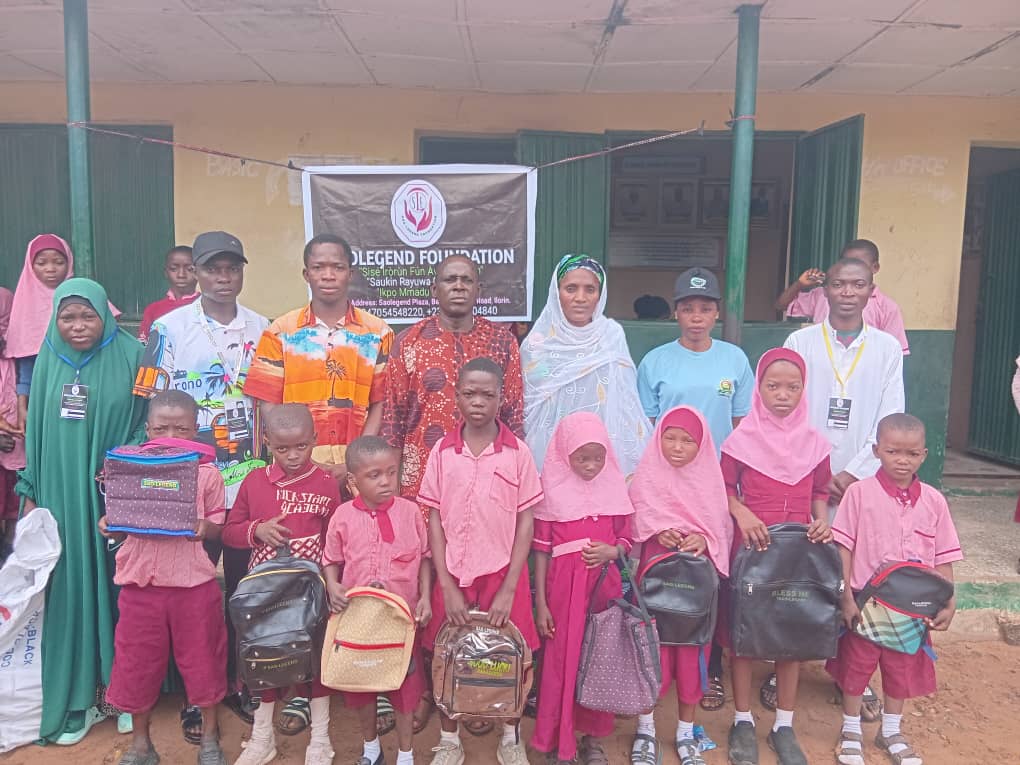
Tears of Joy as Saolegend Foundation Gifted Free School Bags, Lunch Bags, and Books to Orphans in Nigeria on the 7 October 2025 The Saolegend Foundation extended a profoundly compassionate gesture to orphaned children in Nigeria, gifting them free school bags, lunch bags, and books at Sobi Alagbado L.G.E.A School, Nomadic L.G.E.A School Osibi, and Adahiyah Primary School. The recipients were overwhelmed with joy upon receiving these precious tokens of kindness.
The Profound Significance of These Gifts Acquiring a new school bag ignites a sense of possibility, whispering affirmations of worth: “You matter.” The lunch bags nurture their physical well-being, while the books unlock expansive realms of knowledge and imagination.
They Catalyse Aspirations: These endowments furnish children with opportunities to excel.
An Expression of Nigerian Compassion: Reflects the nation’s heartfelt concern for its vulnerable populace.
Fostering Scholastic Passion: Inspires enthusiasm for education and scholastic pursuit.
The Adversities Faced by Orphaned Children Orphans frequently navigate arduous circumstances:
Financial Constraints: Educational expenses pose significant challenges for some households.
Administrative Complexities: Navigating bureaucratic procedures can prove daunting.
Stigmatisation: Derogatory attitudes can profoundly impact self-esteem.
Led with Diligence by the Foundation Coordinator Com. Abdulraheem Jamiu Alade (JEGEDE), alongside Com. Ahmed Yusuf Olasheu, Com. Issah Jubril, Com. Abdulwahab Abdulwasiu Faadi, and Com. Abdulraheem Nansimat.
Saolegend Foundation Team
Can We Contribute to This Ripple of Kindness? Acts of generosity sculpt more luminous horizons for these young lives. Would you like to explore modalities of supporting orphan education in Nigeria or hear additional narratives emblematic of the Saolegend Foundation’s philanthropy?
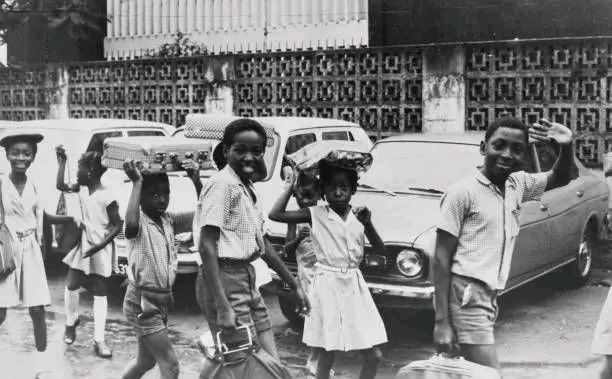
49 years ago, these Nigerian ‘leaders of tomorrow’ were photographed on their way to school in Lagos with some smiling and others carrying their bags on their heads.
The caption of the photo by Keystone adds that many children went to school for the first time at the beginning of the 1976/77 school year after free primary education was introduced in the autumn of 1976.Credit:
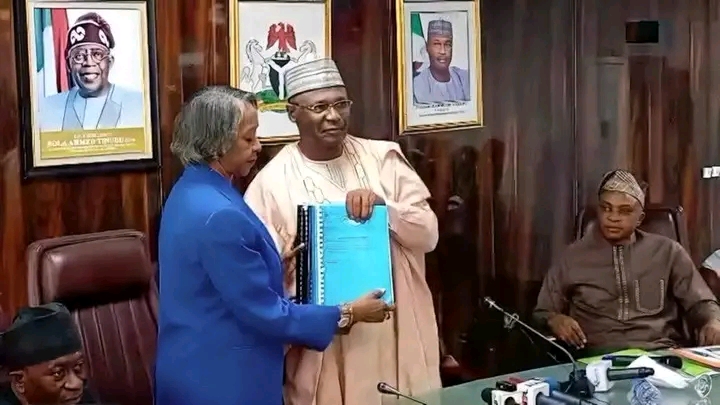
BREAKING: May Agbamuche Takes Over as Acting INEC Chairman from Mahmood YakubuNaijatrusts Online Professor Mahmood Yakubu has officially handed over the leadership of the Independent National Electoral Commission (INEC) to May Agbamuche, who now serves as the Acting National Chairman of the commission.
Agbamuche, the longest-serving National Commissioner at INEC, will oversee the affairs of the electoral body pending the appointment of a substantive chairman by President Bola Tinubu.
Her assumption of office marks a significant transition in Nigeria’s electoral leadership as the commission prepares for upcoming political activities across the country.
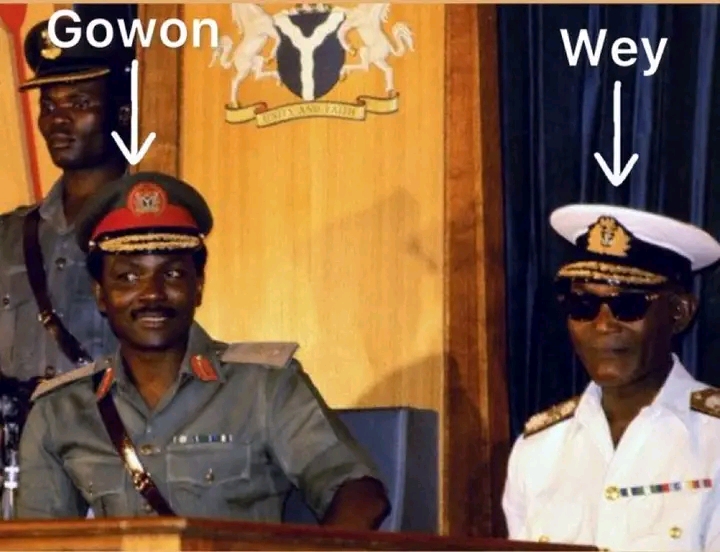
Muslim and Christian Leadership in Nigeria: Contextualizing Religious Representation and Allegations Nigeria’s political landscape reflects a tapestry of religious diversity, with varied pairings in top leadership roles showcasing the nation’s complex socio-political and religious dynamics. Before Nigeria had a Muslim President and Vice President, the country saw a Christian Head of State, General Yakubu Gowon, serving alongside a Christian Deputy, Edet Wey, for nine years (1966-1975). This precedent underscores that combinations of religious affiliations in leadership aren’t unprecedented in Nigeria, highlighting the nation’s pluralistic character.
Understanding Nigeria’s Security Forces Structure
Professional Oversight: The Chief of Defence Staff (CDS) holds professional control of Nigeria’s armed forces. Reports indicate this position has been held by Christians, influencing strategic military direction.
Operational Management: The Chief of Army Staff (COAS) and Inspector General of Police (IGP) manage operational aspects of the army and police respectively; these roles have associations with Christians in recent contexts.
Peter Obi’s Engagements and Allegations Context Former Labour Party presidential candidate Peter Obi reportedly attended meetings in Washington, D.C. between September 24-25, 2025. Allegations emerged the next day (September 26, 2025) via Senator Ted Cruz, suggesting Nigerian officials might be implicated in facilitating genocide against Christians. Grasping Nigeria’s security architecture and religious diversity in leadership is crucial for contextual understanding.
Key Considerations for Nigeria’s Religious and Political Landscape
Interfaith Leadership Dynamics: Nigeria has witnessed leadership combinations involving Christians and Muslims, reflecting its religious plurality.
Nigeria’s Pluralistic Society Nigeria is home to significant Christian and Muslim populations with diverse ethnic groups, shaping its political and social interactions. Leadership reflects attempts to balance these dynamics.
SEO Considerations
Title: Muslim and Christian Leadership in Nigeria: Contextualizing Religious Representation and Allegations
Meta Description Suggestion: Explore Nigeria’s Muslim and Christian leadership history. Understand security roles context and allegations about genocide claims.
Keywords: Nigeria, leadership, Christian, Muslim, Peter Obi, religion, politics
I think, it is high time academics start publicly correcting some misconceptions about Ibadan and Oyo. Ibadan is Oyo, Oyo is Ibadan. Ibadan was an Oyo speaking Yoruba republican city state.
Firstly, there was a war called Gbanamu war where Kurunmi came with his army to assist the Oyo bloc then to defeat the Ife warlord and prince, Maye when there was a disagreement about who will control Ibadan. It was after that war that the republican system was set up in Ibadan.
Baale Oluyedun the Baale that took over from Maye was a direct son of Afonja from Ilorin. Infact many aristocrats like Oluyedun, Oderinlo etc were from Ilorin and they were military commanders under Afonja.
So, the third Olubadan of Ibadan was the son of Afonja from Ilorin. Furthermore, Basorun Oluyole and Basorun Ogunmola were Basorun(s) (Prime minister) under the Alaafin. It was Alaafin that appointed them as Prime ministers. Infact Aare Mohammed Sanusi Latoosisa was appointed by Alaafin.
Kurunmi, Ogunmola, Alli Iwo, Oderinlo, Elepo and other top Baloguns of Ibadan were all Oyo. The setting up of that Republican system in Ibadan made more Oyo refugees from the Kwara/Niger state axis to pour into Ibadan for safety because the military generals and Commanders of the Oyo empire had reorganized themselves there.
Ibadan did not save Oyo, Ibadan saved itself from destruction because they are Oyos or “Oyonized” people. In Ibadan we have Ebiras, Nupes, Hausas, Baribas and other Yoruba groups like Ijebu, Ijesha, Egba, Ekiti etc who became Oyonized after settling there.
The same phenomenon was seen in Ikere Ekiti where the Oyo migrants became “Ekitinized”. The same issue happened in Egba, where Owu and Ijaiye (Oyo) people became “Egbanized”.
The ethnic components of Oyo, Ibadan, Ilorin, Ogbomoso, Shao, Jebba, Abeokuta, Ede, Osogbo, Iseyin, Saki, Yewa, Port Novo (Ajashe), Gbongan, Ikirun, Ganmo, Offa etc are the same but the percentages might be different.
Oranmiyan created Oyo as a people and dialect through war and force. That is why the god of war of Ibadan was also “Oranmiyan” or “Oranyan”. It was brute force or nothing! Bow or die!
That’s the Oyo militaristic way of life. All the successor states who seceded from Oyo empire like Ibadan, Egba, Ijaiye, Ilorin, Dahomey, Ogbomoso, Modakeke, Shao, Ganmo, Offa, Ajashe (Port Novo) etc are all militant and aggressive when it comes to Geopolitics. Those bloc were built on war and the spirit of oranmiyan due to interaction with the Oyo empire. Oyo was a creation of war and social engineering. It is not organic, it is a product of WAR! Ibadan are Oyo speaking people.
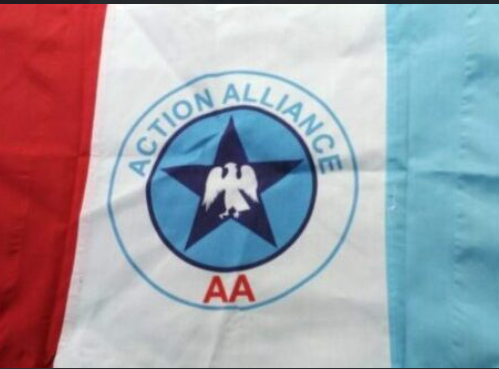
Court Orders Removal of Kenneth Udeze, Affirms Adekunle Rufai Omoaje as Authentic Action Alliance National Chairman
The Federal High Court in Osogbo, Osun State, Nigeria, has ruled in favor of Adekunle Rufai Omoaje, declaring him the legitimate National Chairman of Action Alliance (AA). This judgment comes after a prolonged leadership dispute within the party.
Key aspects of the judgment include validation of Omoaje’s leadership, where the court affirmed his election as National Chairman at AA’s October 7, 2023, convention in Abeokuta, which was monitored by INEC officials. The removal of Kenneth Udeze was ordered by the court, citing his expulsion from the party upheld by the Court of Appeal and Supreme Court.
INEC compliance is a critical part of the ruling, as the commission was directed to recognize Omoaje and restore names of state chairmen loyal to him on its portal. The INEC Chairman Mahmoud Yakubu faces arrest if he fails to comply within seven days, with a ₦100,000 cost awarded against him. The legal basis for the ruling cited contradictions with Section 182 of the Electoral Act and violations of fair hearing rights.
Reactions to the judgment have been positive, with Omoaje hailing it as a victory for democracy and rule of law, boosting confidence in Nigeria’s judiciary. AA’s legal counsel commended the court’s decision, urging INEC compliance.
This development underscores the judiciary’s role in resolving political and party leadership disputes in Nigeria, highlighting the importance of legal processes in determining legitimate leadership within political parties. The outcome is expected to have implications for Action Alliance’s operations and its standing with electoral authorities like INEC.
We kicked things off yesterday with a vibrant boat regatta that showcased the beauty and energy of Lagos on the water. Today, we had the qualifying trials and races, and they were exciting to watch.
The action on the water was pure skill, speed, and teamwork on display. Lagos truly shone as we hosted the world with warmth, pride, and excitement. I’m proud of everyone who helped make this event a success and of the amazing Lagosians who came out to support, Lagos State Governor.
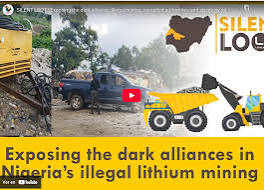
Nigeria’s Silent Recolonization: How Foreign Powers and Local Collaborators Are Bleeding Our Minerals. (If you can be patient to read this, you will know what’s going on in Ifelodun Local Government Area of Kwara State).
The night the attackers came to Oke-Ode, Kwara State, the villagers thought it was just another herder incursion. But as the bullets tore through mud walls and flames engulfed the harvest, it became clear this was no ordinary clash. “They told us to leave or die,” recalled Amos Ajibola, a farmer who fled with his family into the forest. “When we came back days later, strangers were already digging in the hills where we farmed.”
Stories like Ajibola’s are multiplying across Nigeria’s mineral-rich communities. Officials and media often dismiss them as “Fulani–Farmer clashes.” But beneath that narrative lies a disturbing truth: the violence is carefully targeted at communities sitting on gold, tin, lithium, and other strategic minerals. Once villagers are displaced, the land is quietly taken over by illegal miners tied to powerful cartels with foreign backers.
The New Masters: China and France
Security experts and local leaders increasingly point to a slow-motion recolonization of Nigeria, one driven not by treaties or flags, but by economic predators. China and France are the most frequently named, both with long track records of extracting African resources. France has never hidden its dependence on Niger’s uranium, while China has poured billions into Africa under its Belt and Road Initiative. In Nigeria, their interests intersect with a shadow economy of illegal mining.
“These are not random clashes,” said one Abuja-based security analyst who requested anonymity. “They are calculated displacements. The real battle is not over grazing routes, but mineral veins. And the buyers are waiting in Lagos, Dubai, and Beijing.”
Imported Terrorists, Local Collaborators
The system runs with brutal efficiency. Nigerian collaborators, often businessmen or politicians, first identify communities sitting on mineral deposits. They pass the information to their foreign backers. Armed groups, sometimes Fulani Ethnic Militias, sometimes mercenaries from Mali, Chad, or Niger, are then deployed to terrorize locals until they abandon their lands.
A conflict researcher with the Centre for Democracy and Development put it bluntly: “What the public sees is another farmer–herder clash. What is really happening is organized displacement for mining access.”
History Repeating Itself
This pattern echoes Africa’s darkest chapters. In the Democratic Republic of Congo, wars over coltan and cobalt have killed millions while enriching foreign corporations. France has kept a stranglehold over uranium mining in Niger for decades. Now, Nigeria’s lithium and gold deposits are drawing similar interest, and similar bloodshed.
The losses are staggering. Nigeria officially bleeds $9 billion annually from illegal mining. Zamfara alone has seen gold smuggled to fund arms purchases by terrorist groups. In Nasarawa and Kogi, truckloads of lithium vanish under the radar, shipped abroad without any benefit to the host communities.
Who Really Benefits?
The villagers do not. For them, the cost is death, displacement, and dispossession. In Kwara, Kogi, and Plateau, survivors recount losing their farmland, their homes, and their churches, while strangers move in with heavy machinery and armed escorts.
“This is not just corruption, it’s a national security crisis,” warned retired General Alexander Ogomudia in a 2024 interview. “When foreign-backed cartels fund militias to chase Nigerians from their land, it is nothing short of economic warfare.”
Yet government silence is deafening. In some states, officials are accused of protecting cartels. In others, fear of offending powerful embassies leads to paralysis. The result is impunity, as villagers are left to bury their dead while their wealth is siphoned abroad.
The Dangerous Silence
Perhaps most alarming is how easily Nigerians dismiss the allegations as “conspiracy theories.” But from Oke-Ode to Egbe to Isanlu, the same story repeats: gunmen attack, villagers flee, minerals are extracted. How many coincidences make a pattern?
The silence is not ignorance. It is complicity. Every day Abuja refuses to act, the looting of Nigeria’s future deepens.
A Call to Wake Up
Nigeria’s independence in 1960 was won with hope for sovereignty. Today, that sovereignty is under siege not by colonizers in uniform, but by foreign interests in suits, aided by local traitors and protected by mercenaries. China and France may not admit it, but Nigerians on the ground see the connection between their mineral wealth and their bloodshed.
Unless the federal government confronts this reality, tells the whole truth and stand firm, investigates transparently, and breaks the chains of collaboration, Nigeria’s mineral wealth will continue to build other nations’ industries while Nigerians bleed. The recolonization of Nigeria is not a distant threat. It is unfolding now, community by community, mine by mine.
Products
Ladie's Handbags₦17,000.00Original price was: ₦17,000.00.₦15,000.00Current price is: ₦15,000.00.