Posted on 8 Comments

COAS RESHUFFLES NIGERIAN ARMY HIGH COMMAND, APPOINTS NEW PSOs, GOCs, OTHER COMMANDERS

COAS RESHUFFLES NIGERIAN ARMY HIGH COMMAND, APPOINTS NEW PSOs, GOCs, OTHER Commander

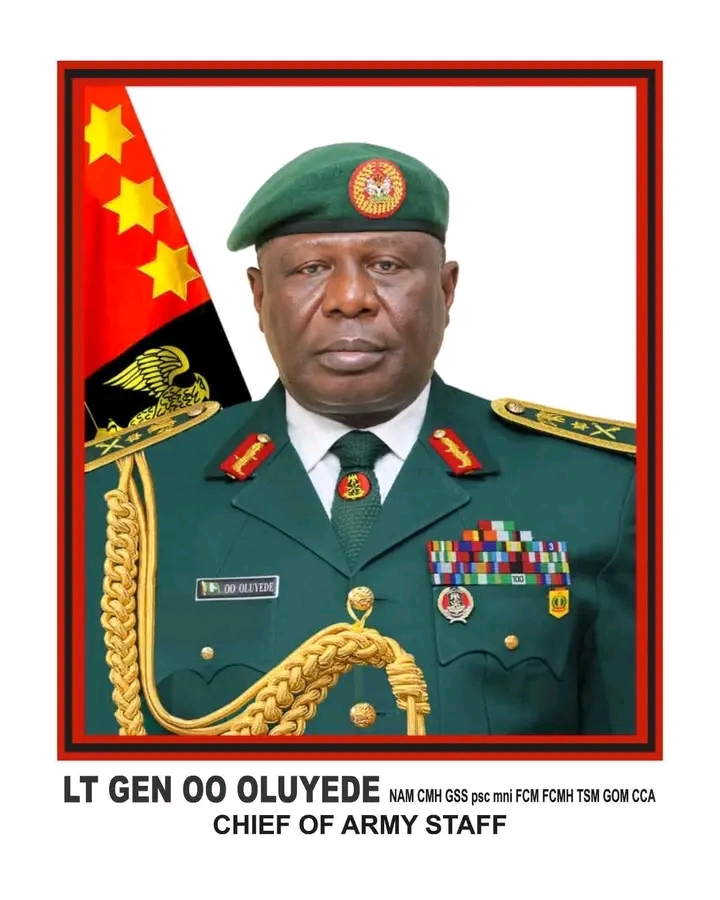
in a strategic move to strengthen leadership and reposition the Nigerian Army (NA) for greater operational effectiveness, the Chief of Army Staff (COAS), Lieutenant General Olufemi Oluyede, has approved the posting and appointment of some senior officers to key command, instructional, and staff positions across various formations and units of the Nigerian Army.

The redeployment encompasses few Principal Staff Officers (PSOs) at the Army Headquarters (AHQ), two General Officers Commanding (GOCs), Corps Commanders, Commandants of training institutions, and Brigade Commanders, among other appointments critical to the Nigerian Army’s operational and administrative structure.

Some of the senior officers appointed as Principal Staff Officers at the Army Headquarters include, Maj Gen AA Adeyinka who was posted from Nigerian Army Corp of Supply and Transport (NACST) to the Department of Army Logistics and appointed Chief of Logistics (Army), Maj Gen AA Adekeye posted from AHQ Department of Standard and Evaluation to AHQ Department of Personnel Management as Chief of Personnel Management (Army), Maj Gen TB Ugiagbe from Headquarters Nigerian Army Intelligence Corp to Army Headquarters Department of Standard and Evaluation and appointed Chief of Standard and Evaluation.

Others are Maj Gen AA Idris from Defence Headquarters to Nigerian Army Intelligence Corps and appointed Chief of Military Intelligence (Army), Maj Gen MO Erebulu from the Department of Special Services and Programmes to Nigerian Army Corps of Military Police and appointed Provost Marshall (Army). Furthermore, Maj Gen EA Anaryu from Defence Space Administration have been redeployed and appointed Corps Commander Supply and Transport while Maj Gen SA Akesode from Office of the National Security Adviser to African Union Verification Mission in Tigray Region, Ethiopia as Head of Mission, while Maj Gen JE Osifo from Nigerian Army School of Finance and Accounts, to Nigerian Army Finance Corporation as Director General.

Senior officers appointed as General Officers Commanding (GOCs) are Major General ASM Wase from Department of Training to Headquarters 1 Division/Sector 1 Joint Task Force North West Operation FANSAN YAMMA (OPFY) as GOC 1 Division/Commander Sector 1, Maj Gen CR Nnebeife is also appointed as the General Officer Commanding 2 Division/ Sector 3 Joint Task Force OPFY.Some of the senior officers appointed as Commandants of NA Training Institutions are,

Maj Gen MO Ihanuwaze from Nigerian Army Finance Insurance Corporation to Nigerian Army Finance School and Administration and appointed Commandant, Maj Gen KO Osemwegie now the commandant Army Signal School, Maj Gen AJ Aliyu also appointed commandant Nigerian Army Ordinance School, while Maj Gen AC Adetoba was posted from the Department of Transformation and Innovation to Nigerian Army College of Logistics and Management as commandant amongst others. Other senior officers also affected in the redeployment are Brig Gen M Jimoh from HQ Operation FANSAN YAMMA to HQ 1 Brigade as Commander, Brig Gen NE Okoloagu from Army War College Nigeria to 2 Brigade as Commander as well as Brig Gen AA Bello from Nigerian Army School of Infantry to 6 Division Garrison/Sector 3 JTF South South Operation DELTA SAFE as Commander.

The Chief of Army Staff has charged the newly appointed senior officers to redouble their effort and commitment to duty in ensuring the sustenance of the ongoing onslaught against terrorism, insurgency and other threats to national security, as they assume their new appointments.

He also reiterates his commitment to welfare of troops as paramount to operational successes. APPOLONIA ANELE Lieutenant ColonelActing Director Army Public Relations 17 August 2025

Posted on Leave a comment

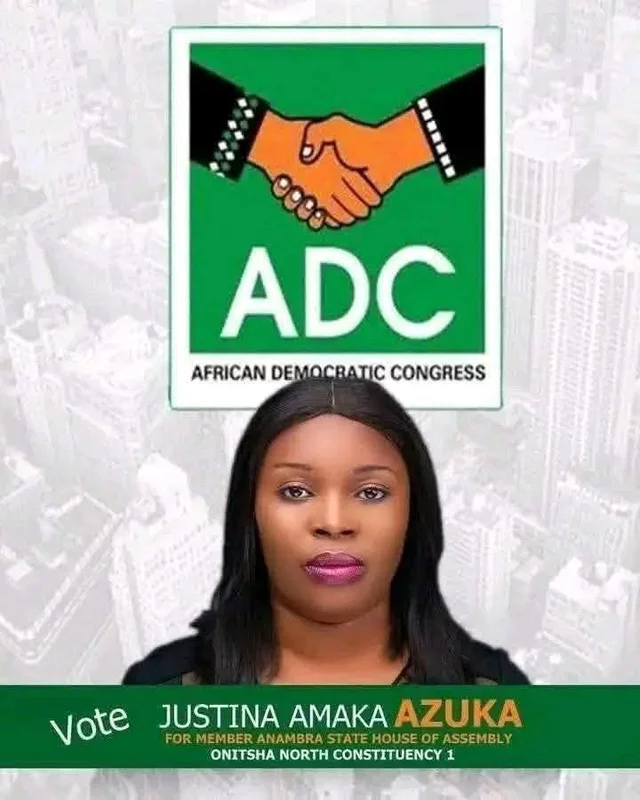
Justina Azuka has made history by becoming the first-ever candidate of the African Democratic Congress (ADC) to win an election in Nigeria.

Justina Azuka has made history by becoming the first-ever candidate of the African Democratic Congress (ADC) to win an election in Nigeria.

She was elected as the representative for Onitsha North 1 Constituency in Anambra State. This victory marks a significant breakthrough for the ADC, a party that has struggled to gain foothold in mainstream electoral contests.Azuka’s win is not only a milestone for the ADC but also a symbol of growing desire among Nigerians for a third force in politics.

Her campaign team praised the constituents for their support and peaceful participation, noting that the massive turnout reflected the resilience of the people’s democratic spirit.Some key highlights of Azuka’s victory include:

Historic Win: Azuka’s election marks the first time the ADC has secured a win in Nigeria, making it a landmark moment for the party.- Women’s Empowerment: As a female candidate, Azuka’s victory is seen as a step forward for gender representation in politics, inspiring other women to take part in electoral processes.

Alternative Voice: The ADC’s win in Onitsha North 1 Constituency signals a potential shift in the country’s political landscape, with voters increasingly willing to experiment beyond established party lines.

Grassroots Support: Azuka’s campaign received support from former Anambra Governor Peter Obi, whose endorsement was seen as instrumental in boosting voter confidence.

However, it’s worth noting that APGA’s Ifeoma Azikiwe ultimately won the Onitsha North 1 State Constituency seat, defeating Justina Azuka in the polls.

Posted on Leave a comment

13 Men Convicted for Open Defecation and Urination in Lagos, Sentenced to 3 Months Imprisonment

13 Men Convicted for Open Defecation and Urination in Lagos, Sentenced to 3 Months Imprisonment

A Magistrate court in Bolade Oshodi, Lagos, has convicted 13 individuals for engaging in open defecation and urination at Agege and Alimosho areas. Each convict was sentenced to three months imprisonment after pleading guilty to the charges.

The convicts include:

  • Friday Samuel, 49 years
  • Sulaimon Olalekan, 54 years
  • Idris Jimoh, 45 years
  • Alao Babatunde, 54 years
  • Chinonso Dominic, 21 years
  • Akeem Suraju, 42 years
  • Lawal Idris, 29 years
  • Oluwatobi Adebayo, 30 years
  • Ismaila Adeyemi, 35 years
  • Murtala Jamilu, 20 years
  • Samson Memudia, 54 years
  • Jamilu Abdullahi, 29 years
  • Ganiyu Akeem, 55 years

This development serves as a warning to others, emphasizing the importance of proper waste disposal and sanitation in the state.

Posted on 1 Comment

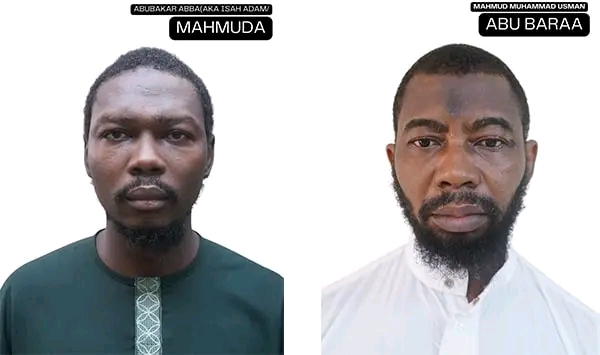
The Federal Government of Nigeria has indeed confirmed the arrest of two top commanders of Jama’atu Ansarul Muslimina fi-Biladis Sudan (Ansaru), an Al-Qaeda affiliate in Nigeria. The arrested individuals are:

The Federal Government of Nigeria has indeed confirmed the arrest of two top commanders of Jama’atu Ansarul Muslimina fi-Biladis Sudan (Ansaru), an Al-Qaeda affiliate in Nigeria. The arrested individuals are:

Mahmud Muhammad Usman (Abu Bara’a): Identified as the self-styled Emir of Ansaru, Abu Bara’a was the coordinator of the group’s sleeper cells across Nigeria and masterminded several high-profile kidnappings and armed robberies to finance extremist activities.

Mahmud al-Nigeri (Mallam Mamuda): Deputy commander of Ansaru, Mallam Mamuda led the notorious “Mahmudawa” faction operating around Kainji National Park and is believed to have received training in Libya under foreign jihadist instructors.

The arrests were made between May and July 2025, following a months-long intelligence-led operation by Nigeria’s security and intelligence agencies. According to National Security Adviser Nuhu Ribadu, the capture of these two Ansaru leaders has effectively dismantled the group’s central command and paves the way for its complete annihilation.

Some of the notable attacks attributed to Ansaru include:

  • 2022 Kuje Prison Break: Ansaru claimed responsibility for the attack on Kuje prison in Abuja, which resulted in the escape of several high-profile inmates.
  • Abduction of French Engineer Francis Collomp: In 2013, Ansaru kidnapped French engineer Francis Collomp in Katsina.
  • Kidnapping of Emir of Wawa: The group was also behind the abduction of the Emir of Wawa.
  • Attack on Niger Uranium Facility: Ansaru claimed responsibility for the deadly attack on a uranium facility in the 2022 Kuje Prison Break.

The Federal Government has stated that the captured materials and digital evidence are undergoing forensic analysis to provide further intelligence on the group’s networks in Nigeria and the Sahel region.

Posted on Leave a comment

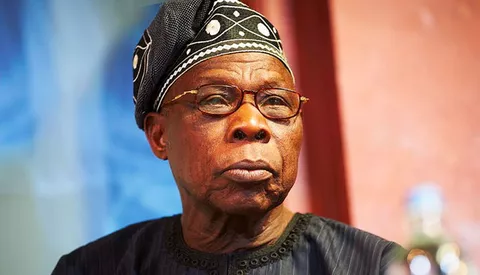
EFCC Raids Obasanjo Hotel Arrest some

The Economic and Financial Crimes Commission (EFCC) raided the Green Legacy Hotel within the Olusegun Obasanjo Presidential Library in Abeokuta, Ogun State, on Sunday, August 10, 2025. The operation resulted in the arrest of several youths suspected of internet fraud. Here’s what we know so far:
Number of Arrests: The EFCC has confirmed arresting 93 suspected internet fraudsters in Ogun State, but the exact number arrested at the Obasanjo Library hotel is not specified.
Items Seized: EFCC operatives reportedly seized over 20 luxury cars and other valuable items from the suspects.
Operation Details: The raid occurred during a pool party at the hotel in the early hours of Sunday. Eyewitnesses described scenes of chaos as guests fled in panic amid the sound of gunfire.
EFCC Response: The EFCC spokesperson, Dele Oyewale, promised to confirm and provide further information on the operation, while the Managing Director of OOPL Ventures, Vitalis Ortese, confirmed the incident but withheld details.

This raid is part of the EFCC’s ongoing efforts to clamp down on cybercrime across Nigeria.

Posted on Leave a comment

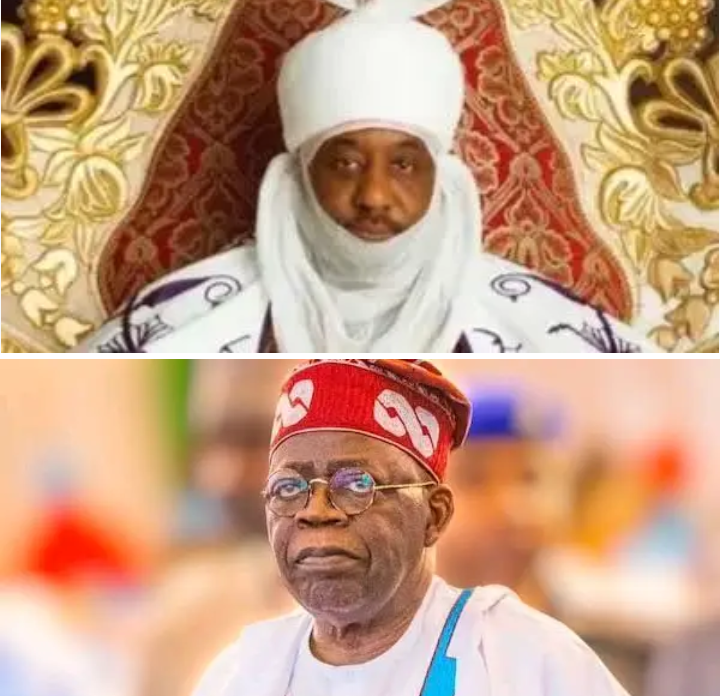
The Emir of Kano, Muhammadu Sanusi II, has indeed issued a stern warning to President Bola Tinubu,

The Emir of Kano, Muhammadu Sanusi II, has indeed issued a stern warning to President Bola Tinubu, urging him not to reward thieves with ministerial appointments. Sanusi emphasized that Nigeria’s value system has been eroded, and the society rewards individuals who have amassed wealth through questionable means with more public offices and opportunities. He stressed that public office holders should prioritize serving the nation, not accumulating personal wealth.¹

Key Points of Sanusi’s Warning:

  • Condemnation of Corruption: Sanusi condemned the appointment of individuals with questionable integrity into public office, citing that this perpetuates a system where material wealth is prioritized over values like honesty and diligence.
  • Regeneration of Values: He called for a collective awakening to restore Nigeria’s moral fabric, emphasizing the need for honesty, diligence, and compassion in governance.
  • Strengthening the Civil Service: Sanusi advocated for empowering civil servants to resist political pressure and uphold accountability, highlighting the importance of a robust civil service in promoting good governance.
  • Shared Responsibility: He emphasized that the responsibility for change lies not only with leaders but also with citizens, underscoring the need for a collective effort to reform Nigeria’s value system.²

Sanusi’s sentiments echo those of former Governor Colonel Abubakar Dangiwa Umar, who also cautioned President Tinubu against appointing desperate lobbyists and individuals of dubious character to his cabinet.³

Posted on Leave a comment

Exploring the Latest Breakthroughs and Trends in AI Technology

Exploring the Latest Breakthroughs and Trends in AI Technology

The world of AI is rapidly evolving, with new developments and innovations emerging every day. Here are some exciting recent breakthroughs and trends:

Recent Breakthroughs:

  1. Text-to-Video AI: New metamorphic video capabilities are being explored, enabling more sophisticated video generation.
  2. AI in Medicine: AI models are being developed to assist in medical decision-making, with some models outperforming doctors in certain exams.
  3. Robotics: Robots are being designed to navigate complex environments, recognize objects, and even exhibit human-like touch.
  4. Quantum Computing: Researchers are making progress in developing fault-tolerant quantum computers and exploring the potential of photonic computing.

Emerging Trends:

  1. Generative AI: Large language models, text-to-image, and text-to-video models are becoming increasingly popular.
  2. Predictive Analytics: AI is being used to predict complex phenomena, such as chemical properties and nuclear waste behavior.
  3. Autonomous Systems: Self-driving cars and drones are being developed with advanced AI capabilities.

Research and Applications:

  1. Cancer Immunotherapy: AI is being used to analyze cell behavior and identify potential targets for therapy.
  2. Environmental Sustainability: AI is being applied to optimize carbon storage and minimize economic disruptions.
  3. Education: AI-powered platforms are being developed to support lifelong learning and improve student outcomes.

Some notable institutions driving AI research include:

  1. MIT: Researchers at MIT are working on various AI projects, including natural language processing, computer vision, and robotics.
  2. ScienceDaily: This platform provides updates on the latest AI research and breakthroughs.

To stay up-to-date on the latest AI news and developments, you can follow sources like:

  1. TechCrunch: Covers AI news, trends, and events.
  2. AI News: Reports on the latest AI news and insights.
  3. Google News: Aggregates news articles on artificial intelligence from various sources.
Posted on Leave a comment

The Best Way for Nigerians to Stop Corrupt Leaders in Power

The Best Way for Nigerians to Stop Corrupt Leaders in Power

Nigeria has been plagued by corruption for decades, with corrupt leaders looting the country’s treasury and perpetuating a culture of impunity. However, the power to stop corrupt leaders lies with the Nigerian people. Here are some ways Nigerians can work together to bring about change:

  1. Demand Transparency and Accountability

Nigerians should demand transparency and accountability from their leaders. This can be achieved by:

  • Attending town hall meetings and public forums to question leaders about their actions
  • Using social media to hold leaders accountable and demand transparency
  • Supporting investigative journalism and media outlets that expose corruption
  1. Vote Wisely

The power of the vote is a crucial tool in removing corrupt leaders from power. Nigerians should:

  • Research candidates thoroughly and vote for those with a track record of integrity and transparency
  • Reject candidates with a history of corruption or links to corrupt practices
  • Encourage others to vote and participate in the democratic process
  1. Support Anti-Corruption Efforts

Nigerians should support anti-corruption efforts by:

  • Reporting corrupt practices to the relevant authorities
  • Cooperating with anti-corruption agencies and providing information about corrupt activities
  • Demanding that anti-corruption agencies are independent and effective
  1. Promote a Culture of Integrity

Nigerians should promote a culture of integrity by:

  • Teaching children the importance of honesty and integrity
  • Encouraging whistleblowers to come forward and report corrupt practices
  • Rewarding integrity and transparency in public and private life
  1. Demand Institutional Reforms

Nigerians should demand institutional reforms that promote transparency and accountability. This includes:

  • Strengthening institutions such as the judiciary, legislature, and anti-corruption agencies
  • Promoting meritocracy and transparency in public appointments and promotions
  • Ensuring that institutions are independent and free from political interference
  1. Use Technology to Fight Corruption

Nigerians can use technology to fight corruption by:

  • Developing and using apps and platforms that promote transparency and accountability
  • Using social media to expose corrupt practices and mobilize public opinion
  • Supporting digital literacy and online activism
  1. Build a Critical Mass

Nigerians should build a critical mass of people who are committed to fighting corruption. This can be achieved by:

  • Building coalitions and networks of anti-corruption activists
  • Organizing public protests and demonstrations against corruption
  • Using social media to mobilize public opinion and build a movement against corruption

By working together and using these strategies, Nigerians can create a groundswell of opposition to corruption and demand that their leaders act with integrity and transparency. The power to stop corrupt leaders lies with the people, and it is time for Nigerians to take action.

Posted on Leave a comment

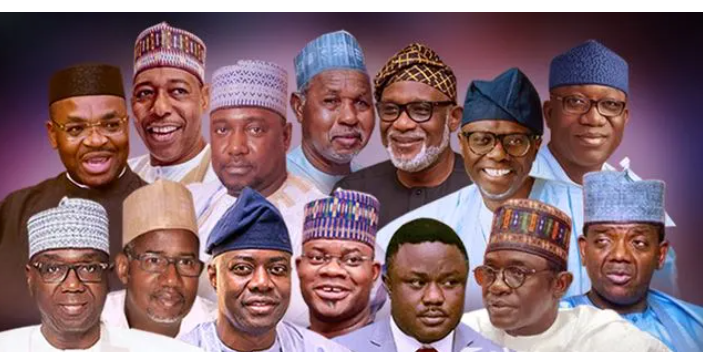
29 State governors spent a whopping N79.97 billion on domestic and international travel

Nigeria’s 29 state governors spent a whopping N79.97 billion on domestic and international travel expenses between January and June 2025. Here is the breakdown of the amount spent by each state:

  1. Abia State – N1.03 billion
  2. Adamawa State – N2.24 billion
  3. Akwa Ibom State – No data available
  4. Anambra State – No data available
  5. Bauchi State – N3.66 billion
  6. Bayelsa State – N3.78 billion
  7. Benue State – N1.13 billion (only Q1 expenditure available)
  8. Borno State – N3.68 billion
  9. Cross River State – N3.68 billion
  10. Delta State – N884.81 million (only Q1 expenditure available)
  11. Ebonyi State – N1.45 billion
  12. Edo State – N3.51 billion
  13. Ekiti State – N3.76 billion
  14. Enugu State – No data available
  15. Gombe State – N1.20 billion
  16. Imo State – N928.34 million
  17. Jigawa State – N1.26 billion
  18. Kaduna State – N1.86 billion
  19. Kano State – N5.58 billion
  20. Katsina State – N548.24 million (only Q1 expenditure available)
  21. Kebbi State – N1.53 billion
  22. Kogi State – N1.75 billion
  23. Kwara State – N1.2 billion
  24. Lagos State – N6.23 billion (only Q1 expenditure available)
  25. Nasarawa State – N2.24 billion
  26. Niger State – N2.63 billion
  27. Ondo State – N1.83 billion
  28. Ogun State – No data available
  29. Osun State – N6.21 billion
  30. Oyo State – N1.89 billion
  31. Plateau State – No data available
  32. Rivers State – No data available
  33. Sokoto State – N2.59 billion
  34. Taraba State – N5.22 billion
  35. Yobe State – N3.70 billion
  36. Zamfara State – N2.77 billion

The total amount spent by the governors on travel expenses represents a 14.72% increase compared to the N69.71 billion spent during the same period in 2024.

Only 5 states and the Federal Capital Territory recorded foreign capital inflows during Q1 2025, with the FCT attracting $3.05 billion, Lagos State $2.56 billion, Ogun State $7.95 million, Oyo State $7.81 million, and Kaduna State $4.06 million.

The disparity between the amount spent on travel expenses and the lack of foreign capital importation in most states has raised questions about the effectiveness of these expenditures in driving investment and promoting economic growth.