The Impact of Illegal Miners on African Insecurity
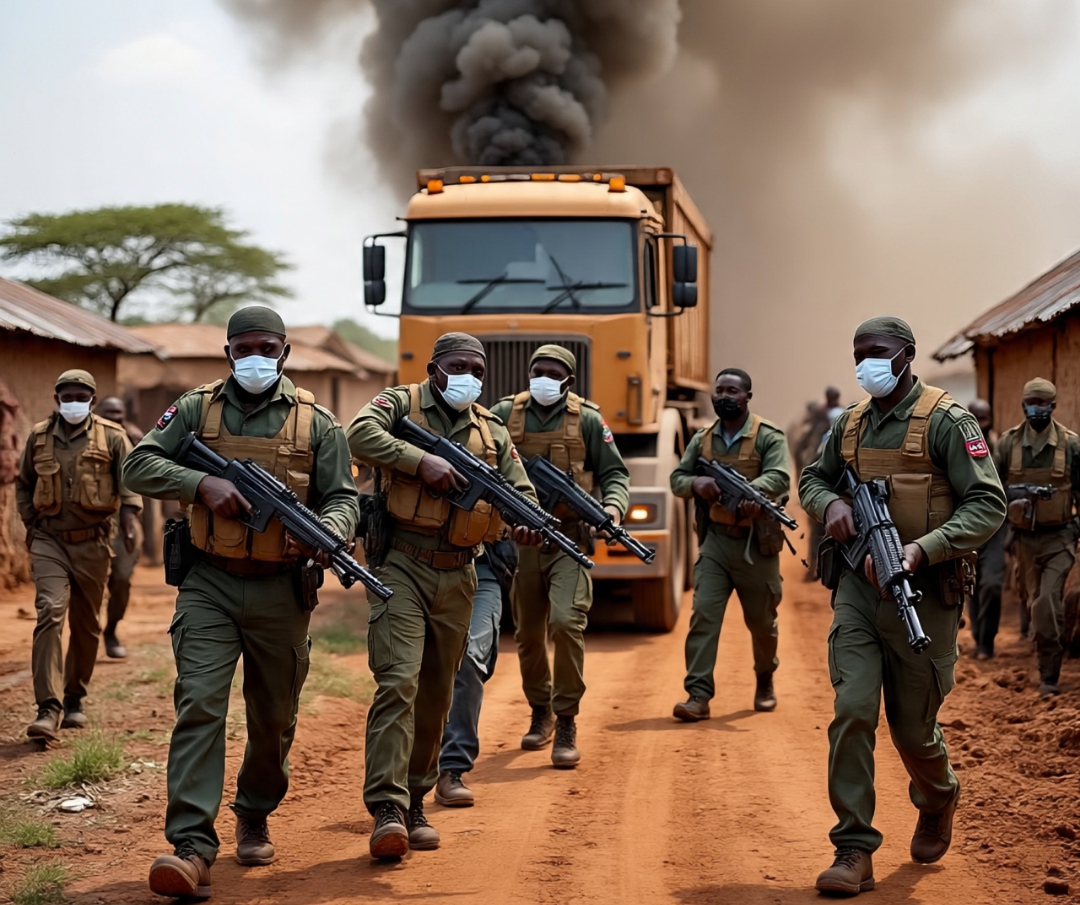
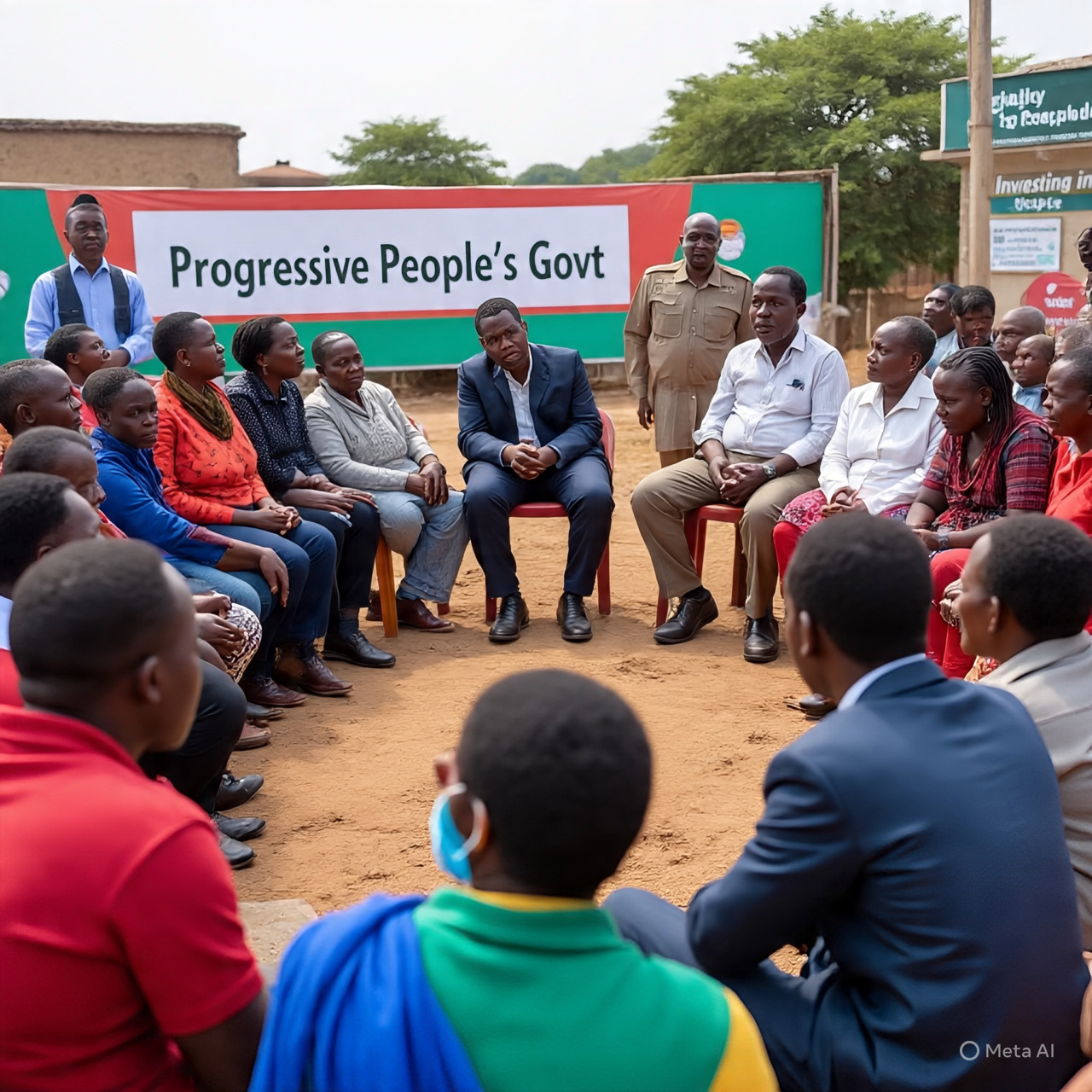
Illegal mining activities pose significant threats to communities across Africa, contributing to insecurity, environmental degradation, and social challenges. Nigeria is among the countries experiencing such impacts.
Impacts of Illegal Mining
Displacement and cultural disruption: Communities face forced removals affecting traditional ways of life.
Environmental harm: Mining can contaminate water, cause soil erosion, and damage ecosystems vital for local livelihoods.
Violence and insecurity: Illegal miners often use coercive tactics leading to fear, displacement, and human rights concerns.
Health risks: Exposure to pollutants from mining affects community health.
Factors Contributing to Illegal Mining
Weak regulatory frameworks: Gaps in laws and enforcement enable illegal activities.
Corruption: Can facilitate unauthorized mining operations.
Economic drivers: Demand for minerals and poverty fuel illegal mining.
Lack of alternatives: Economic pressures push communities toward tolerating or engaging in illegal mining.
Context in Nigeria and Africa
Niger Delta oil conflicts in Nigeria highlight longstanding issues over resource extraction.
Artisanal and illegal mining of minerals like gold, tin pose environmental and security challenges across Africa.
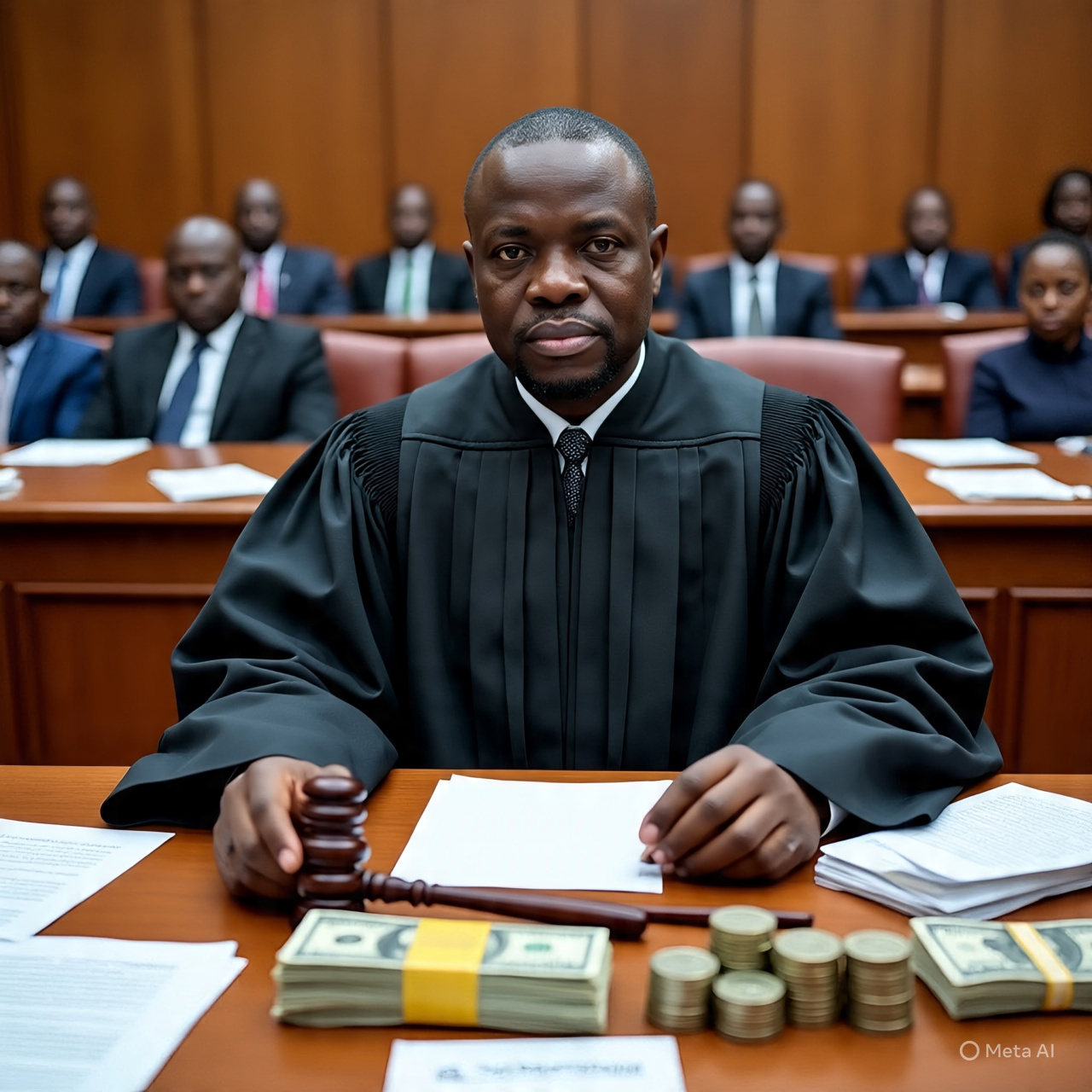
Corruption in the judiciary is a big problem for Nigeria’s democracy. When the judiciary is corrupt, it undermines the rule of law and makes people lose trust in institutions. This creates uncertainty for businesses and deters investors from coming to Nigeria.
The Impact on Investment
The Nigerian government has spent a lot of money to attract investors, but it’s not working. Corruption in the judiciary is a major turn-off for investors. They want a stable and predictable business environment, but without a functional and impartial judiciary, they’re hesitant to invest.
The Burden on the Poor
Corruption in the judiciary also hurts the poor and vulnerable. The judicial system is supposed to help people, but it’s become a source of fear and oppression. The rich and powerful exploit this system to cheat and oppress the poor. They cheat the poor and then tell them to go to court, knowing the poor can’t afford justice and the judgment can be bought.
The Need for Reform
To fix this, Nigeria needs to reform its judiciary. This means:
Making the judiciary stronger and more independent
Improving transparency and accountability
Appointing judges based on merit, not connections
Conclusion
Corruption in the judiciary is a serious threat to Nigeria’s democracy and economy. To attract investors and promote growth, Nigeria needs to prioritize judicial reform. Only then can the judiciary serve as a true bastion of hope for the common man.
Kwara PDP Challenges Gov AbdulRazaq, Labour Unions Over “Lifeless” ₦70,000 Minimum Wage
The Kwara State chapter of the Peoples Democratic Party (PDP) has challenged labour unions in the state to demand a review of what it described as the “lifeless ₦70,000 minimum wage” currently paid to workers by the Abdulrahman Abdulrazaq-led administration.
The party’s call followed the announcement by Imo State Governor, Hope Uzodimma, who increased his state’s minimum wage from ₦76,000 to ₦104,000, prompting the PDP to question why Kwara, under the leadership of the Nigerian Governors’ Forum chairman, remains behind.
In a statement issued by the PDP’s state Publicity Secretary, Olusegun Adewara, the party said, “It is sad that the Chairman of the Nigerian Governors’ Forum, who is supposed to be setting the pace for others, is lagging in this critical area.”
The party argued that with Kwara’s rising Internally Generated Revenue (IGR) and large federal allocations, civil servants deserve more. “It is unacceptable that a corps member now earns more monthly pay than a Grade Level 8 Kwara civil servant,” the statement read.
The PDP criticised the October 2024 introduction of the ₦70,000 minimum wage in Kwara, describing it as “the lowest compared to neighbouring states” and “long outlived with current economic realities in the country.”
The statement further condemned the state government’s spending priorities. “A government that is investing ₦30 billion in mere hotel renovations, planning to buy ₦1.4 billion worth of cars for lawmakers, and that acquired ₦80 million worth of vehicles for each local government chairman should not find it difficult to give hardworking workers what is due to them,” it stated.
It accused the governor of neglecting his duties to the workforce. “We strongly believe that the governor is deliberately shying away from his responsibility to invest in the welfare of workers, a critical factor in boosting productivity, stimulating the local economy and arresting the spate of insecurity,” Adewara added.
“Kwara must move away from the tokenism of the civil service with the current lifeless ₦70,000 minimum wage, which is insufficient to even cover a worker’s transportation expenses for a single month,” the statement said, while encouraging labour to demand a living wage in line with national developments.
The Nigerian government has implemented policies that have led to the removal of subsidies on essential goods and services, such as fuel, electricity, and education. This has resulted in a significant increase in the cost of living for ordinary Nigerians, including those in Kwara State. The devaluation of the naira has also contributed to the economic hardship faced by many citizens.
The Impact on Citizens in Kwara State
The removal of subsidies and the devaluation of the naira have led to a situation where many Kwara State residents are struggling to make ends meet. The cost of living has increased significantly, and many citizens are finding it difficult to afford basic necessities like food, healthcare, and education.
The Kwara State Government’s Response
The federal government has been returning a significant portion of the revenue generated from the removal of subsidies to state governments, including Kwara State. However, the Kwara State government has failed to prioritize human capacity development and instead focus on infrastructure development projects. This has further exacerbated the poverty situation in the state.
The Need for a Different Approach
The Kwara State government needs to create an enabling environment for businesses to thrive, rather than competing with the private sector. By investing in unique businesses that solve problems for entrepreneurs, such as producing machines, tools, and raw materials, the government can support the growth of the private sector and create jobs for citizens.
Solutions to Poverty in Kwara State
The Kwara State government should:
1. Invest in Human Capacity Development: Invest in education, healthcare, and skills development programs to empower citizens with the skills and knowledge they need to participate in the economy. 2. Create an Enabling Business Environment: Create an enabling environment for businesses to thrive by providing support for entrepreneurs, reducing bureaucracy, and providing access to finance. 3. Support Entrepreneurship: Support entrepreneurship by providing training, mentorship, and access to finance for start-ups and small businesses. 4. Invest in Infrastructure: Invest in infrastructure development projects that support economic growth and development, such as roads, transportation systems, and energy infrastructure. 5. Invest in Security: Invest in security measures to protect lives and property, and create a safe environment for businesses to operate.
By taking these steps, the Kwara State government will help reduce poverty and create a more prosperous and equitable society for its citizens. The government should also work with private sector partners, civil society organizations, and international development agencies to support poverty reduction efforts in the state.
Conclusion
The poverty situation in Kwara State is a complex challenge that requires a multifaceted approach. The Kwara State government has a critical role to play in addressing this challenge by prioritizing human capacity development, creating an enabling business environment, supporting entrepreneurship, investing in infrastructure, and investing in security. By working together, the government and citizens will build a more prosperous and equitable society for all.
The Federation Account Allocation Committee (FAAC) has distributed N2.001 trillion among the Federal Government, states, and local government councils as July 2025 revenue. This allocation marks the second consecutive month of growth in allocations, with a 10% increase from the N1.818 trillion shared in June.
Here’s a breakdown of the allocation: – Federal Government: N735.081 billion – State Governments: N660.349 billion – Local Government Councils: N485.039 billion – Oil-producing States Derivation: N120.359 billion, representing 13% of mineral revenue
The distributable revenue comprised¹: – Statutory Revenue: N1.282 trillion – Value Added Tax (VAT): N640.610 billion – Electronic Money Transfer Levy (EMTL): N37.601 billion – Exchange Difference: N39.745 billion
From the VAT revenue, the Federal Government received N96.092 billion, State Governments received N320.305 billion, and Local Government Councils received N224.214 billion. The FAAC noted that Petroleum Profit Tax, Oil and Gas Royalty, EMTL, and Excise Duty increased significantly in July, while VAT and import duty recorded marginal increases.
The United States has disputed World Trade Organization (WTO) Director-General Dr. Ngozi Okonjo-Iweala’s assessment of Nigeria’s economy, citing that the new minimum wage of N70,000 hasn’t improved the standard of living for Nigerian workers due to the continued depreciation of the Naira.
The US report highlights that the minimum wage, pegged at about $47.90 per month, has lost its value due to the Naira trading at over N1,500 to the dollar. This has resulted in the wage being no longer higher than the poverty income level. Furthermore, the law only applies to employers with 25 or more full-time staff, leaving most workers in the informal economy unprotected.
Some key points from the report include¹ ²: – Naira Depreciation: The Naira’s continued depreciation has undermined the new minimum wage, making it difficult for workers to afford basic necessities. – Limited Coverage: The minimum wage law only applies to a small portion of the workforce, with most workers operating in the informal economy. – Enforcement Issues: The government rarely enforces minimum wage and overtime laws, with penalties being low and not commensurate with other crimes like fraud. – Informal Economy: Between 70 and 80 percent of Nigeria’s working population operates in the informal economy, where authorities fail to enforce wage, hour, and occupational safety and health laws.
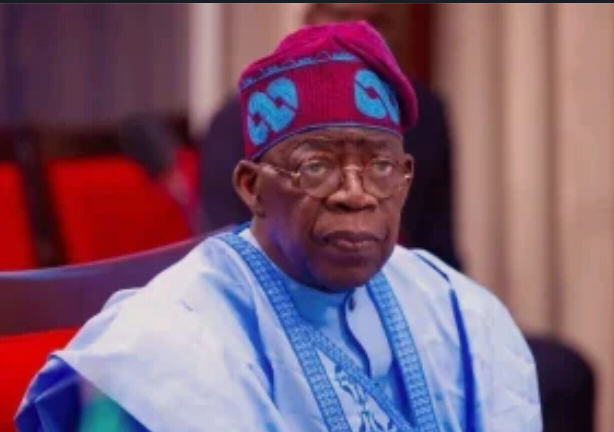
Dr. Okonjo-Iweala had commended President Tinubu’s administration for restoring stability to Nigeria’s economy, but the US report presents a contrasting view, highlighting the challenges faced by Nigerian workers.
Nigeria Deports 51 More Foreigners for Cyberterrorism and Internet Fraud
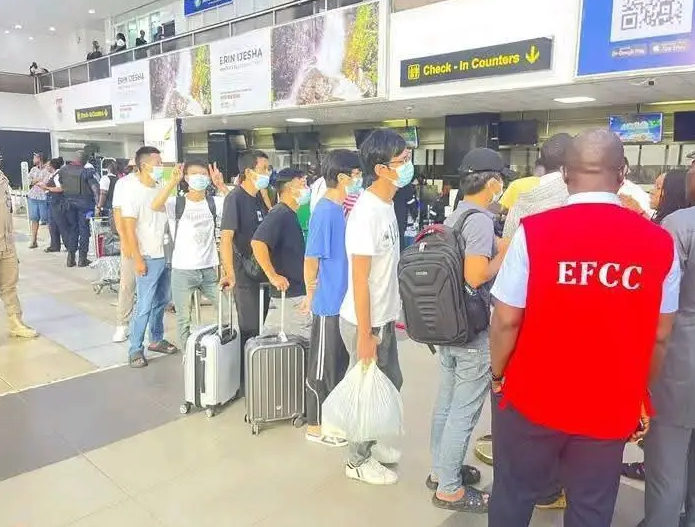
The Economic and Financial Crimes Commission (EFCC) and the Nigerian Immigration Service (NIS) have repatriated 51 foreign nationals convicted of cyber-terrorism and internet fraud. The deportees include 50 Chinese nationals and one Tunisian, bringing the total number of deported convicts to 102 since the exercise began on August 15, 2025.
These individuals were part of a larger group of 192 foreign nationals arrested in Lagos during a sting operation targeting a major foreign-led cybercrime syndicate. The EFCC has stated that further deportations are scheduled in the coming days as part of an intensified crackdown on transnational cybercrime.
The deported individuals had completed their prison sentences handed down by the Federal High Court in Lagos before being handed over to immigration authorities for repatriation. The EFCC emphasized that this operation demonstrates Nigeria’s commitment to tackling global cybercrime syndicates and protecting its digital space.
Key Details: – Number of Deportees: 102 foreign nationals deported since August 15, 2025 – Nationalities: 50 Chinese and one Tunisian in the latest batch – Crimes: Cyber-terrorism and internet fraud, including romance scams and fraudulent cryptocurrency schemes – Arrests: 192 foreign nationals arrested in Lagos during a sting operation – Future Plans: Further deportations scheduled as court processes for remaining suspects are concluded.
The Imo State Government has indeed banned graduation parties for kindergarten, nursery, and Junior Secondary School (JSS3) students, effective immediately. This decision aims to reduce financial burdens on parents and redirect attention to academic development. Only Primary 6 and Senior Secondary School 3 (SS3) students are permitted to hold graduation ceremonies, aligning with Nigeria’s 6-3-3-4 education system.Key Highlights of the Ban:- Reduced Financial Burden: The government seeks to alleviate excessive spending on graduation parties, which can be financially draining for parents.- Focus on Academics: By limiting graduation ceremonies to key academic milestones, the government aims to emphasize the importance of academic achievement over extravagant celebrations.- Promoting Discipline: The ban is also intended to instill discipline and responsible values in students, encouraging them to focus on their studies rather than indulging in lavish parties.Additional Measures:- Textbook Policy: The government has also directed schools to stop changing textbooks annually, mandating the use of approved textbooks for at least four years. This aims to reduce costs for parents and promote consistency in teaching.- Monitoring Compliance: The Ministry of Primary and Secondary Education will monitor schools to ensure compliance with the new policies.The National Orientation Agency (NOA) has praised the Imo State Government for this decision, describing it as a bold step toward instilling discipline and responsible value reorientation among young learners.
Here is how colonial powers, including America, took advantage of Nigeria and other African countries.
Economic Exploitation Colonial powers exploited Africa’s natural resources, imposing their own economic systems and policies that benefited them at the expense of local populations. This led to – Resource extraction: Colonial powers extracted resources such as palm oil, groundnuts, cocoa, cotton, and palm kernel from Africa, often using forced labor. – Economic dependency: African countries were forced to rely on their colonial masters for economic support, creating a cycle of dependency that persists today.
Cultural Imperialism Colonial powers imposed their own culture, language, and beliefs on African countries, suppressing local traditions and identities: – Loss of cultural heritage: The imposition of foreign cultures led to the erosion of traditional African cultures and identities. – Language barrier: The use of European languages as official languages hindered communication and development in African countries.
Political Interference Colonial powers interfered in the governance of African countries, often supporting leaders who served their interests: – Puppet governments: Colonial powers installed puppet governments that served their interests, rather than those of the local population. – Undermining sovereignty: The interference in governance undermined the sovereignty of African countries, making it challenging for them to assert their own development agendas.
Legacy of Colonialism The legacy of colonialism continues to impact Africa today, with many countries still struggling to overcome the economic, cultural, and political challenges imposed by colonial powers.³
To overcome these challenges, African leaders can focus on: – Prioritizing national interests: Developing domestic industries and economies that benefit the local population. – Promoting transparency and accountability: Ensuring good governance and accountability to the people. – Investing in human capital and infrastructure: Developing the skills and abilities of the population, and investing in infrastructure that supports economic growth and development. – Fostering regional cooperation and integration: Collaborating with other African countries to strengthen economic ties and promote peace and stability. – Resisting external interference: Asserting sovereignty and protecting national interests from external influence.
Products
Ladie's Handbags₦17,000.00Original price was: ₦17,000.00.₦15,000.00Current price is: ₦15,000.00.