Posted on Leave a comment

Nigerians Are Celebrating Devils in Entertainment There’s something deeply troubling happening in our society

Nigerians Are Celebrating Devils in Entertainment There’s something deeply troubling happening in our society—and many of us have become so used to it that we no longer question it.

Nigerians are celebrating devils in entertainment.

Not “devils” in the literal religious sense alone, but in the way we now glorify content, lifestyles, and messages that once would have been rejected without debate.

Today, the more controversial, immoral, or shocking a person is, the more attention they get.

The more they promote negativity, vulgarity, or destructive values, the more we elevate them.And we call it entertainment.

When Fame Rewards the Wrong Things We’ve created a system where:Bad behavior trends faster than good character Noise is louder than talent Controversy brings more money than creativity People no longer ask, “Is this right?”They ask, “Is this trending?”

Social Media Made It Worse Platforms meant to connect and inspire have turned into stages where anything goes—as long as it brings views.And we, the audience, are not innocent.Every like, share, and comment is a vote.Every trend we push is a message about what we value.

Real-Life Reflection You see it everywhere:Artists gaining fame for promoting chaos instead of creativity Influencers building brands on indecency instead of impact Young people copying what they see because “that’s what works”Slowly, values are being replaced with vibes.And the dangerous part?We’re normalizing it.

The Bigger Question What happens when a generation grows up believing that:

Fame is more important than character Attention is more valuable than integrity influence matters more than truth We may laugh now, scroll past it, and even celebrate it—but the long-term effect is deeper than we think.

Final Thought not everything that entertains is harmless.Not everyone we celebrate deserves a platform.

Until we start rewarding substance over noise,we will keep celebrating devils… while true talent and positive voices suffer in silence

Posted on Leave a comment

Nigerians Celebrate Devils in Politicians While the People Suffer

Nigerians Celebrate Devils in Politicians While the People Suffer

There’s something deeply troubling about Nigeria—and many of us have become so used to it that we barely question it anymore.

Nigerians are celebrating devils.

We are not just being led.

We are celebrating the very politicians who make life harder for us.When Politicians Become Masters of Deception every election season, it’s the same pattern.

Convoys.

Promises.

Noise.

Hope.

They speak like saviors. They sound like they understand. They tell us change is coming.But once elections are over, reality returns like a slap.

Darkness replaces light.Broken roads remain broken.Hospitals stay empty of equipment.

Graduates remain unemployed.

Yet, somehow, these same politicians are praised, defended, and even worshipped. A Painful Reality I remember a man in my area who lost his child because there was no oxygen in the hospital.

That same week, a politician responsible for public welfare was trending—for distributing branded T-shirts.Think about that.A child dies due to negligence…And we celebrate the politician connected to the system responsible.

This is how Nigerians are celebrating devils without even realizing it.

We Celebrate Our Own Suffering this is the contradiction.

We clap for politicians who create hardship. We defend politicians who ignore our pain.

We argue online for politicians who wouldn’t recognize us in real life.And in doing so, we strengthen the very system that keeps us down.

The Dangerous Cycle the problem is no longer just bad leadership.

It is blind loyalty to politicians.

Supporting individuals without accountabilityDefending failureNormalizing suffering When people say, “That’s how Nigeria is,” what they’re really saying is:“We have accepted it.”The Truth We AvoidLet’s be honest.

These politicians did not become powerful on their own.We gave them that power.

Through:Our Votes our silence Our tribal and personal loyaltyUntil Nigerians stop celebrating devils in politicians, nothing will change.

A New Direction If Nigeria must improve, the mindset must change.Stop clapping for politicians because of promises.

Stop defending politicians because of loyalty.

Stop supporting politicians who fail repeatedly.

Start demanding results.

Because leadership is not entertainment.

It is responsibility.—Final Though tA country where Nigerians are celebrating devils in politicians will continue to suffer.

The question is: Are you still clapping?

Posted on Leave a comment

Following Politicians Is Like Caging Your Future – And Your Children’s Too

Following Politicians Is Like Caging Your Future – And Your Children’s Too

If you’re still queuing behind political parties like APC, PDP, ADC—or any of the elite clubs we call political platforms—pause and ask yourself one simple question:

What have they actually done for you?

Look around.

Nigeria is richly blessed with oil, gas, fertile land, solid minerals, and millions of talented young people. Yet, the average citizen still struggles daily with unreliable electricity, poor roads, unemployment, and a healthcare system where survival often depends on money you don’t have.

So, what went wrong?


1. Laws That Protect Them, Not You

Since 1999, countless laws have been passed—but how many directly made life easier for the average Nigerian?

How many reduced the cost of food, made education truly affordable, or ensured accessible healthcare?

Now compare that to how quickly lawmakers approve:

  • Their salaries and allowances
  • Lifetime pensions after just a few years in office
  • Legal protections and immunity

The system isn’t broken—it’s working exactly as designed. Just not for you.


2. A System Designed to Keep You Out

Nigeria’s political structure isn’t just unfair—it’s intentionally restrictive.

Want to run for office?

Be ready to pay:

  • Millions for nomination forms
  • Hundreds of thousands for “expression of interest”
  • Additional hidden costs along the way

This isn’t democracy—it’s a pay-to-play system.

A teacher, farmer, trader, or fresh graduate doesn’t stand a chance. The high cost acts as a gate, ensuring power remains in the hands of a few wealthy elites who simply rotate positions among themselves.


3. A Nation Rich in Resources, Poor in Priorities

Nigeria has everything it needs to thrive—yet continues to struggle.

  • We produce crude oil but import refined fuel
  • We flare gas but rely on generators
  • We have vast farmland but import food

The issue isn’t lack of resources—it’s misplaced priorities.

Government focus often leans toward:

  • Contracts over community development
  • Convoys over public infrastructure
  • Foreign trips over local investment

Meanwhile, institutions meant to protect citizens remain underfunded or misused.


4. Real Life Reality: Ibrahim’s Story

Consider Ibrahim, a 31-year-old mechanical engineering graduate from Kaduna.

After graduating with a first-class degree in 2017, he spent four years job hunting—without success.

Eventually, he borrowed ₦80,000 to start a small welding business.

Then came the “revenue agents.”

Within one week, they demanded ₦150,000 for various levies. Unable to pay, his shop was locked.

That same week, tragedy struck.

His younger brother was involved in an accident on a poorly maintained road. At the hospital, treatment was delayed due to a ₦210,000 deposit requirement.

He didn’t survive.

Driven by pain and a desire for change, Ibrahim decided to run for councillor.

At the party office, he was told:

  • Nomination form: ₦2.5 million
  • Expression of interest: ₦500,000

He walked away.

Today, Ibrahim is planning to leave the country. His tools sit idle. His dream is fading.

This is the real cost of a broken system.


5. The Cage We’re Building

Every time you:

  • Defend politicians blindly
  • Vote based on tribe or party loyalty
  • Ignore accountability

You help strengthen a system that works against you.

A system where:

  • Your children may still face unemployment decades from now
  • Basic amenities remain luxuries
  • Opportunity depends on connections, not competence

So, What’s the Way Forward?

Supporting any political party without demanding measurable results is like handing over your future without conditions.

Before you support anyone, ask:

Can they show at least five laws or actions that improved the lives of ordinary people in the last four years?

If not, then you’re not supporting democracy—you’re sustaining your own limitations.


Final Thought

Nigeria will not change because we switched party names or logos.

Real change begins when citizens:

  • Demand transparency
  • Reject blind loyalty
  • Support competence over connection

Stop clapping for systems that silence your voice.

Stop financing your own struggle.

Your future—and your children’s future—depends on it.

Posted on Leave a comment

The Commodification of Politics in Nigeria

The Commodification of Politics: How Democracy Suffers

In Nigeria, politics has become a lucrative business, with politicians treating parties as assets to be traded for personal gain.

The ruling party and opposition are increasingly seen as transactional entities, with loyalty sold to the highest bidder.

This trend is eroding democracy, as politicians prioritized power and wealth over public service.

The Opposition’s Dilemma

When opposition parties prioritized personal interests over national welfare, democracy loses. They:

  • Collude with the ruling party to secure perks and influence
  • Sabotage government initiatives to maintaining relevance
  • Trade party interests for personal gain

The People’s Betrayal

Some Nigerians remained loyal to these politicians, despite their self-serving ways. This perpetuates:

  • Corruption and impunity
  • Economic stagnation
  • Poor governance

As one Nigerian activist lamented, “We’re stuck in a cycle of greed and gullibility.”

Breaking the Cycle

Can Nigerians demand accountability and transparency from their leaders? Can politicians prioritized the people over personal gain? The future of Nigerian democracy depends on it.

Do you want to add or change anything?

Posted on Leave a comment

Wake Up Nigerians: Don’t Trade Your Future for Empty Promises

Wake Up, Nigerians: Don’t Trade Your Future for Empty Promises

The 2027 general election is around the corner. Stop being a die-hard supporter of any politician. Nigerian politicians aren’t worth dying for – they’re not your friends, and they don’t deserve your blind loyalty.

Why follow someone whose business is to trade your future for personal gain? They’re rich, but that doesn’t make them special. Your worth isn’t defined by their wealth or your current struggles.

Believe in yourself. Respect your integrity. One day, you’ll make it. Don’t sacrifice yourself on the altar of politics for someone who doesn’t care.

Your vote is your power. Use it wisely.

is

Posted on Leave a comment

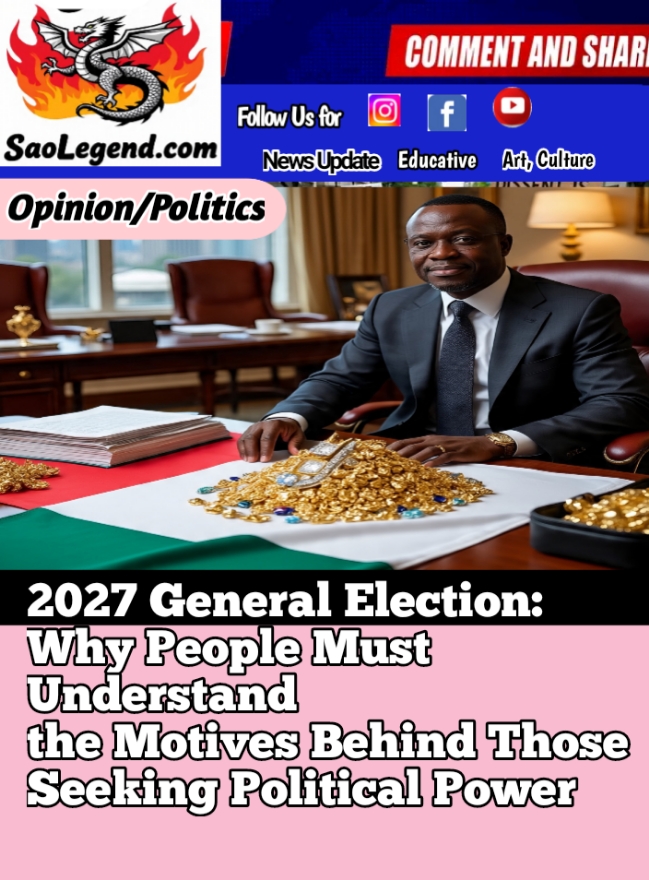
2027 General Election: Why People Must Understand the Motives Behind Those Seeking Political Power

2027 General Election: Why People Must Understand the Motives Behind Those Seeking Political Power

As the 2027 general election approaches, many citizens are asking an important question: What truly drives those seeking political office? While public service should ideally be rooted in a desire to improve lives and strengthen communities, the reality often appears more complex.

The Real Motivation Behind Political Ambition In many cases, political influence is closely tied to wealth, connections, and access to power.

For some candidates, entering politics is less about service and more about maintaining or expanding personal influence.

This helps explain why significant financial resources are often invested in securing positions of authority.

Many individuals have already revealed their intentions—through statements, actions, or past records. In one way or another, it has become clear that the primary motive for some is personal gain rather than a genuine commitment to good governance. In some cases, political ambition is driven by the desire to control financial opportunities and gain access to valuable national resources, rather than to manage them responsibly for the benefit of all.

Why Some Politicians Will Do Anything to Win

Several concerning patterns continue to shape the political landscape: Personal interests over public good: Decisions are sometimes made to benefit individuals rather than the wider population.

Power as protection: Political positions can be used to safeguard personal or business interests.

Neglect of citizens’ needs: Essential issues affecting everyday people may be overlooked or under-prioritized.

The Consequences for SocietyWhen leadership is driven by self-interest, the effects can be far-reaching:Increased hardship: Economic and social challenges persist or worsen for ordinary citizens.

Widening inequality: The gap between the powerful and the vulnerable continues to grow.Slowed national progress: Development stalls when leadership lacks genuine commitment to the people.

Breaking the CycleChange is possible—but it requires active participation from citizens:Demand accountability: Hold leaders responsible for their actions and promises.

Raise expectations: Do not settle for less than transparent and people-focused governance.

Support credible candidates: Choose leaders who demonstrate integrity and a commitment to public service.

Final Thoughts the 2027 general election presents an opportunity to reshape the future. By staying informed, engaged, and intentional about leadership choices, citizens can help build a system that prioritizes people over power.

Posted on Leave a comment

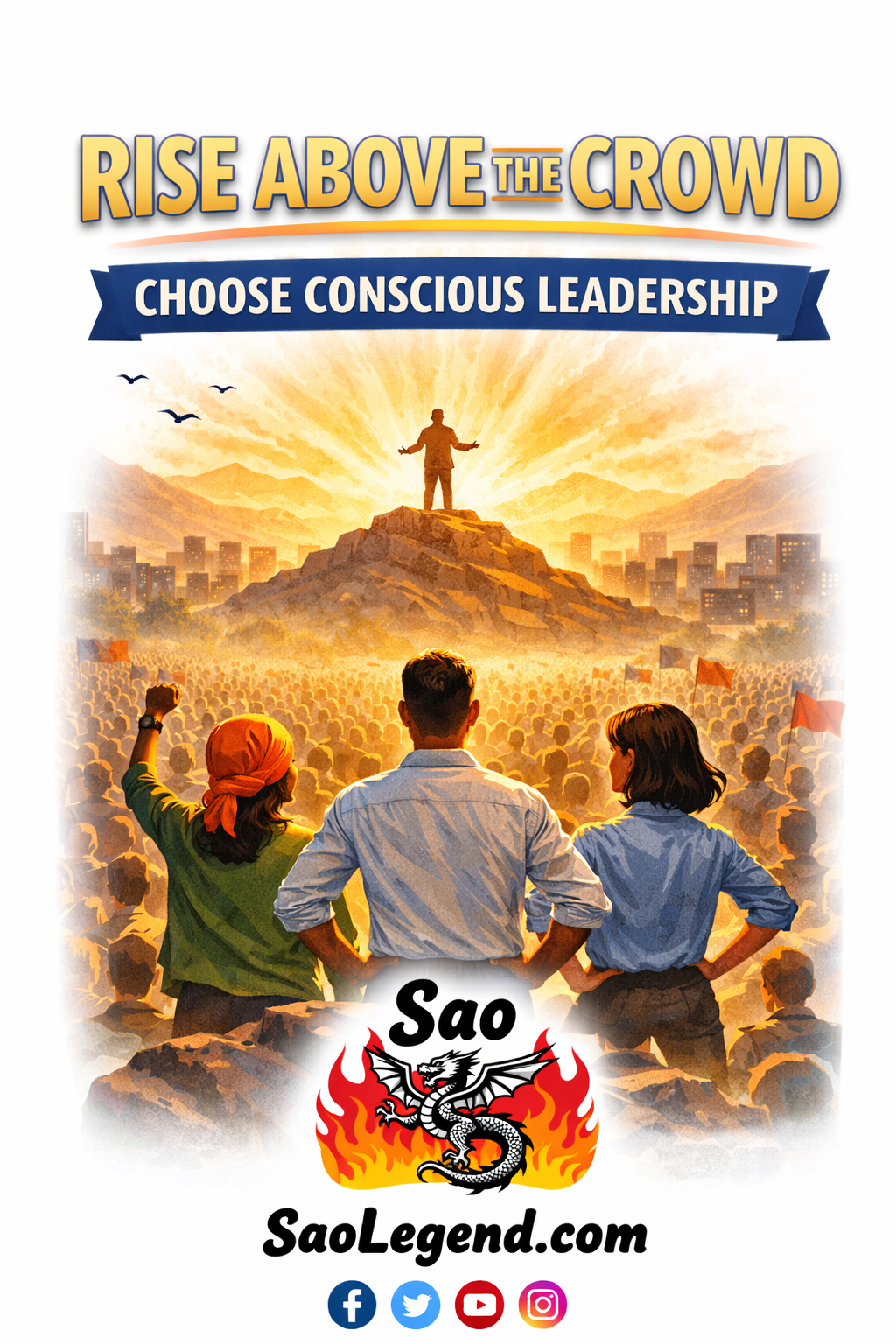
Rise Above the Crowd: Embracing Conscious Leadership for a Better Society

Rise Above the Crowd: Embracing Conscious Leadership for a Better Society


In every society, there is a clear difference between those who simply follow and those who consciously choose their future.

Being part of a crowd often means allowing others to dictate the narrative. But being truly human means thinking independently, taking responsibility, and choosing leaders who genuinely serve the people.


Crowds follow without questioning.

Conscious citizens think critically.
Crowds wait to be led. Conscious humans lead themselves.


The Power of Conscious Choice
Leadership shapes the destiny of any nation. When leadership fails, governance suffers, opportunities decline, and citizens bear the consequences. But when leadership is guided by integrity, accountability, and service, societies experience progress, stability, and shared prosperity.


The future we desire cannot be imposed upon us — it must be chosen deliberately.


Conscious leadership begins with conscious citizens who:
Question systems that do not serve the people
Demand accountability and transparency
Support leaders committed to public welfare over personal gain
Change does not happen by chance; it happens through informed and united action.


Breaking Free from Imposed Leadership
For too long, leadership has often been influenced by power, wealth, and connections rather than competence and genuine service.

It is time to move beyond passive acceptance and actively support leadership that prioritizes citizens’ well-being above all else.
A better system is possible — one built on fairness, inclusion, and equal opportunity for all.


Join the Movement for Systemic Change
The journey toward meaningful transformation starts with collective awareness and collaboration. The Apero Mekunu Advocacy Group calls on conscious individuals to unite and advocate for a government that works for everyone — without bias, favoritism, or political gatekeeping.
Together, we can build a formidable community of conscious citizens committed to lasting change.
Let us rise above the crowd.


Let us choose leadership that truly serves the people.


💪 The future belongs to those who choose it consciously.

Posted on Leave a comment

The Truth About Modern Politics: Power, Wealth, and the Struggle of the Masses

The Truth About Modern Politics: Power, Wealth, and the Struggle of the Masses

Politics is often presented as a noble calling — a path for individuals committed to serving their communities and building stronger nations. In theory, leadership exists to improve lives, promote justice, and drive national development.


However, for many citizens today, reality tells a different story.
Across many societies, political ambition increasingly appears driven not by genuine love for the people but by the pursuit of wealth, influence, connections, and power.

This explains why some political aspirants are willing to spend enormous personal resources just to secure public office.
When power becomes an investment rather than a responsibility, governance begins to lose its true purpose.


Why Some Politicians Will Stop at Nothing
When politics transforms into a gateway for personal advantage instead of public service, leadership priorities inevitably shift.

  1. Personal Gain Over Public Welfare

  2. Rather than focusing on national growth and social development, some leaders prioritize financial benefits, social status, and political control.
  3. Power Used for Self-Protection
    Political offices sometimes become shields designed to protect private interests, avoid accountability, and maintain influence instead of solving public problems.
  4. Neglect of Citizens’ Needs
    Critical issues affecting ordinary people — employment, education, healthcare, infrastructure, and economic stability — often receive less attention than political survival and elite competition.

  5. The Consequences for Society

  6. The effects of self-centered leadership are felt most deeply by the masses.
    Rising hardship and economic suffering
    Growing inequality and social injustice
    Slow national progress
    Weakening public trust in governance
    When leadership fails to serve, citizens bear the heaviest burden.
    Breaking the Cycle:
  7. What Citizens Can Do

  8. Real transformation does not begin only in government offices — it begins with informed, united, and active citizens.
    Demand accountability from elected leaders
    Insist on transparency and measurable performance
    Support leaders who prioritize people over power
    Participate actively in civic and democratic processes
    Form alliances within communities and responsibly select credible leaders among themselves
    A nation progresses when leadership reflects the genuine needs and aspirations of its people.