Posted on Leave a comment

Your LGA Is Receiving Millions Every Month — Here’s How to Track Your Local Government Allocation

The Money Is Moving—But Is Your Life Changing?
Something historic happened in Nigeria—and many people didn’t even notice.
In July 2024, the Supreme Court made a bold decision: Local Government Areas (LGAs) must receive their allocations directly. No more passing through state governments. No more bottlenecks.
By January 2026, it became reality.
Today, money flows straight from Abuja into your LGA account every single month—sometimes as much as ₦200 million to ₦280 million.
But here’s the uncomfortable truth:
Most communities still look the same.
The roads are still broken.
Primary health centers are still struggling.
Youth unemployment is still rising.
So the question is no longer “Is money coming?”
It is now: “Where is the money going?”

  1. A System That Finally Changed
    For years, LGAs operated like extensions of state governments.
    Funds meant for your community were first controlled at the state level. Salaries were paid, yes—but development? That often came last… or never.
    Chairmen had titles, but little power.
    Now, that has changed.
    Money is sent directly to each LGA.
    Chairmen now control their budgets.
    They can plan projects, award contracts, and act—without waiting.
    This reform was supposed to bring government closer to you.
    But has it?
  2. The Kind of Money We’re Talking About
    Let’s make this real.
    In Kwara State alone, monthly allocations in early 2026 looked like this:
    Ilorin West — ₦276M
    Ilorin East — ₦241M
    Asa — ₦198M
    Offa — ₦203M
    Edu — ₦224M
    Baruten — ₦251M
    That’s billions of naira every year flowing into local governments.
    Money that could:
    Fix abandoned health centers
    Repair dangerous roads
    Support struggling small businesses
    Create jobs for young people
    This isn’t small money.
    This is life-changing money—if used properly.
  3. Why It Still Feels Like Nothing Has Changed
    If the money is real, why isn’t the impact?
    Three hard truths:
    Debt is quietly eating the funds
    Many LGAs owe banks and contractors. Before the money even arrives, deductions are made. What’s left is sometimes just a fraction.
    Some LGAs are not ready for this power
    Managing hundreds of millions requires planning, expertise, and discipline. Not every LGA has that capacity yet.
    Silence from citizens
    This may be the biggest issue.
    When nobody asks questions, anything can happen.
    Projects can exist only on paper.
    Budgets can be padded.
    Funds can disappear quietly.
  4. You Don’t Need Power to Demand Accountability
    You don’t need to be in government to ask questions.
    You don’t need connections.
    You don’t even need money.
    You just need your phone—and the willingness to care.
    Here’s how to start:
    Check the numbers
    FAAC releases monthly allocation figures. A simple search shows how much your LGA received.
    Ask for the budget
    This is your right. Visit your LGA secretariat or contact your ward councilor.
    Follow the projects
    If millions were approved for boreholes or roads—go and see them. Are they real? Are they complete?
    Use the law
    The Freedom of Information Act gives you the right to request details. Public offices are expected to respond.
  5. Why This Moment Matters More Than You Think
    Nigeria is heading toward another election cycle.
    But this time, something is different.
    LGAs now control real money.
    Real influence.
    Real power.
    That means what happens at the local level will shape everything—from grassroots politics to national outcomes.
    If citizens stay silent, nothing changes.
    If citizens pay attention, everything changes.
  6. What You Can Do—Starting Today
    Don’t wait for activists or journalists.
    Start small:
    Find your ward councilor and save their contact
    Ask one simple question: “What projects has our LGA approved this year?”
    Share what you discover with others
    Awareness spreads. Pressure builds. Change begins.
    Bottom Line: The Money Is No Longer the Problem
    For the first time in a long time, the excuse is gone.
    The money is coming.
    The system has changed.
    The opportunity is here.
    What’s missing is accountability.
    And that doesn’t start in Abuja.
    It starts with you.
    Because if we don’t track it now…
    2027 will come—and we’ll still be asking the same questions.
    Call to Action:
    Which LGA should we investigate first? Drop the name. Let’s follow the money together.
#LGAutonomy #TrackYourLGA #GoodGovernance #Saolegen.com

Posted on 2 Comments

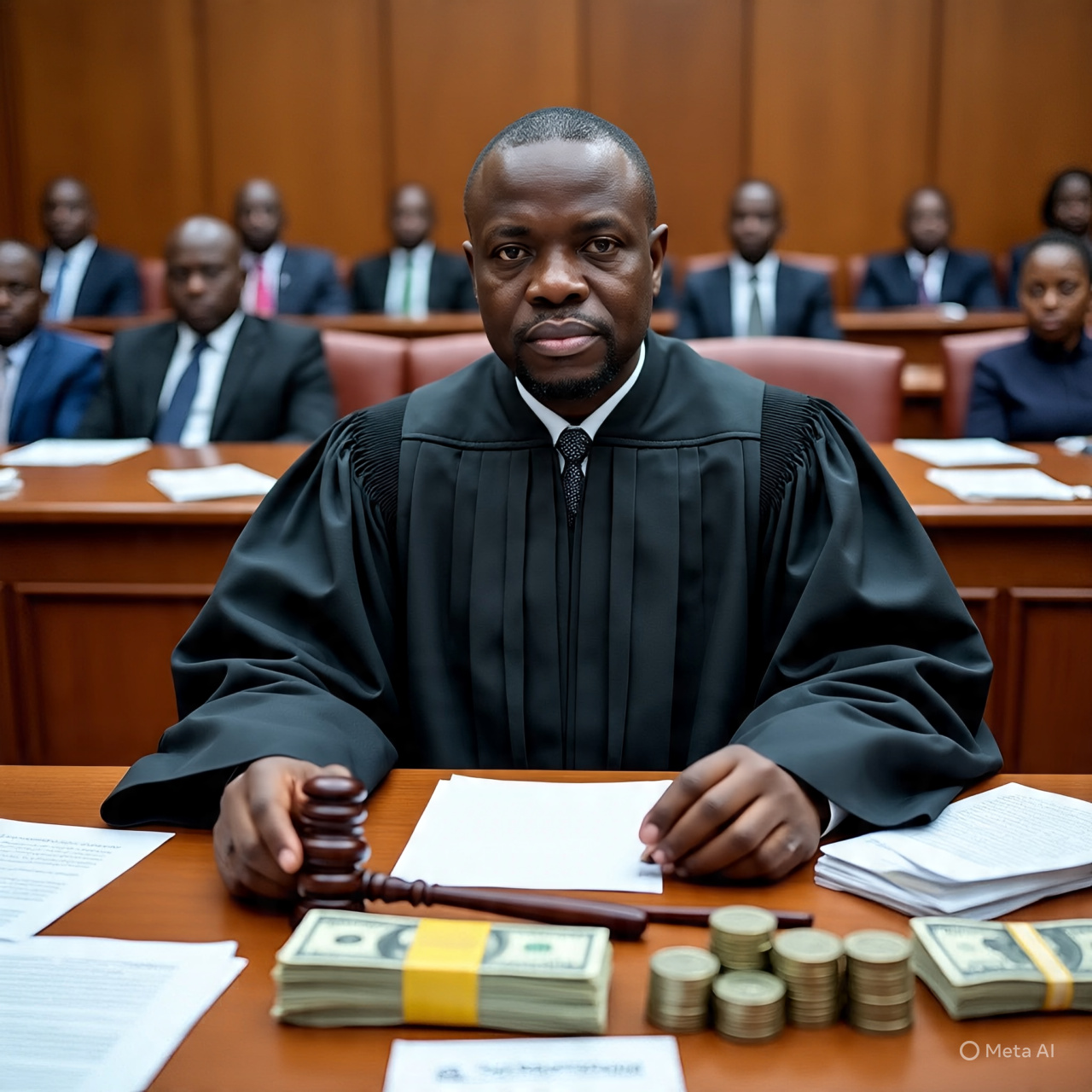
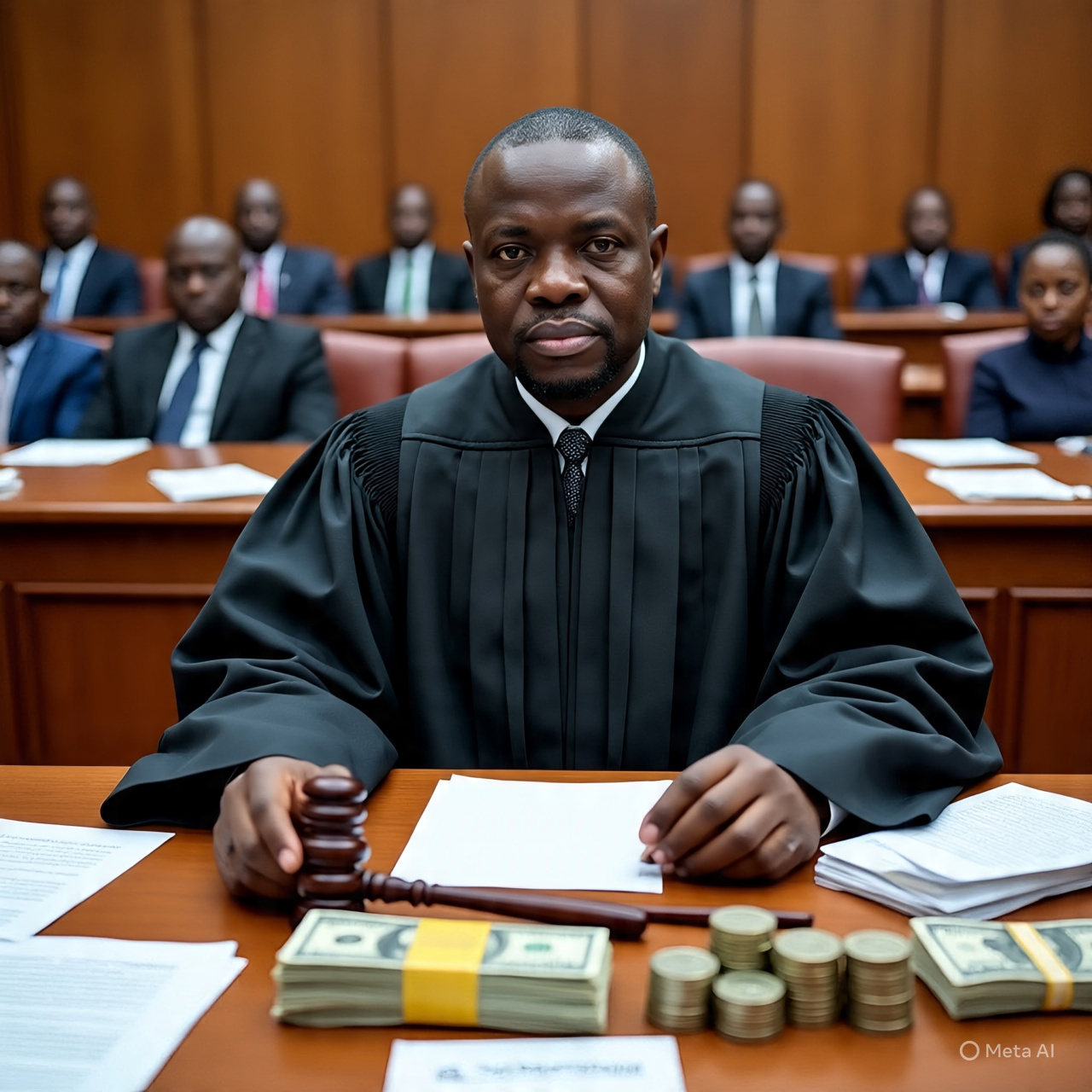
Corruption in the Judiciary: A Threat to Democracy and Economic Growth

Corruption in the judiciary is a big problem for Nigeria’s democracy. When the judiciary is corrupt, it undermines the rule of law and makes people lose trust in institutions. This creates uncertainty for businesses and deters investors from coming to Nigeria.

The Impact on Investment

The Nigerian government has spent a lot of money to attract investors, but it’s not working. Corruption in the judiciary is a major turn-off for investors. They want a stable and predictable business environment, but without a functional and impartial judiciary, they’re hesitant to invest.

The Burden on the Poor

Corruption in the judiciary also hurts the poor and vulnerable. The judicial system is supposed to help people, but it’s become a source of fear and oppression. The rich and powerful exploit this system to cheat and oppress the poor. They cheat the poor and then tell them to go to court, knowing the poor can’t afford justice and the judgment can be bought.

The Need for Reform

To fix this, Nigeria needs to reform its judiciary. This means:

  • Making the judiciary stronger and more independent
  • Improving transparency and accountability
  • Appointing judges based on merit, not connections

Conclusion

Corruption in the judiciary is a serious threat to Nigeria’s democracy and economy. To attract investors and promote growth, Nigeria needs to prioritize judicial reform. Only then can the judiciary serve as a true bastion of hope for the common man.

Posted on 1 Comment

Corruption in the Nigeria Judiciary: A Threat to Democracy and Economic Growth

Corruption in the judiciary is a big problem for Nigeria’s democracy. When the judiciary is corrupt, it undermines the rule of law and makes people lose trust in institutions. This creates uncertainty for businesses and deters investors from coming to Nigeria.

The Impact on Investment

The Nigerian government has spent a lot of money to attract investors, but it’s not working. Corruption in the judiciary is a major turn-off for investors. They want a stable and predictable business environment, but without a functional and impartial judiciary, they’re hesitant to invest.

The Burden on the Poor

Corruption in the judiciary also hurts the poor and vulnerable. The judicial system is supposed to help people, but it’s become a source of fear and oppression. The rich and powerful exploit this system to cheat and oppress the poor. They cheat the poor and then tell them to go to court, knowing the poor can’t afford justice and the judgment can be bought.

The Need for Reform

To fix this, Nigeria needs to reform its judiciary. This means:

– Making the judiciary stronger and more independent
– Improving transparency and accountability
– Appointing judges based on merit, not connections

Conclusion

Corruption in the judiciary is a serious threat to Nigeria’s democracy and economy. To attract investors and promote growth, Nigeria needs to prioritize judicial reform. Only then can the judiciary serve as a true bastion of hope for the common man.

Posted on 8 Comments

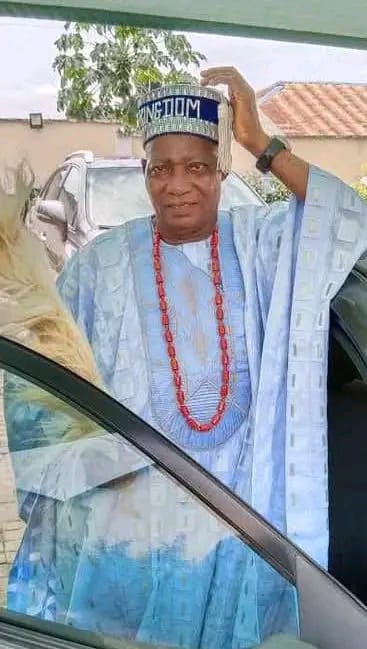
Kwara Scandal: King of Alabe, His Queen Caught With ₦120m Loot — Linked to Banditry; King of Babanla, Queens Also Arrested

Kwara Scandal: King of Alabe, His Queen Caught With ₦120m Loot — Linked to Banditry; King of Babanla, Queens Also Arrested

The shocking truth has finally come out in Kwara State. The King of Alabe and his Queen were arrested after security operatives stormed their palace. During the search, over ₦90 million in cash was discovered in the king’s residence, while investigators also traced over ₦30 million hidden in his wife’s account.

All the money has been linked directly to the kidnappings and banditry terrorizing the region. The royal couple was immediately taken into custody for further investigation.

Not only that another monarch, the King of Babanla, alongside his queens, was also arrested for allegedly having a hand in the same criminal activities.

For years, fingers have been pointed at Fulani herders for every crime, but this shocking revelation has now exposed how some so-called “community leaders” are the real faces behind the banditry bleeding the land

Posted on Leave a comment

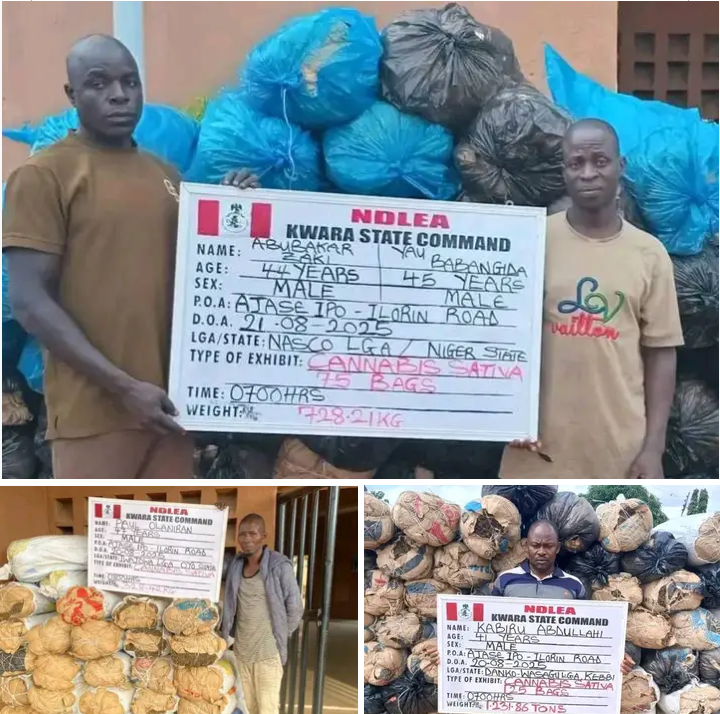
NDLEA Seizes Over 1.2 Tons of Cannabis on Ajase-Ipo/Ilorin Highway

NDLEA Seizes Over 1.2 Tons of Cannabis on Ajase-Ipo/Ilorin Highway

The National Drug Law Enforcement Agency (NDLEA), Kwara State Command, has recorded a major breakthrough with the arrest and seizure of 1.231 tons, 328.42kg, and 728.21kg of cannabis sativa along the Ajase-Ipo/Ilorin Highway.

The operation is part of the ongoing collaboration between the NDLEA and the Kwara State Government to curb crime and criminality in the state. According to the agency, most bandits and kidnappers rely heavily on drugs to carry out their operations, hence the intensified clampdown on illicit substances

Credit: SA Drug Abuse , Protection a d Control to Kwara Gov , Hon Mikael Olamilekan

Posted on Leave a comment

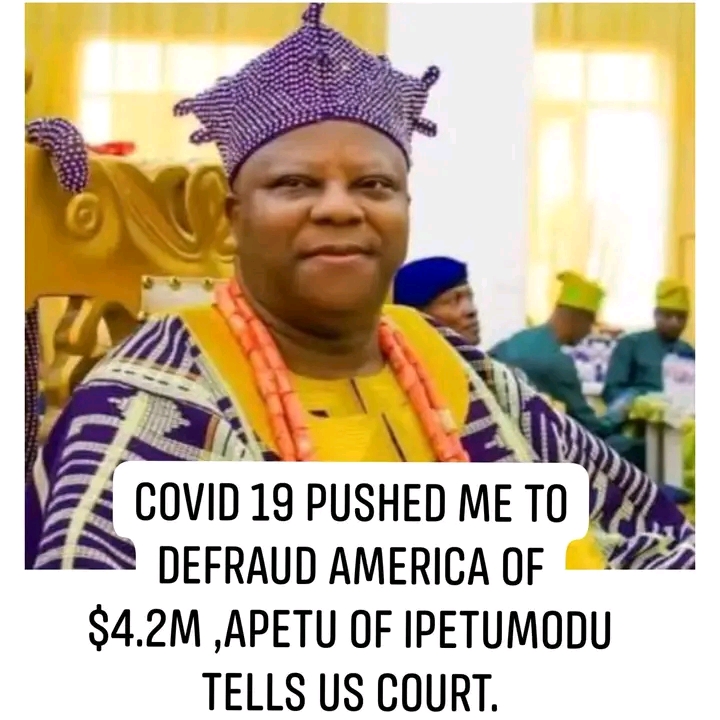
COVID-19 Pandemic Drove Me to $4.2m Fraud, Osun Monarch Apetu of Ipetumodu Tells US Court”

“COVID-19 Pandemic Drove Me to $4.2m Fraud, Osun Monarch Apetu of Ipetumodu Tells US Court”

The Apetu of Ipetumodu, Oba Joseph Oloyede, has pleaded guilty to a $4.2 million COVID-19 relief fraud scandal in the United States. According to court filings, Oloyede used six companies to file fraudulent loan applications under the US Paycheck Protection Programme and Economic Injury Disaster Loan schemes.

Oloyede’s lawyers argue that the COVID-19 pandemic was a significant factor that led him to commit the crime, citing concerns about pre-existing health problems potentially becoming fatal if he contracted the virus. They also highlighted his clean record and contributions to society, working as an adjunct professor and banker before returning to Nigeria to become the Apetu of Ipetumodu in July 2019.¹

Key Details of the Case:

– Amount Involved: $4.2 million in COVID-19 relief funds
– Charges: Conspiracy to commit wire fraud, wire fraud, conspiracy to defraud, money laundering, and related offenses
– Plea: Guilty plea entered by Oloyede
– Sentence: Scheduled for August 26, 2025
– Consequences:* Faces possible prison sentence and has already had a Medina County property in Ohio and over $96,000 seized from one of his company’s bank accounts

Oloyede’s prolonged absence from his kingdom in Osun State, Nigeria, has raised concerns about succession and the vacuum created by his ordeal.