Posted on Leave a comment

Ooni Dismisses 48-hour Ultimatum, Describes Alafain as COMEDIAN

Ooni Dismisses 48-hour Ultimatum, Describes Alafain as COMEDIAN

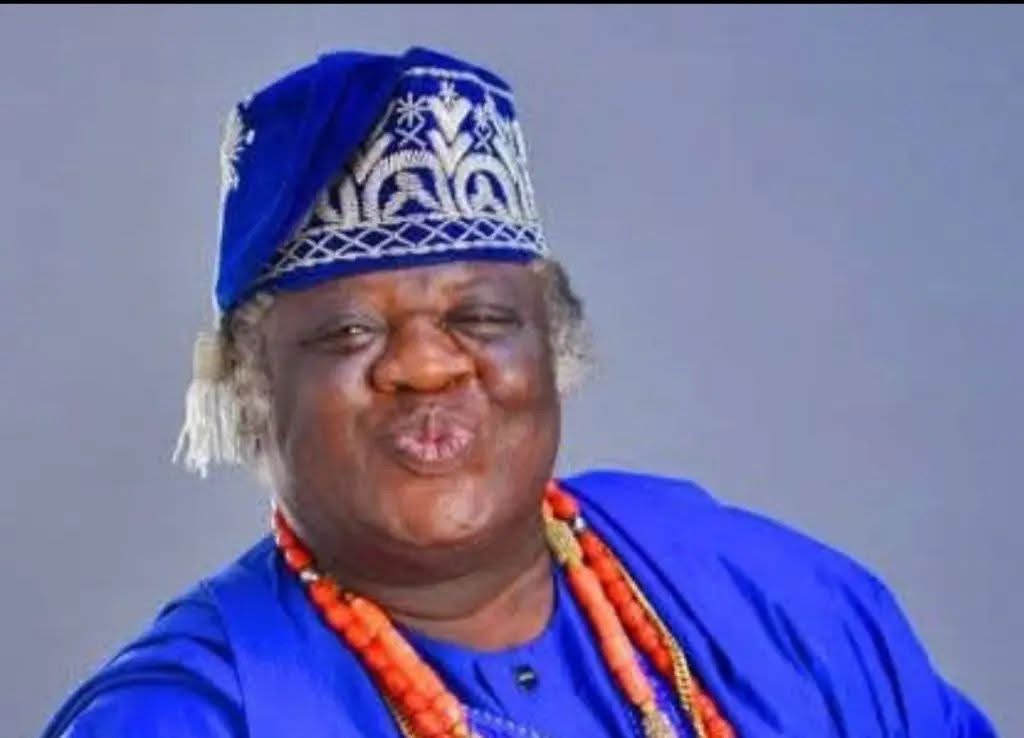
Ooni of Ife, Oba Enitan Adeyeye Ogunwusi, has refused to respond to the 48-hour ultimatum issued by the Alaafin of Oyo, Oba Abimbola Akeem Owoade, over the controversial ‘Okanlomo of Yorubaland’ chieftaincy title he recently conferred on Ibadan-based businessman, Engineer Dotun Sanusi, aka Ilaji.

Speaking on Tuesday through his spokesperson, Moses Olafare, the Ooni dismissed the threat as “empty” and unworthy of an official response.

In a Facebook post, Olafare disclosed that Oba Ogunwusi personally directed him to ignore the Alaafin’s warning, insisting that the matter had already been subjected to the “court of public opinion.”

Olafare described the Alaafin as a “comedian”, likening him to the late popular comedian, Moses Olaiya, better known by his stage name ‘Baba Sala’.

“My Principal has directed me against issuing a Press Release on the Empty Threat of the Alawada Babasala,” he said.

“I beg to disappoint you gentlemen of the press. We cannot dignify the undignifyable with an official response. We leave the matter to be handled in the public court of opinion has it is already being treated.

“Let’s rather focus on narratives that unite us rather than the ones capable of dividing us.

“No Press Release pls. 48 Hours My Foot!!!”

The Alaafin had on Monday described the Ooni’s action as an “affront” and a direct challenge to his authority after the conferment of the “Okanlomo of Yorubaland” title on Sanusi.

In a statement signed by his Director of Media and Publicity, Bode Durojaiye, the Oyo monarch declared that only the Alaafin holds the exclusive right to bestow Yoruba-wide titles, citing a Supreme Court ruling as precedent.

“The conferment of a Yoruba-wide chieftaincy title by the Ooni is not only ultra vires but an insult to the Titan of Yorubaland. The Supreme Court itself has ruled that only the Alaafin has such authority. Yet, the Ooni continues to act above the law, trampling on both tradition and the courts,” the statement read.

The Alaafin warned that failure by the Ooni to withdraw the title within 48 hours would attract “consequences.”

This is not the first time both stools have clashed over chieftaincy matters. In 1991, the late Alaafin, Oba Lamidi Adeyemi, accused the then Ooni, Oba Okunade Sijuade, of desecrating tradition after he conferred the “Akinrogun of Yorubaland” title on Chief Tom Ikimi, then National Chairman of the National Republican Convention.

Posted on 8 Comments

COAS RESHUFFLES NIGERIAN ARMY HIGH COMMAND, APPOINTS NEW PSOs, GOCs, OTHER COMMANDERS

COAS RESHUFFLES NIGERIAN ARMY HIGH COMMAND, APPOINTS NEW PSOs, GOCs, OTHER Commander

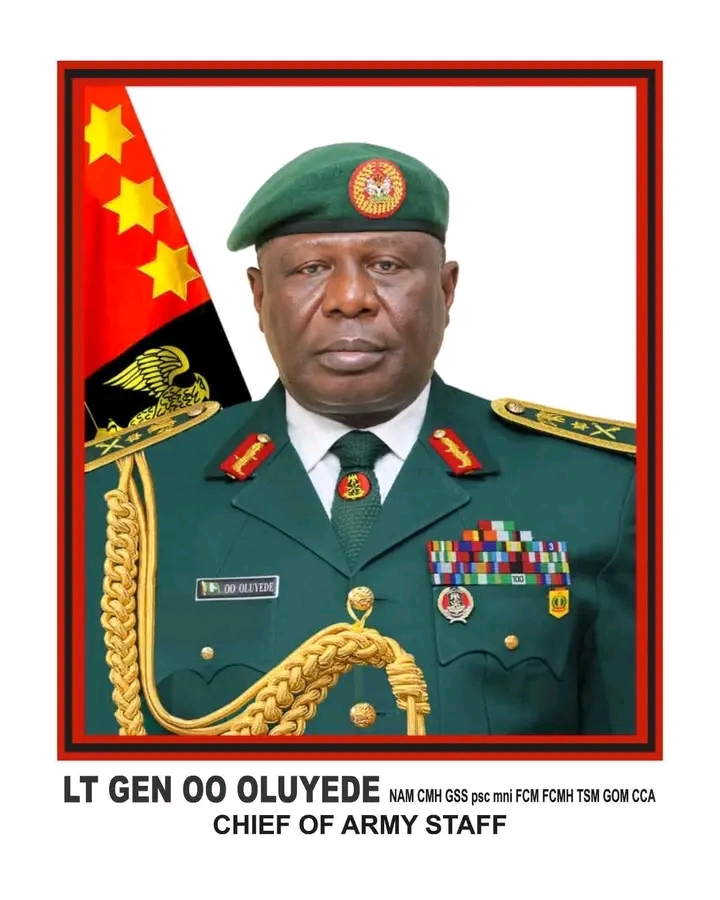
in a strategic move to strengthen leadership and reposition the Nigerian Army (NA) for greater operational effectiveness, the Chief of Army Staff (COAS), Lieutenant General Olufemi Oluyede, has approved the posting and appointment of some senior officers to key command, instructional, and staff positions across various formations and units of the Nigerian Army.

The redeployment encompasses few Principal Staff Officers (PSOs) at the Army Headquarters (AHQ), two General Officers Commanding (GOCs), Corps Commanders, Commandants of training institutions, and Brigade Commanders, among other appointments critical to the Nigerian Army’s operational and administrative structure.

Some of the senior officers appointed as Principal Staff Officers at the Army Headquarters include, Maj Gen AA Adeyinka who was posted from Nigerian Army Corp of Supply and Transport (NACST) to the Department of Army Logistics and appointed Chief of Logistics (Army), Maj Gen AA Adekeye posted from AHQ Department of Standard and Evaluation to AHQ Department of Personnel Management as Chief of Personnel Management (Army), Maj Gen TB Ugiagbe from Headquarters Nigerian Army Intelligence Corp to Army Headquarters Department of Standard and Evaluation and appointed Chief of Standard and Evaluation.

Others are Maj Gen AA Idris from Defence Headquarters to Nigerian Army Intelligence Corps and appointed Chief of Military Intelligence (Army), Maj Gen MO Erebulu from the Department of Special Services and Programmes to Nigerian Army Corps of Military Police and appointed Provost Marshall (Army). Furthermore, Maj Gen EA Anaryu from Defence Space Administration have been redeployed and appointed Corps Commander Supply and Transport while Maj Gen SA Akesode from Office of the National Security Adviser to African Union Verification Mission in Tigray Region, Ethiopia as Head of Mission, while Maj Gen JE Osifo from Nigerian Army School of Finance and Accounts, to Nigerian Army Finance Corporation as Director General.

Senior officers appointed as General Officers Commanding (GOCs) are Major General ASM Wase from Department of Training to Headquarters 1 Division/Sector 1 Joint Task Force North West Operation FANSAN YAMMA (OPFY) as GOC 1 Division/Commander Sector 1, Maj Gen CR Nnebeife is also appointed as the General Officer Commanding 2 Division/ Sector 3 Joint Task Force OPFY.Some of the senior officers appointed as Commandants of NA Training Institutions are,

Maj Gen MO Ihanuwaze from Nigerian Army Finance Insurance Corporation to Nigerian Army Finance School and Administration and appointed Commandant, Maj Gen KO Osemwegie now the commandant Army Signal School, Maj Gen AJ Aliyu also appointed commandant Nigerian Army Ordinance School, while Maj Gen AC Adetoba was posted from the Department of Transformation and Innovation to Nigerian Army College of Logistics and Management as commandant amongst others. Other senior officers also affected in the redeployment are Brig Gen M Jimoh from HQ Operation FANSAN YAMMA to HQ 1 Brigade as Commander, Brig Gen NE Okoloagu from Army War College Nigeria to 2 Brigade as Commander as well as Brig Gen AA Bello from Nigerian Army School of Infantry to 6 Division Garrison/Sector 3 JTF South South Operation DELTA SAFE as Commander.

The Chief of Army Staff has charged the newly appointed senior officers to redouble their effort and commitment to duty in ensuring the sustenance of the ongoing onslaught against terrorism, insurgency and other threats to national security, as they assume their new appointments.

He also reiterates his commitment to welfare of troops as paramount to operational successes. APPOLONIA ANELE Lieutenant ColonelActing Director Army Public Relations 17 August 2025

Posted on Leave a comment

Justina Azuka has made history by becoming the first-ever candidate of the African Democratic Congress (ADC) to win an election in Nigeria.

Justina Azuka has made history by becoming the first-ever candidate of the African Democratic Congress (ADC) to win an election in Nigeria.

She was elected as the representative for Onitsha North 1 Constituency in Anambra State. This victory marks a significant breakthrough for the ADC, a party that has struggled to gain foothold in mainstream electoral contests.Azuka’s win is not only a milestone for the ADC but also a symbol of growing desire among Nigerians for a third force in politics.

Her campaign team praised the constituents for their support and peaceful participation, noting that the massive turnout reflected the resilience of the people’s democratic spirit.Some key highlights of Azuka’s victory include:

Historic Win: Azuka’s election marks the first time the ADC has secured a win in Nigeria, making it a landmark moment for the party.- Women’s Empowerment: As a female candidate, Azuka’s victory is seen as a step forward for gender representation in politics, inspiring other women to take part in electoral processes.

Alternative Voice: The ADC’s win in Onitsha North 1 Constituency signals a potential shift in the country’s political landscape, with voters increasingly willing to experiment beyond established party lines.

Grassroots Support: Azuka’s campaign received support from former Anambra Governor Peter Obi, whose endorsement was seen as instrumental in boosting voter confidence.

However, it’s worth noting that APGA’s Ifeoma Azikiwe ultimately won the Onitsha North 1 State Constituency seat, defeating Justina Azuka in the polls.

Posted on Leave a comment

13 Men Convicted for Open Defecation and Urination in Lagos, Sentenced to 3 Months Imprisonment

13 Men Convicted for Open Defecation and Urination in Lagos, Sentenced to 3 Months Imprisonment

A Magistrate court in Bolade Oshodi, Lagos, has convicted 13 individuals for engaging in open defecation and urination at Agege and Alimosho areas. Each convict was sentenced to three months imprisonment after pleading guilty to the charges.

The convicts include:

  • Friday Samuel, 49 years
  • Sulaimon Olalekan, 54 years
  • Idris Jimoh, 45 years
  • Alao Babatunde, 54 years
  • Chinonso Dominic, 21 years
  • Akeem Suraju, 42 years
  • Lawal Idris, 29 years
  • Oluwatobi Adebayo, 30 years
  • Ismaila Adeyemi, 35 years
  • Murtala Jamilu, 20 years
  • Samson Memudia, 54 years
  • Jamilu Abdullahi, 29 years
  • Ganiyu Akeem, 55 years

This development serves as a warning to others, emphasizing the importance of proper waste disposal and sanitation in the state.

Posted on 1 Comment

The Federal Government of Nigeria has indeed confirmed the arrest of two top commanders of Jama’atu Ansarul Muslimina fi-Biladis Sudan (Ansaru), an Al-Qaeda affiliate in Nigeria. The arrested individuals are:

The Federal Government of Nigeria has indeed confirmed the arrest of two top commanders of Jama’atu Ansarul Muslimina fi-Biladis Sudan (Ansaru), an Al-Qaeda affiliate in Nigeria. The arrested individuals are:

Mahmud Muhammad Usman (Abu Bara’a): Identified as the self-styled Emir of Ansaru, Abu Bara’a was the coordinator of the group’s sleeper cells across Nigeria and masterminded several high-profile kidnappings and armed robberies to finance extremist activities.

Mahmud al-Nigeri (Mallam Mamuda): Deputy commander of Ansaru, Mallam Mamuda led the notorious “Mahmudawa” faction operating around Kainji National Park and is believed to have received training in Libya under foreign jihadist instructors.

The arrests were made between May and July 2025, following a months-long intelligence-led operation by Nigeria’s security and intelligence agencies. According to National Security Adviser Nuhu Ribadu, the capture of these two Ansaru leaders has effectively dismantled the group’s central command and paves the way for its complete annihilation.

Some of the notable attacks attributed to Ansaru include:

  • 2022 Kuje Prison Break: Ansaru claimed responsibility for the attack on Kuje prison in Abuja, which resulted in the escape of several high-profile inmates.
  • Abduction of French Engineer Francis Collomp: In 2013, Ansaru kidnapped French engineer Francis Collomp in Katsina.
  • Kidnapping of Emir of Wawa: The group was also behind the abduction of the Emir of Wawa.
  • Attack on Niger Uranium Facility: Ansaru claimed responsibility for the deadly attack on a uranium facility in the 2022 Kuje Prison Break.

The Federal Government has stated that the captured materials and digital evidence are undergoing forensic analysis to provide further intelligence on the group’s networks in Nigeria and the Sahel region.

Posted on 1 Comment

Veteran Nollywood Actor Chief Kanran Passes Away at 72

Veteran Nollywood Actor Chief Kanran Passes Away at 72

Chief Kanran, whose real name was Olusegun Akinremi, was a household name in the Yoruba film industry, renowned for his unique style, humor, and commanding performances in numerous stage plays and movies over several decades. He died on Friday morning, at the age of 72.

Early Life and Career

Chief Kanran began his acting career as a child, featuring in stage dramas during Easter and Christmas celebrations. He trained at the Centre for Cultural Studies (now Department of Creative Arts) at the University of Lagos and later obtained a diploma in directing, acting, and film production from Obafemi Awolowo University.

Notable Works

Some of his notable works include:
– Langbodo, Nigeria’s official drama entry for FESTAC ’77
– Ewe Orun
– Aiye
– Efunsetan Aniwura
– Agbarin
– Bata Wahala
– Mirror in the Sun, marking his transition from stage to television

Legacy

Chief Kanran was a versatile crossover actor who appeared in numerous Yoruba stage productions, television shows, and films. He was known for his commanding performances, sharp wit, and magnetic stage presence. His legacy extends beyond his on-screen work, as he mentored many younger actors and contributed significantly to the growth of the Yoruba film industry.

Posted on 1 Comment

I have bought my Burial Site, wrote my will

I have bought my Burial Site, wrote my will

Actress Kemi Afolabi has revealed the harrowing ordeal she faced while battling lupus, a chronic autoimmune disease in which the body’s immune system attacks its own organs and tissues.In an interview on Doyin Kukoyi TV, Afolabi recounted how, at the peak of her health crisis, she was unable to eat or drink, relied on oxygen to breathe, and even prepared for the worst by purchasing a burial site and writing her will.She credited her survival to God’s grace and the unwavering support of her family, friends, and colleagues.

Afolabi said her struggle began with severe joint pain “more intense than childbirth,” which led to multiple misdiagnoses at Lagos University Teaching Hospital (LUTH). It was only after seeking medical care abroad that she finally received the correct diagnosis.She said, “When I was down with Lupus, I thought the end had come. I couldn’t eat or drink. I was using oxygen to breathe. I already bought where I would be buried, and I wrote my Will, but God said it was not yet time to go. I survived with the power of God, the support of my family, friends and colleagues. Lupus has killed a lot of people. I had never heard of it till I experienced it. It is an autoimmune disease that will make your body’s system work against itself. The organs will not function properly

“When it first started with me, all the joints in my body gave me intense pain. Childbirth pain is a little compared to the pain of Lupus. They were diagnosing different diseases for me at LUTH until I travelled out and was told it’s Lupus. Lupus has no cure, I am still managing it with medications. I travel abroad every now and then because of it. I get an injection every day. I can’t be under the light for a long time like I used to when acting. People were saying so many things, but the one that got to me most was when someone said I have been used spiritually.”

Posted on Leave a comment

In 1975, a quiet, brilliant man named Steve Wozniak was working as a calculator engineer at Hewlett-Packard (HP).

In 1975, a quiet, brilliant man named Steve Wozniak was working as a calculator engineer at Hewlett-Packard (HP).

Wozniak wasn’t just another employee.

He was grateful.

HP had given him his start.

Trained him. Paid his bills.

He believed in the company.

But Wozniak had a vision that was bigger than calculators.

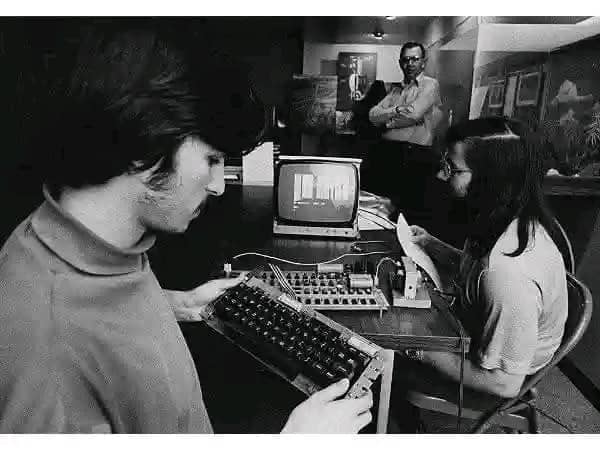
Working late nights at HP, he built something radical.

a computer small enough and cheap enough for ordinary people to own.

It was called the Apple I. Inspired by his friend a one Steve Jobs

His dream? To put computing power in the hands of everyday people.

And because he was a loyal employee

when he had built something radical
something that could change the world

He offered it to HP the company that gave him life.

But when he pitched his ideas to HP,
they laughed.

“A toy.”
“Useless.”
“Why would the average person need a computer?”

HP executives dismissed him not once… not twice… but five times.

After the fifth rejection, his close friend, Steve Jobs, had enough.

“Let’s do it ourselves,” Jobs said.

That moment was the birth of Apple and the deàth of HP’s chance to lead a trillion-dollar industry.

So Steve Wozniak quit his job at HP to start Apple with his friend, Steve Jobs.

Before Apple, computers were for corporations and universities.

Big.
Expensive.
Complicated.

They filled rooms.
Cost tens of thousands of dollars.
Only experts could use them.

Regular people couldn’t touch them
let alone own one.

But  Steve Wozniak dream.
A dream to make computers personal.
To bring them into people’s hands and homes.

Kept Him awake

By day, he worked at Hewlett-Packard (HP) as an engineer.

By night, he soldered and sketched in secret.

Building something incredible:

A compact, affordable machine called the Apple
I  on a wooden board.

His friend Steve Jobs saw it and saw the future.

Jobs wasn’t the engineer.
He was the energy.
The salesman.
The believer.

He didn’t just see a circuit board.
He saw a product.
He saw possibility.

Something HP executives couldn’t see

So he made a bold pitch:

“Let’s sell it.

Let’s start a company. Let’s call it… Apple.”

Why Apple?

Because it was simple.
Jobs had spent time on a fruit farm.

And because, in his words, it sounded “fun, spirited, and not intimidating.”

So, the two of them sold what little they had

Wozniak sold his calculator,
Jobs sold his Volkswagen van, and they raised $1,300.

And got to work.

They assembled the first 50 computers made by Steve Wozniak in the Jobs family garage.

Jobs the salesman walked into a local computer store

The Byte Shop and convinced them to buy all 50…

before they were even built.

And they bought all. 

That was the shift:

A passion project became a product.
A product became a company.
Apple Computer Inc. was born on April 1, 1976.

Suddenly, a hobby became a hustle.

But they weren’t done.

Wozniak built the Apple II a sleek, plastic-cased machine with color graphics, a keyboard, and expandable storage.

This wasn’t just for hobbyists anymore.

It was for schools, homes, offices, kids.

The Apple II didn’t just sell.

It exploded.

And in 1980, Apple went public at $1.2 billion.

Meanwhile, HP, the company that rejected

Wozniak five times, was still building calculators and hardware peripherals.

They didn’t just miss a product.

They missed the personal computer revolution.

They missed the trillion-dollar wave that reshaped the planet.

What can we learn from Steve Wozniak, Steve Jobs, and HP?

When you have a big idea, don’t wait for approval  especially from those who cannot see the future you envision.

Steve Wozniak had a dream. Steve Jobs had the guts.

HP had the chance.

But they didn’t just reject the Apple I.

They rejected the future not once, but five times.

And where did that leave them?

Today, HP is still building hardware, printers, computers, parts with an estimated market cap of $28 billion.

Meanwhile, Apple is shaping culture, designing the future, and commanding a market cap of over $3 trillion.

All because two friends chose to believe in their dream rather than settle for permission.

Here are the lessons:

– Don’t beg for vision from the blind.

– If they reject your idea, it may not mean it’s
bad it may mean it’s too early for them.

– Visionaries don’t wait. They build.

– Sometimes, rejection is just redirection
to something greater.

– Never underestimate a garage, a dream, and two friends with conviction.

Somewhere right now, someone is being told “no.” I hope they read this story and push on..

#TechStory
#Apple
#HP
#SteveWozniak
#SteveJobs

Ifeanyi Christopher ©️

Posted on 1 Comment

Peller Accuses Asisat Oshoala, Super Falcons of Ignoring Him After $100k Bonus

Popular Nigerian TikToker, Habeeb Okikiola, popularly known as Peller, has called out Super Falcons star Asisat Oshoala and her teammates for allegedly ignoring his messages following their recent financial reward from the presidency.

In a viral video, Peller claimed the players stopped responding to him after receiving $100,000 each for their victory at the Women’s Africa Cup of Nations (WAFCON).

“I text Asisat since last two weeks, she never reply me. Them don give them $100k, all the Nigerian girls footballers didn’t reply me,” he lamented.

The content creator suggested the players’ attitude had changed because of their newfound wealth, describing it as a sudden shift in personality.

“If the $100k finish, if they text me I’ll not reply them. $100,000 is making you feel like angel that is flying,” Peller added in a mix of amusement and frustration.

Posted on 1 Comment

How Colonial Powers Exploited Nigeria and Other African Countries


Here is how colonial powers, including America, took advantage of Nigeria and other African countries.

Economic Exploitation
Colonial powers exploited Africa’s natural resources, imposing their own economic systems and policies that benefited them at the expense of local populations. This led to
– Resource extraction: Colonial powers extracted resources such as palm oil, groundnuts, cocoa, cotton, and palm kernel from Africa, often using forced labor.
– Economic dependency: African countries were forced to rely on their colonial masters for economic support, creating a cycle of dependency that persists today.

Cultural Imperialism
Colonial powers imposed their own culture, language, and beliefs on African countries, suppressing local traditions and identities:
– Loss of cultural heritage: The imposition of foreign cultures led to the erosion of traditional African cultures and identities.
– Language barrier: The use of European languages as official languages hindered communication and development in African countries.

Political Interference
Colonial powers interfered in the governance of African countries, often supporting leaders who served their interests:
– Puppet governments: Colonial powers installed puppet governments that served their interests, rather than those of the local population.
– Undermining sovereignty: The interference in governance undermined the sovereignty of African countries, making it challenging for them to assert their own development agendas.

Legacy of Colonialism
The legacy of colonialism continues to impact Africa today, with many countries still struggling to overcome the economic, cultural, and political challenges imposed by colonial powers.³

To overcome these challenges, African leaders can focus on:
– Prioritizing national interests: Developing domestic industries and economies that benefit the local population.
– Promoting transparency and accountability: Ensuring good governance and accountability to the people.
– Investing in human capital and infrastructure: Developing the skills and abilities of the population, and investing in infrastructure that supports economic growth and development.
– Fostering regional cooperation and integration: Collaborating with other African countries to strengthen economic ties and promote peace and stability.
– Resisting external interference: Asserting sovereignty and protecting national interests from external influence.