Posted on Leave a comment

The Complex Relationship Between America and African Countries

US-Africa Relations: A Complex Dynamic

The relationship between the US and African countries is complex and often contentious. The US aims to guide African nations, but its actions have significant consequences.

Understanding US Interference

The US has faced criticism for interfering in African governance. By supporting leaders who prioritize American interests, the US can inadvertently empower exploitative leaders. This can lead to poverty and instability in African nations. Moreover, US influence can create dependencies that hinder growth and self-sufficiency.

The Impact of US Influence

US actions can have far-reaching consequences for African economies. For instance, the devaluation of African currencies and undermining of local economies can stifle growth. Furthermore, external interference has consistently frustrated and undermined African economies, perpetuating poverty and inequality.

The Need for Self-Determination

African countries must assert their sovereignty and prioritize their own development agendas. By recognizing the complexities of US-Africa relations, African nations can work towards a more prosperous future. To achieve this, African leaders can take several steps.

Breaking the Cycle of Dependency

  • Prioritize national interests over external influences.
  • Develop homegrown economic policies that benefit African countries and people.
  • Promote transparency and accountability in governance.
  • Invest in human capital and infrastructure development.
  • Foster regional cooperation and integration.
  • Resist external interference and assert sovereignty.
  • Develop strategic partnerships that benefit African nations.
  • Encourage citizen participation in decision-making processes.

Empowering African Nations through Diaspora Engagement

Some African countries are strengthening their relationships with diaspora communities. Examples include Ghana, Nigeria, South Africa, Kenya, Gabon, Cape Verde, and Zimbabwe. By working together, African nations can unlock their true potential for growth, prosperity, and self-determination.

I made the following changes to improve the SEO score:

  1. Added subheadings to structure the content and make it easier to scan.
  2. Shortened sentence length to improve readability.
  3. Used transition words to connect ideas and improve flow.
  4. Simplified vocabulary to suit a larger audience.

These changes should help improve the SEO score and make the content more engaging and readable.
Posted on Leave a comment

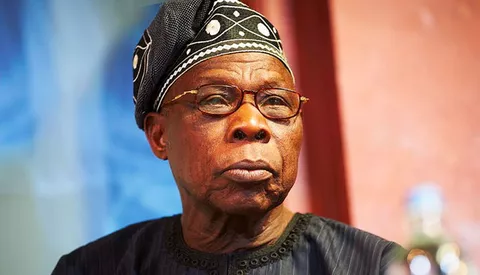
EFCC Raids Obasanjo Hotel Arrest some

The Economic and Financial Crimes Commission (EFCC) raided the Green Legacy Hotel within the Olusegun Obasanjo Presidential Library in Abeokuta, Ogun State, on Sunday, August 10, 2025. The operation resulted in the arrest of several youths suspected of internet fraud. Here’s what we know so far:
Number of Arrests: The EFCC has confirmed arresting 93 suspected internet fraudsters in Ogun State, but the exact number arrested at the Obasanjo Library hotel is not specified.
Items Seized: EFCC operatives reportedly seized over 20 luxury cars and other valuable items from the suspects.
Operation Details: The raid occurred during a pool party at the hotel in the early hours of Sunday. Eyewitnesses described scenes of chaos as guests fled in panic amid the sound of gunfire.
EFCC Response: The EFCC spokesperson, Dele Oyewale, promised to confirm and provide further information on the operation, while the Managing Director of OOPL Ventures, Vitalis Ortese, confirmed the incident but withheld details.

This raid is part of the EFCC’s ongoing efforts to clamp down on cybercrime across Nigeria.

Posted on Leave a comment

You Go to School to Be Educated, Not to Be a Job Seeker

diagnosed car with laptop

You Go to School to Be Educated, Not to Be a Job Seeker

You go to school to be educated, not to be a job seeker. The purpose of education is often misunderstood. Many people believe that the sole purpose of going to school is to get a job. However, this perspective is limiting and narrow-minded. Education is about building yourself, gaining knowledge, and developing skills that will benefit you throughout your life.

Building yourself, not just a certificate
When you focus solely on getting a certificate or degree, you miss out on the opportunity to truly learn and grow. Education is not just about passing exams or getting good grades; it’s about developing critical thinking, problem-solving, and communication skills. By focusing on building yourself, you’ll gain a deeper understanding of the world and develop a sense of purpose. You’ll learn to think creatively, approach problems from different angles, and develop a growth mindset.

The benefits of a holistic education
A holistic education that focuses on building yourself has numerous benefits. You’ll:

  • Develop a love for learning that will stay with you throughout your life
  • Gain a deeper understanding of the world and your place in it
  • Develop critical thinking and problem-solving skills
  • Improve your communication and collaboration skills
  • Become a more well-rounded and informed individual

There is nothing bad if you get employment – that means you’re lucky. But still, it doesn’t stop you from discovering yourself. Let your employer know the value you can bring to your role. Your education and skills can benefit your workplace in many ways, and it’s essential to showcase your abilities and contribute to the organization’s growth.

It’s better to be employed based on your skills than your certificate. Skills are what set you apart and make you valuable in the workplace. While a certificate can get you in the door, it’s your skills and abilities that will keep you there and help you grow.

Conclusion
You go to school to be educated, not to be a job seeker. By focusing on building yourself and gaining knowledge, you’ll set yourself up for success in all areas of life. Don’t just focus on getting a certificate; focus on developing the skills and knowledge that will benefit you for years to come.

Adding specific examples or anecdotes could enhance the post. Some ideas include:

  • Sharing personal experiences of how a holistic education benefited you
  • Highlighting successful individuals who attribute their success to a well-rounded education
  • Providing examples of innovative schools or programs that prioritize holistic education
  • Discussing the long-term benefits of a holistic education in various fields, such as business, art, or science?
Posted on Leave a comment

The Emir of Kano, Muhammadu Sanusi II, has indeed issued a stern warning to President Bola Tinubu,

The Emir of Kano, Muhammadu Sanusi II, has indeed issued a stern warning to President Bola Tinubu, urging him not to reward thieves with ministerial appointments. Sanusi emphasized that Nigeria’s value system has been eroded, and the society rewards individuals who have amassed wealth through questionable means with more public offices and opportunities. He stressed that public office holders should prioritize serving the nation, not accumulating personal wealth.¹

Key Points of Sanusi’s Warning:

  • Condemnation of Corruption: Sanusi condemned the appointment of individuals with questionable integrity into public office, citing that this perpetuates a system where material wealth is prioritized over values like honesty and diligence.
  • Regeneration of Values: He called for a collective awakening to restore Nigeria’s moral fabric, emphasizing the need for honesty, diligence, and compassion in governance.
  • Strengthening the Civil Service: Sanusi advocated for empowering civil servants to resist political pressure and uphold accountability, highlighting the importance of a robust civil service in promoting good governance.
  • Shared Responsibility: He emphasized that the responsibility for change lies not only with leaders but also with citizens, underscoring the need for a collective effort to reform Nigeria’s value system.²

Sanusi’s sentiments echo those of former Governor Colonel Abubakar Dangiwa Umar, who also cautioned President Tinubu against appointing desperate lobbyists and individuals of dubious character to his cabinet.³

Posted on Leave a comment

“It’s Better to Be Employed with Your Skills than Your Certificate”

Skill Over Certificate

“It’s Better to Be Employed with Your Skills than Your Certificate”

In today’s competitive job market, the debate rages on: what’s more important, having the right certificate or possessing the necessary skills? While certificates and degrees can open doors, it’s the skills that ultimately make you employable and valuable in the workplace.

Why Skills Trump Certificates

  1. Practical application: Skills demonstrate your ability to apply knowledge in real-world situations.
  2. Adaptability: Skills are transferable across industries and roles, making you more versatile.
  3. Problem-solving: Skills enable you to tackle complex challenges and find innovative solutions.
  4. Value addition: Skills make you a valuable asset to your organization, driving growth and success.

The Limitations of Certificates

  1. Credentialism: Certificates can become outdated or lose relevance in a rapidly changing job market.
  2. Lack of practical experience: Certificates may not guarantee hands-on experience or practical skills.
  3. Overemphasis on theory: Certificates often focus on theoretical knowledge, which may not be directly applicable in the workplace.

The Benefits of Skill-Based Employment

  1. Increased job satisfaction: When you’re employed based on your skills, you’re more likely to enjoy your work and feel fulfilled.
  2. Better job prospects: Skills make you a more attractive candidate, increasing your chances of landing your desired job.
  3. Career growth: Developing skills can lead to career advancement opportunities and higher earning potential.
  4. Personal growth: Acquiring new skills can boost your confidence and self-esteem, leading to personal growth and development.

Conclusion
In conclusion, while certificates can provide a foundation, it’s the skills that ultimately make you employable and valuable in the workplace. Focus on developing practical skills that align with your career goals, and you’ll be more likely to succeed in today’s competitive job market.

Posted on Leave a comment

Exploring the Latest Breakthroughs and Trends in AI Technology

Exploring the Latest Breakthroughs and Trends in AI Technology

The world of AI is rapidly evolving, with new developments and innovations emerging every day. Here are some exciting recent breakthroughs and trends:

Recent Breakthroughs:

  1. Text-to-Video AI: New metamorphic video capabilities are being explored, enabling more sophisticated video generation.
  2. AI in Medicine: AI models are being developed to assist in medical decision-making, with some models outperforming doctors in certain exams.
  3. Robotics: Robots are being designed to navigate complex environments, recognize objects, and even exhibit human-like touch.
  4. Quantum Computing: Researchers are making progress in developing fault-tolerant quantum computers and exploring the potential of photonic computing.

Emerging Trends:

  1. Generative AI: Large language models, text-to-image, and text-to-video models are becoming increasingly popular.
  2. Predictive Analytics: AI is being used to predict complex phenomena, such as chemical properties and nuclear waste behavior.
  3. Autonomous Systems: Self-driving cars and drones are being developed with advanced AI capabilities.

Research and Applications:

  1. Cancer Immunotherapy: AI is being used to analyze cell behavior and identify potential targets for therapy.
  2. Environmental Sustainability: AI is being applied to optimize carbon storage and minimize economic disruptions.
  3. Education: AI-powered platforms are being developed to support lifelong learning and improve student outcomes.

Some notable institutions driving AI research include:

  1. MIT: Researchers at MIT are working on various AI projects, including natural language processing, computer vision, and robotics.
  2. ScienceDaily: This platform provides updates on the latest AI research and breakthroughs.

To stay up-to-date on the latest AI news and developments, you can follow sources like:

  1. TechCrunch: Covers AI news, trends, and events.
  2. AI News: Reports on the latest AI news and insights.
  3. Google News: Aggregates news articles on artificial intelligence from various sources.
Posted on Leave a comment

The Best Way for Nigerians to Stop Corrupt Leaders in Power

The Best Way for Nigerians to Stop Corrupt Leaders in Power

Nigeria has been plagued by corruption for decades, with corrupt leaders looting the country’s treasury and perpetuating a culture of impunity. However, the power to stop corrupt leaders lies with the Nigerian people. Here are some ways Nigerians can work together to bring about change:

  1. Demand Transparency and Accountability

Nigerians should demand transparency and accountability from their leaders. This can be achieved by:

  • Attending town hall meetings and public forums to question leaders about their actions
  • Using social media to hold leaders accountable and demand transparency
  • Supporting investigative journalism and media outlets that expose corruption
  1. Vote Wisely

The power of the vote is a crucial tool in removing corrupt leaders from power. Nigerians should:

  • Research candidates thoroughly and vote for those with a track record of integrity and transparency
  • Reject candidates with a history of corruption or links to corrupt practices
  • Encourage others to vote and participate in the democratic process
  1. Support Anti-Corruption Efforts

Nigerians should support anti-corruption efforts by:

  • Reporting corrupt practices to the relevant authorities
  • Cooperating with anti-corruption agencies and providing information about corrupt activities
  • Demanding that anti-corruption agencies are independent and effective
  1. Promote a Culture of Integrity

Nigerians should promote a culture of integrity by:

  • Teaching children the importance of honesty and integrity
  • Encouraging whistleblowers to come forward and report corrupt practices
  • Rewarding integrity and transparency in public and private life
  1. Demand Institutional Reforms

Nigerians should demand institutional reforms that promote transparency and accountability. This includes:

  • Strengthening institutions such as the judiciary, legislature, and anti-corruption agencies
  • Promoting meritocracy and transparency in public appointments and promotions
  • Ensuring that institutions are independent and free from political interference
  1. Use Technology to Fight Corruption

Nigerians can use technology to fight corruption by:

  • Developing and using apps and platforms that promote transparency and accountability
  • Using social media to expose corrupt practices and mobilize public opinion
  • Supporting digital literacy and online activism
  1. Build a Critical Mass

Nigerians should build a critical mass of people who are committed to fighting corruption. This can be achieved by:

  • Building coalitions and networks of anti-corruption activists
  • Organizing public protests and demonstrations against corruption
  • Using social media to mobilize public opinion and build a movement against corruption

By working together and using these strategies, Nigerians can create a groundswell of opposition to corruption and demand that their leaders act with integrity and transparency. The power to stop corrupt leaders lies with the people, and it is time for Nigerians to take action.

Posted on Leave a comment

29 State governors spent a whopping N79.97 billion on domestic and international travel

Nigeria’s 29 state governors spent a whopping N79.97 billion on domestic and international travel expenses between January and June 2025. Here is the breakdown of the amount spent by each state:

  1. Abia State – N1.03 billion
  2. Adamawa State – N2.24 billion
  3. Akwa Ibom State – No data available
  4. Anambra State – No data available
  5. Bauchi State – N3.66 billion
  6. Bayelsa State – N3.78 billion
  7. Benue State – N1.13 billion (only Q1 expenditure available)
  8. Borno State – N3.68 billion
  9. Cross River State – N3.68 billion
  10. Delta State – N884.81 million (only Q1 expenditure available)
  11. Ebonyi State – N1.45 billion
  12. Edo State – N3.51 billion
  13. Ekiti State – N3.76 billion
  14. Enugu State – No data available
  15. Gombe State – N1.20 billion
  16. Imo State – N928.34 million
  17. Jigawa State – N1.26 billion
  18. Kaduna State – N1.86 billion
  19. Kano State – N5.58 billion
  20. Katsina State – N548.24 million (only Q1 expenditure available)
  21. Kebbi State – N1.53 billion
  22. Kogi State – N1.75 billion
  23. Kwara State – N1.2 billion
  24. Lagos State – N6.23 billion (only Q1 expenditure available)
  25. Nasarawa State – N2.24 billion
  26. Niger State – N2.63 billion
  27. Ondo State – N1.83 billion
  28. Ogun State – No data available
  29. Osun State – N6.21 billion
  30. Oyo State – N1.89 billion
  31. Plateau State – No data available
  32. Rivers State – No data available
  33. Sokoto State – N2.59 billion
  34. Taraba State – N5.22 billion
  35. Yobe State – N3.70 billion
  36. Zamfara State – N2.77 billion

The total amount spent by the governors on travel expenses represents a 14.72% increase compared to the N69.71 billion spent during the same period in 2024.

Only 5 states and the Federal Capital Territory recorded foreign capital inflows during Q1 2025, with the FCT attracting $3.05 billion, Lagos State $2.56 billion, Ogun State $7.95 million, Oyo State $7.81 million, and Kaduna State $4.06 million.

The disparity between the amount spent on travel expenses and the lack of foreign capital importation in most states has raised questions about the effectiveness of these expenditures in driving investment and promoting economic growth.

Posted on Leave a comment

Sowore’s Detention: A Timeline of Events and Reactions

Sowore’s Detention: A Timeline of Events and Reactions

Omoyele Sowore, a human rights activist and publisher of Sahara Reporters, has been detained by the Nigerian police after honoring an invitation from the Inspector General of Police’s (IGP) Monitoring Unit over a petition. Here’s what’s happening:

  • Detention Background: Sowore was invited by the police over a viral video he recorded, highlighting alleged extortion by police officers on the Murtala Muhammed International Airport Access Road in Lagos. He arrived at the police headquarters with a travel bag, suggesting he was prepared for possible detention.
  • Bail Conditions: The police set bail conditions, including producing a level 16 civil servant as a surety and surrendering his passport. Sowore rejected these conditions, describing them as “illegal” and citing a Court of Appeal ruling that declared such conditions unlawful.
  • Alleged Assault: While in detention, Sowore claims police officers broke his arm during an attempt to transfer him to court without access to his lawyers. Amnesty International has condemned the alleged assault, demanding immediate medical attention for Sowore and accountability for the police officers involved.
  • Reactions: Former Vice President Atiku Abubakar has condemned Sowore’s detention, describing it as a “shameful abuse of power” and “personal vendetta” by the IGP. Atiku demanded Sowore’s immediate and unconditional release, stating that his only offense was speaking out against injustice and bad governance.
  • Protests: Sowore’s supporters have issued a two-hour ultimatum to the police to release him or face mass resistance. Rights groups have also condemned the action, urging the IGP to intervene and ensure accountability within Nigeria’s security forces.

The situation is ongoing, with concerns about police brutality and the rule of law in Nigeria.