Posted on Leave a comment

If U.S eventually bans Us from traveling to their country, We should also ban them too – Sen Sheu Sani

If U.S eventually bans Us from traveling to their country, We should also ban them too – Sen Sheu Sani

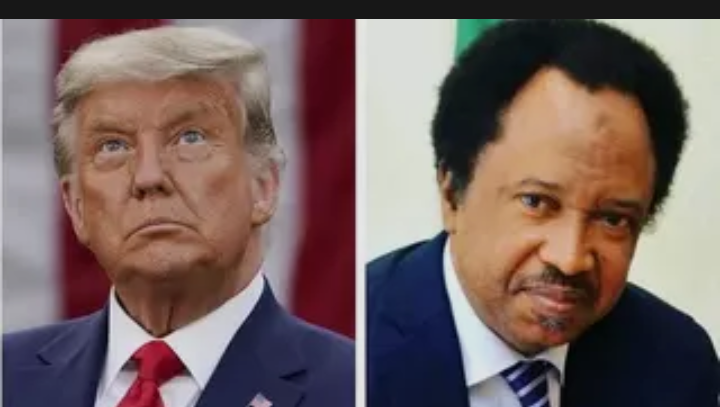
Amid rising diplomatic tensions following a U.S. travel ban targeting 12 countries, mostly in Africa and the Middle East, announced by President Donald Trump, Nigerian Senator Shehu Sani has called for national dignity over reliance on foreign acceptance. Though Nigeria is not currently included in the ban, Sani’s remarks on X have sparked a heated debate about the country’s global standing and the value of local life.

In a post at 08:59 UTC, Sani stated, “The US should not ban Nigerians from traveling to their country. There is no reason to do that. We don’t fall into the category of those countries they consider as threats.” He suggested a reciprocal ban if the U.S. proceeds, adding, “However, there are those of us who appreciate the peace and dignity of our villages and mud houses than going to live in places where we are not welcomed.”

See the screenshot of his post below:

Posted on Leave a comment

The Notion of Democracy vs. Enslavement in Nigerian Governance

The Notion of Democracy vs. Enslavement in Nigerian Governance

The Nigerian political system has long been touted as a democracy, with all the trappings of democratic governance, including elections, a constitution, and institutions designed to represent the will of the people. However, a closer examination of the system reveals a stark contrast between the ideals of democracy and the harsh realities of governance.

In reality, the system practiced in Nigeria seems to be a government of the rich, by the rich, and for the rich. The wealthy and powerful wield significant influence over policy-making and resource allocation, often to the detriment of the masses. This has created a culture of dependency and patronage, where citizens are forced to rely on the benevolence of those in power rather than demanding their rights as citizens.

One of the most insidious aspects of this system is the use of token handouts and gestures to create an illusion of care and concern for the populace. Politicians often employ these tactics to garner support and maintain control, but they rarely translate into meaningful empowerment or systemic change. Instead, they serve to pacify the masses and maintain the status quo.

The token beneficiaries of these gestures are often co-opted into the system, becoming unwitting participants in their own oppression. They may be used to mobilize support for the ruling elite, suppress dissent, or legitimize policies that further entrench inequality. This creates a vicious cycle of dependency, where citizens are conditioned to rely on handouts rather than demanding their rights.

To break free from this cycle, Nigerians must demand more from their leaders. This includes pushing for policies that promote economic empowerment, social justice, and genuine citizen participation in governance. It also requires a shift in mindset, where citizens recognize their own agency and power to effect change.

Some potential solutions include:

  • Increased transparency and accountability in government spending and decision-making
  • Strengthening institutions that support democracy, such as an independent judiciary and free press
  • Promoting civic education and critical thinking to empower citizens
  • Encouraging citizen participation in governance through town hall meetings, public consultations, and other mechanisms
  • Fostering a culture of activism and advocacy for social justice and human rights

By working together to address these challenges, Nigerians can build a more just and equitable society that truly serves the needs of all its citizens.

The question remains, however, whether the current system can be reformed or if a more fundamental transformation is needed. Can the existing power structures be persuaded to relinquish their grip on power and resources, or will it take a grassroots movement to effect change? Whatever the answer, one thing is clear: the status quo is unsustainable, and Nigerians deserve better.

In conclusion, the Nigerian political system is a complex web of power dynamics, patronage, and tokenism. While it may masquerade as democracy, the reality is far from it. To create a truly democratic system, Nigerians must demand more from their leaders and work towards a more just and equitable society. The time for change is now.

Posted on Leave a comment

Democracy or Enslavement: The Nigerian Paradox”- Comr. Sulaiman A. O.

“Nigerian politician often adopt an enslavement system of governance, masquerading it under the guise of democracy.

True democracy is a government of the people, by the people, and for the people. In contrast, the system practiced here seems to be a government of the rich, by the rich, and for the rich. These politicians might offer token handouts to certain citizens, creating an illusion of care and concern.

However, this façade crumbles when one tries to bridge the gap between the empowered and the powerful. The token beneficiaries are often used to mobilize support and suppress dissent, rather than genuinely uplifting the masses.”

Posted on Leave a comment

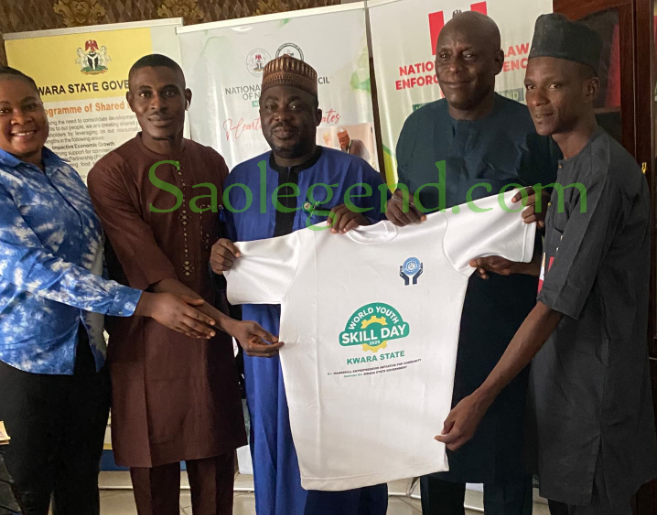
Kwara Youth Development Ministry Partners with Handskill Entrepreneurship for World Youth Skills Day

“A delegation from Handskill Entrepreneurship Initiative for Community Development paid a courtesy visit to Hon. Amb. Ndanusa Usman Shehu, Kwara State Commissioner for Youth Development, on June 11, 2025, to seek the ministry’s partnership for the upcoming “World Youth Skills Day 2025” event. The organization’s president, Comr. Sulaiman Andulfatai, explained that the event aims to celebrate talented youths and highlight the importance of skills and youth empowerment, marking a pioneering effort in the state and Nigeria.

The Director of Youth Development, Mr. Akeem, praised the organization for its contributions to youth development and encouraged them to continue their good work. The Commissioner expressed appreciation for the organization’s efforts and pledged the ministry’s support, noting that such initiatives align with the ministry’s mandate and the governor’s vision. He urged the delegation to sustain their activities and directed them to collaborate with Kwara Youth Technical Committee to achieve better results.”

Posted on Leave a comment

Federal Government picks 12 Universities to Manufacturing Electric Vehicles

Federal Government picks 12 Universities to Manufacturing Electric Vehicles

The President Bola Ahmed Tinubu-led Federal Government has taken steps to manufacture electric vehicles in the country

The Director-General of the National Automotive Design and Development Council (NADDC) Oluwemimo Osanipin, said 12 universities – two from each geopolitical zone have been selected for the initiative

According to Osanipin, the institutions are designing university shuttle buses that are going to be 100 per cent electric

Uyo, Akwa Ibom state – The President Bola Ahmed Tinubu-led Federal Government has selected 12 universities – two from each of the country’s geopolitical zones – to manufacture electric vehicles.

The Director-General of the National Automotive Design and Development Council (NADDC), Oluwemimo Osanipin, said the initiative will be financed by the Bank of Industry (BoI) and other key financial institutions.

As reported by The Nation, Osanipin explained that the initiative is a part of the “Nigeria First” policy of President Bola Ahmed Tinubu’s administration.

He made this known at a stakeholders’ engagement with the Association of Motor Dealers of Nigeria (AMDON) and the Nigeria Automotive Manufacturers Association (NAMA) in Uyo, Akwa Ibom state.

We are working with major assemblers. In terms of the design you are talking about, we have started an initiative where we gather 12 universities – two from each geopolitical zone. They are designing what we call university shuttle buses that are going to be 100 per cent electric

They are going to be designed in Nigeria. Most of the cars will be sourced locally. We are on it. When they finish, we will come together again to work with assemblers and vehicle manufacturers and get support from companies that can finance them, like the Bank of Industry (BoI) and other financial institutions, to be able to produce the vehicles.

Gradually, we are going to have electric vehicles fully designed and manufactured in Nigeria. In preparation for that, we started building stations in certain universities. In the next few months, we will cover nothing less than 10 universities.

“By the time we have this, weather will have built some infrastructure. Gradually, we are building for the future and building the parts.”

Federal govt to manufacture university shuttle buses that are going to be 100 per cent electric.

Posted on Leave a comment

Federal Government Declares Free Tuition, Accommodation, Feeding

The Federal government has declared that students in technical colleges, federal and state, will henceforth enjoy free education.

The government explained that the package include free tuition, accommodation, and feeding, including monthly stipend of N22, 500 to students in the colleges.

The Minister of Education, Dr. Tunji Alausa, announced the development at the launch of Technical and Vocational Education Training (TVET), in Abuja, on Friday.

The minister said the gesture was designed to attract more young people to TVET, so that they could use the opportunity to acquire relevant skills that would make them useful to the society.

Posted on Leave a comment

Lawyer as a profession

Lawyers are professionals who play a crucial role in the justice system. Their job is to represent and defend their clients to the best of their ability, regardless of the circumstances. A good lawyer seeks the truth to provide the most effective defense or advice, whether the situation is morally right or wrong. Their commitment to the law and their clients requires both skill and integrity.

Posted on Leave a comment

Nigeria’ The Rich Country Govern by Selfish Leader, Using poverty for their political strategy to be controlling the masses.

By: Comr. Sulaiman Abdulfatai O.

CEO Saolegend.com

Nigeria is blessed with sufficient natural and human resources but the leadership has been the major problem of this country they seen corruption as normal business in politics they don’t always care about the warfare of the citizens but themselves.
The current government has increased the hardship on the citizens by introducing the policies that is not favored the masses, removed the subside on all what people are enjoying like Electricity and Petroleum, Inflate the tuition fee beyond tha ability of the poor people, Inflate the tax rate.

What bothering is that the set of the current leader are benefited from good governance in this country,
They enjoyed Free Education with special treatments, Collecting Allowance, Direct Employment.
Now the same set of people that benefit from good governance of the past leaders are the that make things difficult for masses, The same set of people that benefit from free education are the ine that makes education unbearable for the youth, what can we call this?
Bad Leaders?
Selfish Leaders?
Wicked Leaders?
Corrupt Leaders?
Whatever name you call them they deserve it.
Nigeria leaders needs to think beyond given food items or whatever things they call palliative Nigerians are more than that every Nigerian youth are blessed with a raw talent with can enrich their pocket but government policies is not allowed most Nigerian two eat twice in a tankless of think about their potential.
I plead with government at all level especially Federal Government and State Government to review those policies that brought hardship to the masses, make policies that we not only benefit the riches, politicians but also the police that would favor both rich and common people.
Federal Government should enforce all the State government to implement supreme Court judgement on Autonomy to Local Government, Invest wildly in security, agriculture and make sure they fight corruption and always do the project that would be direct benefit to the masses, find all the possible means to stabilize the electricity this could create millions of job because it will give youth opportunity to use electricity to power their talent through machines and technology.

By: Comr. Sulaiman Abdulfatai O.

CEO Saolegend.com