Posted on Leave a comment

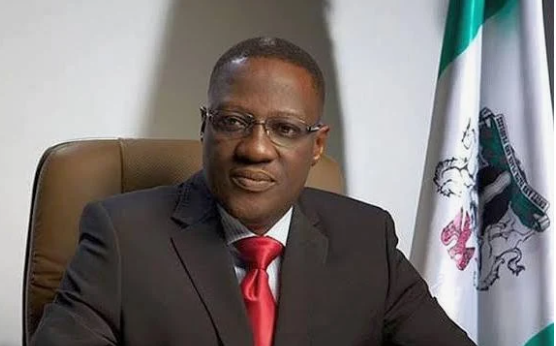
EFCC Uncovers N5.78 Billion Fraud Linked to Former Kwara Governor

EFCC Uncovers N5.78 Billion Fraud Linked to Former Kwara Governor

The Economic and Financial Crimes Commission (EFCC) has uncovered an alleged N5.78 billion fraud linked to former Kwara State Governor Abdulfatah Ahmed. The funds were meant for Universal Basic Education Commission (UBEC) projects, but were diverted during Ahmed’s administration from 2011 to 2019.

Key Allegations:

  • Misappropriation of UBEC Funds: Ahmed and his former Finance Commissioner, Ademola Banu, allegedly diverted N5.78 billion meant for basic education projects in Kwara State.
  • Unauthorized Use of Funds: The funds were used for purposes other than intended, including paying civil servant salaries and repaying loans.
  • Abandoned Projects: Many educational projects were left unexecuted or abandoned due to the diversion of funds.

Ongoing Trial:

  • Ahmed and Banu were re-arraigned on a 14-count charge bordering on alleged stealing and mismanagement of public funds.
  • The trial has been ongoing, with several witnesses testifying against the former governor and his finance commissioner.
  • The EFCC has presented evidence of the alleged fraud, including bank statements and project documents.
Posted on Leave a comment

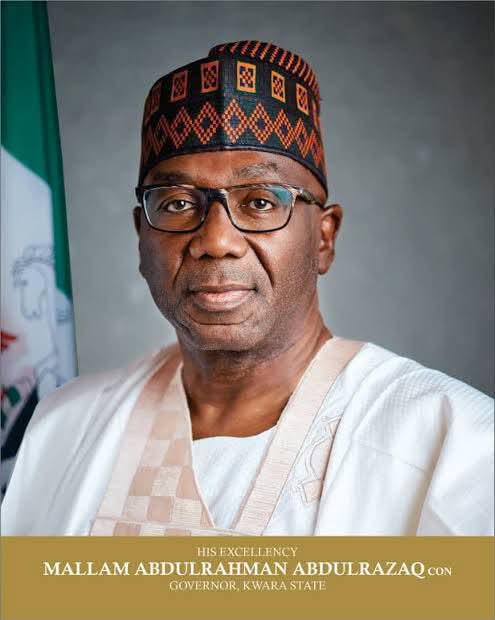
Gov Abdulrazaq offsets medical bills for 13 injured Kwara students at UDUS

Gov Abdulrazaq offsets medical bills for 13 injured Kwara students at UDUS

•wishes them quick recovery

Kwara State Governor AbdulRahman AbdulRazaq has directed immediate release of funds for medical emergencies involving 13 students of Kwara State origin at the Usman Dan Fodio University Sokoto (UDUS).

The Governor also sent a get-well-soon message to the students through the Special Assistant on Students Affairs Hon. Wasiu Onidugbe, praying to God to grant the students safe recovery.

While eight of the students had varying degrees of bone fractures which are considered an emergency, including surgeries, five of them are to undergo other levels of medical treatment — all at the UDUS Teaching Hospital in Sokoto.

“The Governor has immediately released N5,250,000.00 to cover the cost of tests, scans, and other procedures and treatments already itemized by the hospital,” according to a statement by the SA Students Affairs.

The students were involved in an auto crash along the Yauri-Sokoto Expressway in Kebbi State as they were returning to Sokoto. The driver of their car died in the accident.

Posted on Leave a comment

Nigerian Man Sentenced to 11 Years in US for $1.3 Million COVID-19 Scam

Nigerian Man Sentenced to 11 Years in US for $1.3 Million COVID-19 Scam

A 43-year-old Nigerian man, Abiola Quadri, has been sentenced to over 11 years in federal prison in the United States for orchestrating a massive $1.3 million COVID-19 scam. Quadri was convicted of conspiracy to commit bank fraud and was sentenced to 135 months in prison by a U.S. court. He was also ordered to pay $1,356,229 in restitution and a $35,000 fine.

According to authorities, Quadri used stolen identities to claim COVID-19 unemployment and disability benefits. He submitted hundreds of fraudulent benefit applications and withdrew stolen funds from multiple ATMs across California. Quadri wired at least $500,000 abroad to fund a luxury resort project in Nigeria, which included a nightclub, shopping mall, and 120-room hotel.

Quadri was arrested at the Los Angeles International Airport in September 2024 while attempting to flee to Nigeria. Authorities found 17 counterfeit checks worth over $3.3 million on his phone, as well as text messages negotiating fake transactions. Quadri also ran a business in California under the name Rock of Peace, which was allegedly used to provide daycare services to developmentally disabled children.

The investigation revealed that Quadri had misused food-aid debit cards and had links to shell businesses under various aliases. He had also admitted to obtaining U.S. permanent residency through a sham marriage.

The case was investigated by the U.S. Postal Inspection Service, Homeland Security Investigations, and California’s Employment Development Department. Quadri’s conviction and sentencing bring an end to a complex and extensive COVID-19 benefits scam that exploited vulnerable individuals and drained public resources.

Posted on Leave a comment

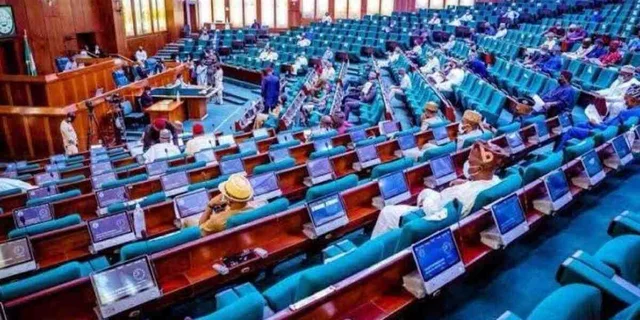
No more Private Schools, Hospital for Civil Servants – Reps proposes New Bill

No more Private Schools, Hospital for Civil Servants – Reps proposes New Bill

A new bill proposed by Hon. Amobi Ogah, a lawmaker representing Isuikwuato Umunneochi Federal Constituency in Abia State, seeks to ban public and civil servants from sending their children to private schools or using private hospitals. The bill aims to restore accountability and rebuild trust in Nigeria’s public institutions by compelling government officials to invest in and use the same public systems they manage.

Key Provisions of the Bill:

  • Public Education: Civil servants would be required to send their children to public schools, rather than private schools.
  • Public Healthcare: Government officials would be expected to utilize public hospitals instead of private healthcare services or foreign medical treatment.

Rationale Behind the Bill:

  • Promote Equality: By using public institutions, government officials would experience the same challenges faced by ordinary citizens, potentially driving improvements.
  • Address Decay in Public Institutions: The consistent preference for private services has worsened the state of public institutions, creating inequality.
  • Significant Foreign Expenditure: Nigeria spent over $29 billion on medical trips abroad during former President Muhammadu Buhari’s administration, and $218.87 million on foreign education in 2023.

Potential Impact:

  • Improved Public Institutions: By investing in public schools and hospitals, the government may be able to improve the quality of services, benefiting the majority of citizens.
  • Reducing Inequality: This bill could help bridge the gap between the quality of services available to government officials and ordinary citizens.

Challenges and Considerations:

  • Implementation: Ensuring compliance and effective implementation would be crucial to the bill’s success.
  • Quality of Public Services: Significant investment and reform would be necessary to improve public schools and hospitals to a standard acceptable to civil servants.

Ogah has launched a social media campaign with hashtags #PromoteOurSchoolsAndHealthcareServices and #PrivateInstitutionsAndHealthcareServicesProhibitionBill2025 to garner support for the bill.

Posted on Leave a comment

YOUTH USEFULNESS AND USELESSNESS IN SOCIETY BUILDING

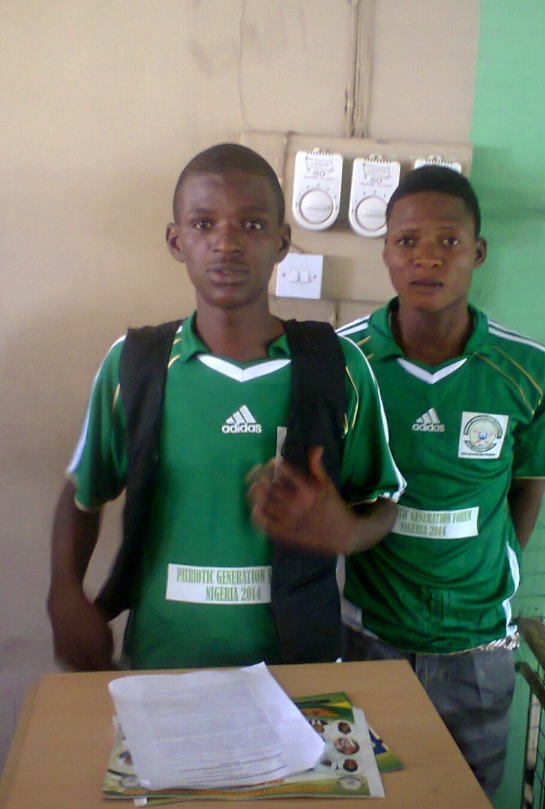
By Com. Sulaiman Abdulfatah O.PGF National President.

PRESIDENT’S SPEECH DELIVERED TODAY 27/12/2014

YOUTH USEFULNESS AND USELESSNESS IN SOCIETY BUILDING

The Chairman, Special guests of honor, the Royal Fathers, the Patrons and Matrons, members of the forum,Gentlemen of the press, Ladies and Gentlemen.

Permit me to emphasis first on the meaning of the word youth using the definitions in the Oxford

 dictionary:

 Here we have 3 meanings; one is denotative and others, connotative. Firstly, youth is the time of life when a person is young, especially the time when a child becomes a young adult. That’s youth is the intermediary between childhood and adulthood in life. Perhaps, one only savours this chance in life but once. And the Yoruba has a catchphrase to show the significance or dynamism of this period of life, so they call it “Igba Sango ode” – that is the period when somebody is more active and powerful in life. Yes, the emperor, Alaafin Sango who is the eponym of this age was a youth and became epitome of power in human history to the extent of that he was  deified as god-of-thunder. There is more information about him in Yorupedia.

Again, youth is the quality or state of being young. And what is young? Young means “not fully developed or experienced. In this case, a youth needs the valuable supports of the experienced or fully developed people in the society to realize his dream in life.

Perhaps, adulthood is a period or page that a youth needs to enter later through the guidance from the experienced elders/leaders. And from the Yoruba experience, “ewe a ma soro bi ewe”- that youth is characterized with inexperience of the life cult. This is where culture needs to be transmitted from the older and morally experienced generation of elders to the young generation to assimilate for the continuity of our humane cultural heritage.   

Therefore a youth needs to grow and be fully developed by the elders/leaders of today for the same would become the leaders/elders of tomorrow.

And finally, a youth is a young man as long as he is a man but young he has some sacrifice and service to render to his immediate society and humanity at large.

So youth is a period, in summary, when a child becomes a young man with is unusual craze for everything life has to offer in fortune.

Note that youth is young and initially imagines most of the fantasies of life as realities. It is common in a youth dream that to become rich is to hit a jack-port or stumble on a port-folio full of money like the one the lazy Baba Sala found in one of his dramas that later landed him into a police custody. Therefore, youth hates looking at the other side of life to survive; but ironically, life offers man some literarily incompatible pairs like”no struggle no success” “no endurance no achievement” “no pains no gains, no humility no adoration, no sacrifice, no benefit, no bitterness no sweetness just to mention but a few.

At this juncture, the society needs to decide on how to guild and guard this important gift of human creation to enhance growth and development.

To make the youth useful, the society must prepare to educate, orientate and empower them for the general wellbeing of the society in turn.

Any attempt to ignore the best ways of preparing the youth through standard education and empowerment programs, the society will be like a fowl messing up a pot of soup but ironically never realizes it is preparing itself for a cook to garnish soup. Therefore, if the society fails to make youth useful, the youth being active and dynamic will surely become useless and become a threat to the wellbeing of the general public. You know, idle hand is the devil’s workshop.

And if the youth should be ignored, the future is already dead and interned before the arrival of the messiah; the useful youth among the grotesque ones.

Therefore our campaign is to make the useful youth more useful and salvage the useless youth to rehabilitate them to effectively build a strong and progressive society or nation.

However, so far so good, in this campaign we have been able to achieve the following and we would be happy to count on your support for continuity of the service to the youth community and society at large.

1.         Vocational training and retraining of youth

2.         Youth Sports promotion

3.         Youth empowerment programs

4.         Free computer training and coaching

5.         Youth sensitization and orientation programs

6.         Scholarship

7.         Production of leadership/personalities magazine and award

8.         Arrangement of free meal during Ramadan fasting and other festivals

9.         Organization of sermons and free distribution of religion Books i.e Alquran and Dalaylu

10.       Distribution of education materials e.g. exercise books, chalks, pen and dusters to some basic Schools

11.       Production of Packaged Gari to boost food production in the country.                                      

Thanks, God bless you. God bless KwaraState

 and God bless Nigeria

.

PGF! PROGRESS! BUILD THE YOUTH! BUILD THE NATION!

Posted on Leave a comment

DSS, Army Rescue Abducted Catholic Priest and 42 Others

DSS, Army Rescue Abducted Catholic Priest and 42 Others

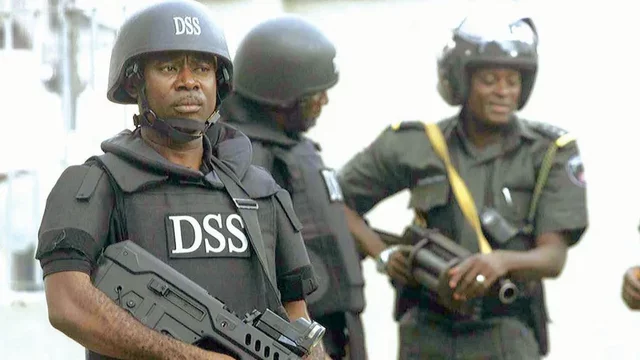
The Department of State Services (DSS) and the Nigerian Army have successfully rescued Reverend Father Alphonsus Afina, a Catholic priest kidnapped by Boko Haram terrorists on June 1, along with 42 other kidnap victims.

The rescue operations were carried out in two separate locations: Borno State and Zamfara State.Rescue Details:Borno State: Father Afina, who previously served as a priest in Alaska, United States, was rescued alongside 10 women by DSS operatives with the support of Nigerian Army troops.

The priest was kidnapped on his way from Mubi in Adamawa State to Maiduguri when his convoy was ambushed, resulting in one fatality. The rescue was executed without paying any ransom.

Zamfara State: In a separate operation, DSS officers and Nigerian Army troops rescued 32 kidnap victims, including 27 women and five young boys, who had spent between two to four months in captivity.

The victims were handed over to the Zamfara State Government for medical attention and documentation.

Reactions: Catholic Bishop of Maiduguri Diocese, John Bakeni, commended the DSS and Nigerian Army for their bravery and professionalism, rescuing Father Afina and the other victims. He described the rescue as a moment of profound relief and joy for the Church and lovers of peace and justice. The bishop also called for sustained collaboration between security agencies and local communities to defeat insurgency.

Posted on Leave a comment

How Nigerians Contribute to Politicians’ Misuse of Public Funds

The Enabling Environment: How Nigerians Unintentionally Support Politicians’ Corruption

By Comr. Sulaiman Abdulfatai

Nigeria’s political landscape has long been plagued by corruption, with politicians often accused of looting public funds with impunity. While politicians bear the primary responsibility for these actions, it’s essential to examine the role Nigerians play in enabling this behavior.

Electoral Apathy and Lack of Accountability

Many Nigerians often prioritize personal interests over national concerns, failing to hold elected officials accountable for their actions. This apathy creates an environment where politicians feel emboldened to engage in corrupt practices without fear of consequences.

Vote Buying and Patronage

The widespread practice of vote buying and patronage in Nigerian politics perpetuates corruption. By accepting bribes or promises of personal gain in exchange for votes, citizens inadvertently contribute to the corrupt system.

Tolerance for Corruption

Some Nigerians tolerate or even celebrate politicians’ corrupt activities if they benefit personally or perceive benefits for their community. This tolerance sends a signal that corrupt behavior is acceptable, further entrenching the problem.

Demanding Unnecessary Financial Support

Additionally, some Nigerians demand unnecessary financial support from politicians, expecting handouts or gifts in exchange for loyalty or support. This expectation can lead politicians to prioritize personal gain over public service, further fueling corruption.

Fabricated Stories for Financial Gain

Some individuals fabricate stories or lies to extract money from politicians or those who work for them. This behavior not only diverts resources meant for public good but also contributes to the corrupt system.

Lack of Civic Engagement

Limited civic engagement and lack of participation in public discourse allow corrupt politicians to operate with relative impunity. When citizens don’t engage in meaningful discussions about governance and accountability, politicians may feel less inclined to act with integrity.

Cultural and Social Pressures

In some cases, cultural and social pressures can lead Nigerians to prioritize loyalty to politicians or parties over accountability and good governance. This can create a culture where corruption is normalized and whistleblowers are ostracized.

Breaking the Cycle

To break this cycle, Nigerians must demand better governance and hold politicians accountable for their actions. This requires:

  1. Increased civic engagement: Citizens must participate in public discourse and demand transparency and accountability.
  2. Electoral reform: Electoral processes must be reformed to prevent vote buying and ensure credible elections.
  3. Whistleblower protection: Mechanisms must be put in place to protect whistleblowers and encourage reporting of corrupt activities.
  4. Cultural shift: Nigerians must prioritize accountability and good governance over personal or community interests.
  5. Smart vote strategy: Even if a politician is trying to buy your vote, collect his money and vote for the right candidate.

By working together, Nigerians can create an environment where politicians are incentivized to act with integrity and serve the public interest.

Posted on Leave a comment

Nigerian Railway Corporation Commences Train Services in Jos Starting Monday, 14th July 2025

PUBLIC ANNOUNCEMENT

Nigerian Railway Corporation Commences Train Services in Jos Starting Monday, 14th July 2025

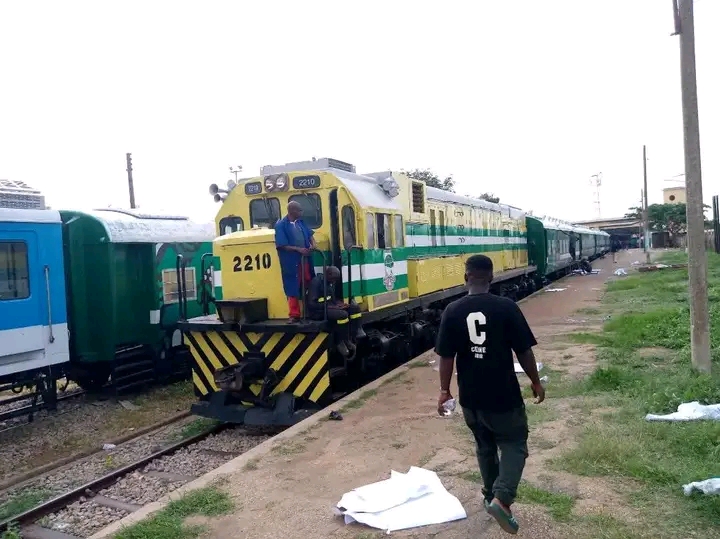
The Nigerian Railway Corporation (NRC) is pleased to announce the commencement of daily passenger train services on the Jos–Bukuru corridor starting Monday, July 14th, 2025.

Trains will operate four daily trips between Bukuru and Jos Terminus, with stops at Old Airport and Dogon Karfe stations.

The full schedule is as follows:

First Trip – Morning (Bukuru to Jos)

Departure from Bukuru: 06:50 AM

Stops:

Old Airport – Arrives 07:08 AM, Departs 07:10 AM

Dogon Karfe – Arrives 07:16 AM, Departs 07:18 AM

Terminus (Jos) – Arrives 07:26 AM

Second Trip – Mid-Morning (Jos to Bukuru)
Departure from Jos Terminus: 09:20 AM

Stops:

Dogon Karfe – Arrives 09:28 AM, Departs 09:30 AM

Old Airport – Arrives 09:36 AM, Departs 09:38 AM

Bukuru – Arrives 09:56 AM

Third Trip – Late Morning (Bukuru to Jos)
Departure from Bukuru: 10:36 AM

Stops:

Old Airport – Arrives 10:54 AM, Departs 10:56 AM

Dogon Karfe – Arrives 11:02 AM, Departs 11:04 AM

Terminus (Jos) – Arrives 11:10 AM

Fourth Trip – Evening (Jos to Bukuru)
Departure from Jos Terminus: 04:20 PM

Stops:

Dogon Karfe – Arrives 04:28 PM, Departs 04:30 PM

Old Airport – Arrives 04:36 PM, Departs 04:38 PM

Bukuru – Arrives 04:56 PM

Passengers are encouraged to arrive at the station at least 10 minutes before departure.

For inquiries and further information, please contact the Nigerian Railway Corporation or visit your nearest station.

We look forward to serving you with safe, reliable, and efficient rail services.

Nigerian Railway Corporation – Moving Plateau Forward.

Announcer,
Information Officer
For:
Hoorable Commissioner, Plateau State
Ministry of Transport.

@highlight