Posted on Leave a comment

Tinubu Supported June 12 Annulment, Not Part of Pro-Democracy Struggle – Lamido

Tinubu Supported June 12 Annulment, Not Part of Pro-Democracy Struggle – Lamido

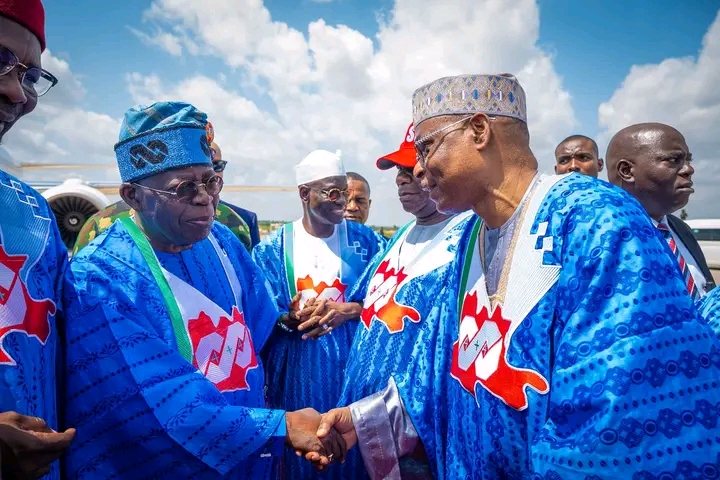
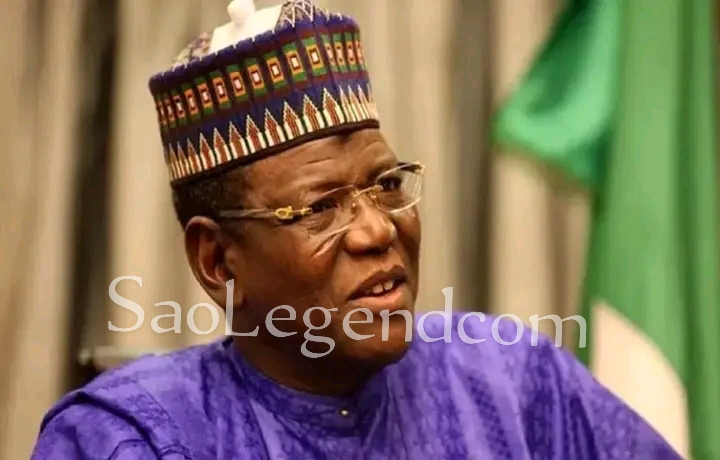
Former Jigawa State Governor Sule Lamido has made a stunning claim about President Bola Tinubu’s role in Nigeria’s democratic history. According to Lamido, Tinubu supported the annulment of the June 12, 1993 presidential election, which was widely regarded as Nigeria’s freest and fairest poll. Lamido stated this during an interview on Arise Television, where he questioned Tinubu’s pro-democracy credentials

Key Points Lamido Made Against Tinubu:

  • Supported June 12 Annulment: Lamido claims Tinubu was “actively hand-in-glove” with General Ibrahim Babangida, who nullified the election.
  • Mother’s Role: He alleged that Tinubu’s mother, Hajia Abibatu Mogaji, mobilized Lagos market women to Abuja to show support for Babangida’s regime.
  • NADECO’s Purpose: Lamido said the National Democratic Coalition (NADECO), which Tinubu later joined, was formed to fight General Sani Abacha’s regime, not specifically to demand the validation of MKO Abiola’s presidential win.
  • Tinubu’s Rise to Prominence: According to Lamido, Tinubu only became noticeable after Abacha took over the government, suggesting his pro-democracy activism was opportunistic

Lamido’s assertions directly challenge the popular narrative of Tinubu’s contributions to Nigeria’s democratic struggle. These claims have added fuel to the ongoing debates about Tinubu’s legacy and role in shaping Nigeria’s political landscape.

Posted on Leave a comment

Chris Brown Pleads Not Guilty in UK Court

Chris Brown Pleads Not Guilty in UK Court

American R&B singer Chris Brown appeared in a London court on Friday, pleading not guilty to a charge related to an alleged nightclub brawl in 2023. The 36-year-old singer, dressed in a dark suit and tie, stood in the dock and responded “Not guilty, ma’am” when the charge was presented.

Allegations and Bail

Brown is accused of attempting to cause grievous bodily harm with intent. He has been released on £5 million ($6.7 million) bail. After entering his plea, Brown waved to supporters in the public gallery as he left the courtroom.

Trial Scheduled

A trial date has been set for October 26, 2026, with an expected duration of five to seven days. The case will proceed to trial, allowing both sides to present their arguments and evidence.

Posted on Leave a comment

Emefiele Granted ₦2 Billion Bail

Emefiele Granted ₦2 Billion Bail

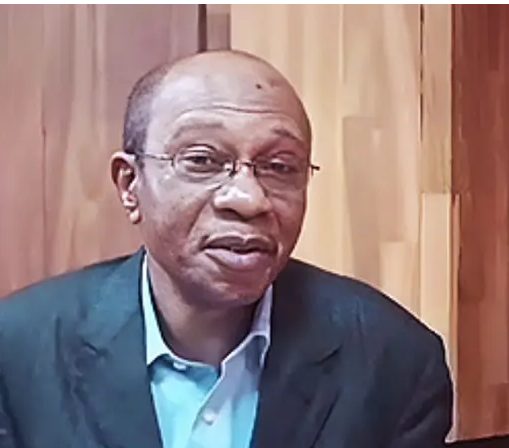
Godwin Emefiele, a former governor of the Central Bank of Nigeria, CBN, was granted ₦2 billion in bail on Monday by a Federal High Court judge sitting in Abuja.

The eight-count charge against Emefiele included allegedly stealing and seizing billions of naira from proxy accounts, as well as illegally obtaining a housing estate with 753 units.

In his ruling, Justice Halilu Yusuf stated that Emefiele had been granted bail in three other criminal cases that were still pending against him and that there was no evidence that he had jumped bail.

Following that, the judge gave Emefiele bail, but only if he could produce two sureties who were the owners of Asokoro, Maitama, or Wuse 2 property that was under the court’s jurisdiction and had a minimum value of ₦2 billion.

He also told Emefiele to turn in his travel documents to the court and that he would be remanded in custody if he didn’t complete the bail by Wednesday.

Emefiele attorney, Matthew Burkaa, filed the bail application, which was granted.

Prosecutor Rotimi Oyedepo did not raise any objections, but he did ask the court to impose special requirements that were different from what the other courts had previously granted.

Credit: The Guardian

Posted on Leave a comment

Tensions Erupt in APC Over Alleged Plan to Drop VP Shettima in 2027

Tensions Erupt in APC Over Alleged Plan to Drop VP Shettima in 2027

A major political rift has erupted within the ruling All Progressives Congress, APC, following allegations that Vice President Kashim Shettima may be dropped from President Bola Tinubu’s ticket for the 2027 elections.

The controversy reached a boiling point on Sunday during a North-East stakeholders’ meeting in Gombe, where a fracas broke out over perceived attempts to sideline Shettima.

The meeting, held at the Gombe International Conference Centre, descended into chaos after the APC National Vice Chairman (North-East), Mustapha Salihu, failed to mention the Vice President in his speech endorsing Tinubu for re-election. Angry delegates, chanting “Shettima! Shettima!!”, physically confronted Salihu, forcing him off the stage amid flying chairs and buckets.

The unrest was sparked by fears that Shettima may be excluded from the 2027 joint ticket, despite strong grassroots support for him in the North-East. Several party leaders from Borno and Adamawa states viewed Salihu’s omission as a deliberate move to marginalize the Vice President, prompting some to threaten defection to the opposition if the move proceeds.

Although governors from Yobe, Borno, and Gombe publicly endorsed the Tinubu-Shettima ticket during the meeting, the Gombe Governor’s silence on Shettima’s role raised further suspicion. His vague comments about Tinubu’s leadership, without mentioning the Vice President, led to accusations of a “hidden agenda” from his camp.

The APC National Chairman, Abdullahi Ganduje, attempted to calm the storm but also stopped short of explicitly confirming Shettima’s place on the 2027 ticket.

While acknowledging the North-East’s contributions to the 2023 election, his ambiguous remarks did little to pacify the enraged crowd, some of whom demanded that Shettima’s name be reaffirmed or risk electoral backlash.

Presidency and party officials have since denied any plan to replace the Vice President. Dr. Ijeoma Arodiogbu, APC’s National Vice Chairman (South-East), dismissed the rumours as politically motivated fabrications, asserting that Tinubu and Shettima remain united and constitutionally bound as one ticket.

However, a number of party sources claim that internal discussions are ongoing among power brokers to replace Shettima with a “stronger northern figure” for strategic electoral reasons. Though unconfirmed, such claims have fueled resentment in Borno, Shettima’s home state, where party loyalists insist he must remain on the ticket.

Delegates from Borno have demanded a clear public endorsement of Shettima, calling Salihu’s remarks a “slap in the face” and warning of potential political consequences. While a communiqué affirming support for both Tinubu and Shettima is being prepared, the fallout from the Gombe meeting highlights growing divisions within the party.

Posted on Leave a comment

If U.S eventually bans Us from traveling to their country, We should also ban them too – Sen Sheu Sani

If U.S eventually bans Us from traveling to their country, We should also ban them too – Sen Sheu Sani

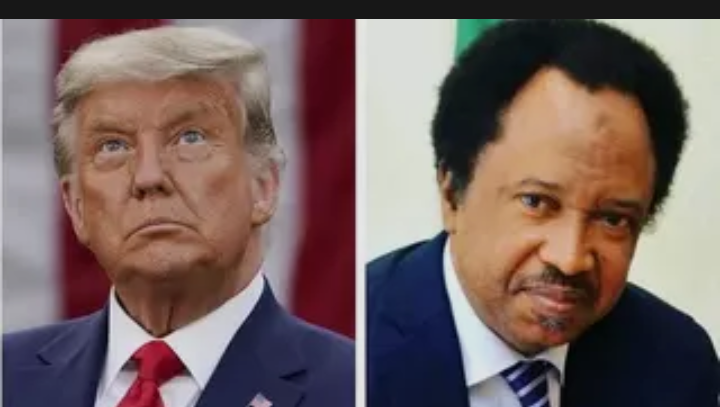
Amid rising diplomatic tensions following a U.S. travel ban targeting 12 countries, mostly in Africa and the Middle East, announced by President Donald Trump, Nigerian Senator Shehu Sani has called for national dignity over reliance on foreign acceptance. Though Nigeria is not currently included in the ban, Sani’s remarks on X have sparked a heated debate about the country’s global standing and the value of local life.

In a post at 08:59 UTC, Sani stated, “The US should not ban Nigerians from traveling to their country. There is no reason to do that. We don’t fall into the category of those countries they consider as threats.” He suggested a reciprocal ban if the U.S. proceeds, adding, “However, there are those of us who appreciate the peace and dignity of our villages and mud houses than going to live in places where we are not welcomed.”

See the screenshot of his post below:

Posted on Leave a comment

The Notion of Democracy vs. Enslavement in Nigerian Governance

The Notion of Democracy vs. Enslavement in Nigerian Governance

The Nigerian political system has long been touted as a democracy, with all the trappings of democratic governance, including elections, a constitution, and institutions designed to represent the will of the people. However, a closer examination of the system reveals a stark contrast between the ideals of democracy and the harsh realities of governance.

In reality, the system practiced in Nigeria seems to be a government of the rich, by the rich, and for the rich. The wealthy and powerful wield significant influence over policy-making and resource allocation, often to the detriment of the masses. This has created a culture of dependency and patronage, where citizens are forced to rely on the benevolence of those in power rather than demanding their rights as citizens.

One of the most insidious aspects of this system is the use of token handouts and gestures to create an illusion of care and concern for the populace. Politicians often employ these tactics to garner support and maintain control, but they rarely translate into meaningful empowerment or systemic change. Instead, they serve to pacify the masses and maintain the status quo.

The token beneficiaries of these gestures are often co-opted into the system, becoming unwitting participants in their own oppression. They may be used to mobilize support for the ruling elite, suppress dissent, or legitimize policies that further entrench inequality. This creates a vicious cycle of dependency, where citizens are conditioned to rely on handouts rather than demanding their rights.

To break free from this cycle, Nigerians must demand more from their leaders. This includes pushing for policies that promote economic empowerment, social justice, and genuine citizen participation in governance. It also requires a shift in mindset, where citizens recognize their own agency and power to effect change.

Some potential solutions include:

  • Increased transparency and accountability in government spending and decision-making
  • Strengthening institutions that support democracy, such as an independent judiciary and free press
  • Promoting civic education and critical thinking to empower citizens
  • Encouraging citizen participation in governance through town hall meetings, public consultations, and other mechanisms
  • Fostering a culture of activism and advocacy for social justice and human rights

By working together to address these challenges, Nigerians can build a more just and equitable society that truly serves the needs of all its citizens.

The question remains, however, whether the current system can be reformed or if a more fundamental transformation is needed. Can the existing power structures be persuaded to relinquish their grip on power and resources, or will it take a grassroots movement to effect change? Whatever the answer, one thing is clear: the status quo is unsustainable, and Nigerians deserve better.

In conclusion, the Nigerian political system is a complex web of power dynamics, patronage, and tokenism. While it may masquerade as democracy, the reality is far from it. To create a truly democratic system, Nigerians must demand more from their leaders and work towards a more just and equitable society. The time for change is now.

Posted on Leave a comment

Democracy Day: President Tinubu to grant presidential pardon to Ibori, Farouk Lawan and others

Democracy Day: President Tinubu to grant presidential pardon to Ibori, Farouk Lawan and others

THERE are strong yet unconfirmed reports doing the rounds in and around the premises of the National Assembly that President Bola Tinubu may take the opportunity of the Democracy Day celebration on Thursday, June 12, 2025, to grant presidential pardon to some ex-convicts who are political gladiators.

Two names that have so far been mentioned are former Delta State governor, Chief James Onanefe Ibori and a former member of the House of Representatives, Farouk Lawan [Shanono Federal Constituency of Kano State].

The announcement of the grant of presidential pardon may form one of the major highlights of President Tinubu’s address to the joint sitting of the National Assembly tomorrow, Thursday.

The decision by the President to deploy the platform of the Legislature in consummating his Democracy Day speech is not unconnected with the acceptance of the place of the legislature in the tripartite classification of powers as a constitutional imperative.

The legislature, in the trinity of the arms of governmental powers, is the bulwark upon which constitutional democracy rests. Sans the legislature, democratic governance takes a flight and yields its place for other forms of government.

Another highlight of President Tinubu’s speech at the joint sitting, which had already been confirmed, is the conferment of national honours on a select group of federal lawmakers.

The commemorative event – special joint sitting – is scheduled to be held in the more expansive House of Representatives Chamber.

Proceedings will commence at 11:00 a.m., while President Tinubu is expected to arrive at 12:00 noon to deliver a presidential address as the Special Guest of Honour.

Chairman of the House Committee on Media and Public Affairs, Hon. Akin Rotimi, had confirmed the development in a statement last Sunday.

the announcement of the presidential pardon for politicians who are ex- convicts may either feature in the president’s speech at the joint sitting or his speech to Nigerians via a nationwide broadcast. There is also a possibility that it may be communicated in a statement by the Presidency.

Ibori is a leader in the Niger Delta region, in addition to being a national figure in Nigeria.

This news medium recalls that in 2012, Ibori was sentenced to 13 years in prison for money laundering in the United Kingdom

Posted on Leave a comment

Democracy or Enslavement: The Nigerian Paradox”- Comr. Sulaiman A. O.

“Nigerian politician often adopt an enslavement system of governance, masquerading it under the guise of democracy.

True democracy is a government of the people, by the people, and for the people. In contrast, the system practiced here seems to be a government of the rich, by the rich, and for the rich. These politicians might offer token handouts to certain citizens, creating an illusion of care and concern.

However, this façade crumbles when one tries to bridge the gap between the empowered and the powerful. The token beneficiaries are often used to mobilize support and suppress dissent, rather than genuinely uplifting the masses.”

Posted on Leave a comment

My Husband Didn’t Steal Nigeria Money

Maryam Abacha, widow of former military Head of State, General Sani Abacha, has dismissed longstanding allegations that her late husband looted billions of dollars during his time in office.

Mrs. Abacha demanded concrete proof that her husband stashed public funds in foreign accounts. “Who is the witness of the monies that were being stashed? Did you see the signature or the evidence of any monies stashed abroad?” she asked.

Mrs Abacha further claimed that the funds her husband reportedly secured for Nigeria “vanished” shortly after his death.

“And the monies that my husband kept for Nigeria, in a few months, the monies vanished. People are not talking about that,” she told TVC in a recent interview, implying mismanagement by subsequent administrations.

Questioning the motivations behind the continued focus on her husband’s legacy, she said, “Why are you blaming somebody? Is that tribalism or a religious problem or what is the problem with Nigerians?

“I pray for Nigerians. I pray for all of us. I pray that we should have goodness in our hearts. We should stop telling lies and blaming people.

“Why are we so bad towards each other? Because somebody is a northerner or a southerner, somebody is a Muslim or a Christian, or somebody is nice or… It’s not fair.”

Mrs. Abacha also criticised the media, urging journalists to “educate the people” rather than “bastardise people.”

She added, “People are not that bad. Twenty-seven years ago and you are still talking about Abacha. He must be very powerful and loved by Nigerians. We thank God for that.”

Responding to a remark about the relatively stable economy during her husband’s regime, marked by rising foreign reserves and lower external debt, she reiterated her denial of any wrongdoing, urging critics to present verifiable evidence.

“So, where did he steal the money from? So where would he have stolen the money from?” She asked. “And because Nigerians are fools, they listen to everything.”