Posted on Leave a comment

Former Chief of Army Staff Calls for Nationwide Mobilization to Combat Insecurity

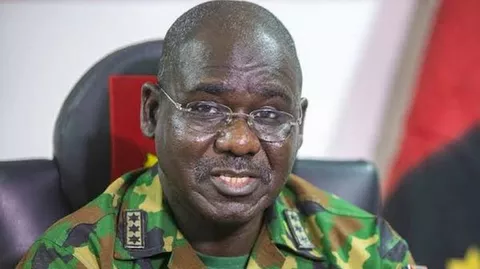
Former Chief of Army Staff, Lt. Gen. Tukur Buratai, has called for a nationwide mobilization strategy to combat insecurity in Nigeria, similar to the approach taken during the COVID-19 lockdown. According to Buratai, insecurity should be treated as a national crisis requiring collective sacrifice and a long-term plan.

The call comes amid growing concerns over deteriorating security conditions in the country. In the first six weeks of 2025, Nigeria lost 805 lives to violence and insecurity across the country. Some of the incidents include¹:
– 70 terrorists killed in Borno
– 22 soldiers killed in a Jihadist suicide attack in Maiduguri, Borno State
– 21 persons killed in Katsina State during an attack on a joint team of Katsina State Community Watch Corps and vigilante members
– 40 farmers killed by Boko Haram insurgents in Dumba community, Baga, Kukawa LGA of Borno State

Buratai emphasized that defeating insurgents requires more than military operations, urging citizens to be mobilized psychologically through social media, the press, and community-driven initiatives. He stressed the need for a long-term plan and collective effort to tackle the security challenges facing the nation.

Key Challenges:

– Insecurity: Nigeria faces numerous security threats, including terrorism, banditry, kidnapping, and cybercrime, which pose a significant threat to national stability and development.
– Economic Impact: Insecurity has severe and far-reaching consequences for the economy of affected areas, directly impacting economic activities and development in the region.
– Displacement and Trauma: Many Nigerians have been forced out of their homes and communities due to violence and attacks, with over 2 million people displaced. Constant news of killings and attacks induces fear, anxiety, and post-traumatic stress disorder in citizens.² ³

Possible Solutions:

– Nationwide Mobilization: Buratai suggested that the government adopt a lockdown strategy to identify and neutralize terrorists, bandits, and kidnappers terrorizing communities nationwide.
– Community Involvement: He highlighted the importance of community involvement, citing the example of nationwide support during the Maiduguri flood disaster.
– Long-term Plan: Buratai emphasized the need for a long-term plan to tackle the security challenges facing the nation.
– Improved Security Surveillance: Improving security surveillance nationwide and ensuring swift prosecution of perpetrators can help prevent attacks.
– Promoting Dialogue: Promoting dialogue between farmers and herdsmen can help reduce conflicts and improve security in vulnerable communities.
Posted on Leave a comment

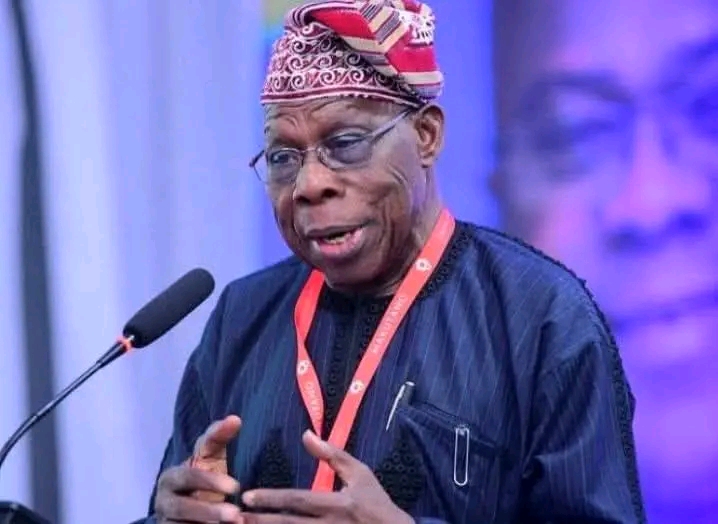
Nigeria’s democracy deeply compromised – Obasanjo


Former President Olusegun Obasanjo on Friday expressed concern that Nigeria’s judiciary has become “deeply compromised”.

Obasanjo noted that corruption among judges has turned Nigerian courts into “court of corruption rather than courts of justice”.

The ex-President made the assertion in his new book, ‘Nigeria: Past and Future’, published by the Olusegun Obasanjo Presidential Library.

The former Nigerian leader lamented what he described as the “steady decline of the judiciary’s integrity”.

“The reputation of the Nigerian judiciary has steadily gone down from the four eras up till today. The rapidity of the precipitous fall, particularly in the Fourth Republic, is lamentable,” he wrote.

The former military Head of State equally stated that justice had become commodified in Nigeria, with dangerous consequences for the nation’s stability.

“The great fear of most well-meaning Nigerians and good friends of Nigeria is that where ‘justice’ is only available to the highest bidder, despair, anarchy, and violence would substitute justice, order, and hope.

“I went to a state in the North about ten years after I left public office. Next to the government guest house was a line of six duplex buildings.

“The governor pointed to the buildings and stated that they belonged to a judge who put them up from the money he made from being the chairman of election tribunals,” Obasanjo said.

He accused the Chairman of the Independent National Electoral Commission, INEC, Mahmood Yakubu, of undermining the electoral process since 2015.

“No wonder politicians do not put much confidence in an election which the INEC of Professor Mahmood Yakubu polluted and grossly undermined to make a charade,” he added.

Posted on Leave a comment

US Contradicts WTO Director-General Ngozi Okonjo-Iweala Over Nigeria’s Economy


The United States has disputed World Trade Organization (WTO) Director-General Dr. Ngozi Okonjo-Iweala’s assessment of Nigeria’s economy, citing that the new minimum wage of N70,000 hasn’t improved the standard of living for Nigerian workers due to the continued depreciation of the Naira.

The US report highlights that the minimum wage, pegged at about $47.90 per month, has lost its value due to the Naira trading at over N1,500 to the dollar. This has resulted in the wage being no longer higher than the poverty income level. Furthermore, the law only applies to employers with 25 or more full-time staff, leaving most workers in the informal economy unprotected.

Some key points from the report include¹ ²:
– Naira Depreciation: The Naira’s continued depreciation has undermined the new minimum wage, making it difficult for workers to afford basic necessities.
– Limited Coverage: The minimum wage law only applies to a small portion of the workforce, with most workers operating in the informal economy.
– Enforcement Issues: The government rarely enforces minimum wage and overtime laws, with penalties being low and not commensurate with other crimes like fraud.
– Informal Economy: Between 70 and 80 percent of Nigeria’s working population operates in the informal economy, where authorities fail to enforce wage, hour, and occupational safety and health laws.

Dr. Okonjo-Iweala had commended President Tinubu’s administration for restoring stability to Nigeria’s economy, but the US report presents a contrasting view, highlighting the challenges faced by Nigerian workers.

Posted on Leave a comment

Alaafin Of Oyo Denies Supremacy Battle With Ooni

Alaafin Of Oyo Denies Supremacy Battle With Ooni, Says British Colonial Govt Recognised His Throne As Yoruba Nation’s Superior Head.

The Alaafin of Oyo, Oba Akeem Owoade, has dismissed speculations of being in a supremacy tussle with any traditional ruler, including the Ooni of Ife, Oba Enitan Ogunwusi.

The monarch made this known in a statement issued on Thursday by his Director of Media and Publicity, Bode Durojaiye, in Ibadan, the Oyo State capital.

Posted on Leave a comment

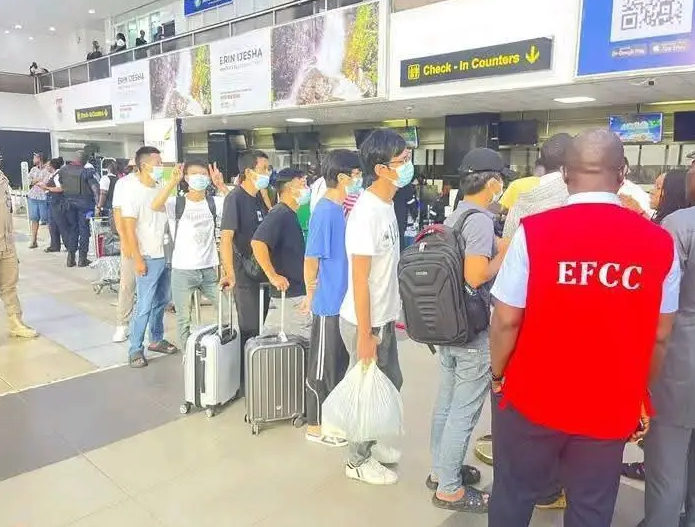
Nigeria Deports 51 More Foreigners for Cyberterrorism and Internet Fraud

Nigeria Deports 51 More Foreigners for Cyberterrorism and Internet Fraud


The Economic and Financial Crimes Commission (EFCC) and the Nigerian Immigration Service (NIS) have repatriated 51 foreign nationals convicted of cyber-terrorism and internet fraud. The deportees include 50 Chinese nationals and one Tunisian, bringing the total number of deported convicts to 102 since the exercise began on August 15, 2025.

These individuals were part of a larger group of 192 foreign nationals arrested in Lagos during a sting operation targeting a major foreign-led cybercrime syndicate. The EFCC has stated that further deportations are scheduled in the coming days as part of an intensified crackdown on transnational cybercrime.

The deported individuals had completed their prison sentences handed down by the Federal High Court in Lagos before being handed over to immigration authorities for repatriation. The EFCC emphasized that this operation demonstrates Nigeria’s commitment to tackling global cybercrime syndicates and protecting its digital space.

Key Details:
– Number of Deportees: 102 foreign nationals deported since August 15, 2025
– Nationalities: 50 Chinese and one Tunisian in the latest batch
– Crimes: Cyber-terrorism and internet fraud, including romance scams and fraudulent cryptocurrency schemes
– Arrests: 192 foreign nationals arrested in Lagos during a sting operation
– Future Plans: Further deportations scheduled as court processes for remaining suspects are concluded.

Posted on Leave a comment

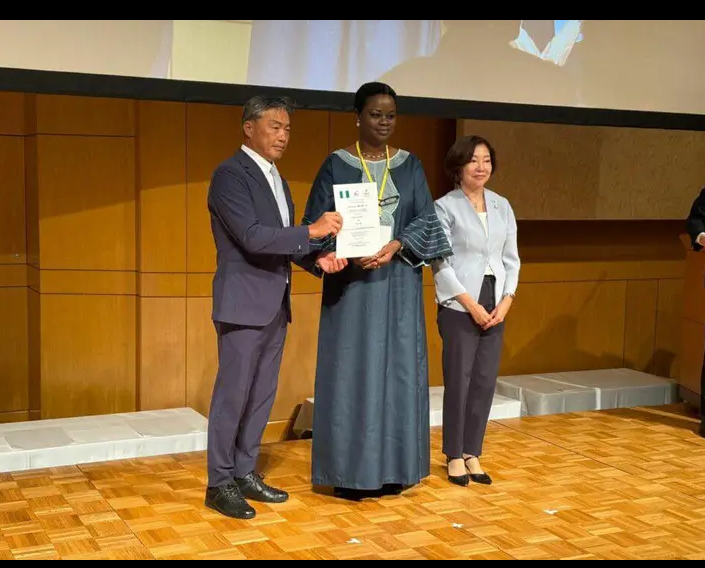
Japan Names Kisarazu City as Hometown for Nigerians in New Cultural Diplomacy Effort

Kisarazu, a city in Chiba Prefecture, Japan, has been designated as a “hometown” for Nigerians looking to live and work in Japan. This initiative aims to foster cultural diplomacy, boost economic growth, and enhance workforce productivity.

About Kisarazu

  • Location: Chiba Prefecture, Japan, approximately 30 kilometers southwest of Chiba City and 70-80 kilometers from central Tokyo
  • Population: around 136,023 people
  • Economy: Mixed economy with commercial fishing, agriculture, and heavy industry along its Tokyo Bay shoreline

Getting to Kisarazu

  • Train: Accessible via JR Uchibo Line and JR Keiyo Line from Tokyo Station, with journey times ranging from 40 minutes to 1 hour 20 minutes
  • Bus: Bus services available from Tokyo Station, Yokohama, Shinagawa, Kawasaki, and Haneda Airport

Living in Kisarazu

  • Climate: Humid subtropical with warm summers and cool winters
  • Attractions: Kisarazu Port, firework displays, and traditional festivals like the Kisarazu Port Festival

For Nigerians considering this opportunity, it’s essential to research the specific requirements, benefits, and cultural aspects of living in Kisarazu.

Posted on 2 Comments

Nigerian Government Bans Nursery Primar JSS3 Graduation Parties Party

The Imo State Government has indeed banned graduation parties for kindergarten, nursery, and Junior Secondary School (JSS3) students, effective immediately. This decision aims to reduce financial burdens on parents and redirect attention to academic development. Only Primary 6 and Senior Secondary School 3 (SS3) students are permitted to hold graduation ceremonies, aligning with Nigeria’s 6-3-3-4 education system.Key Highlights of the Ban:- Reduced Financial Burden: The government seeks to alleviate excessive spending on graduation parties, which can be financially draining for parents.- Focus on Academics: By limiting graduation ceremonies to key academic milestones, the government aims to emphasize the importance of academic achievement over extravagant celebrations.- Promoting Discipline: The ban is also intended to instill discipline and responsible values in students, encouraging them to focus on their studies rather than indulging in lavish parties.Additional Measures:- Textbook Policy: The government has also directed schools to stop changing textbooks annually, mandating the use of approved textbooks for at least four years. This aims to reduce costs for parents and promote consistency in teaching.- Monitoring Compliance: The Ministry of Primary and Secondary Education will monitor schools to ensure compliance with the new policies.The National Orientation Agency (NOA) has praised the Imo State Government for this decision, describing it as a bold step toward instilling discipline and responsible value reorientation among young learners.

Posted on Leave a comment

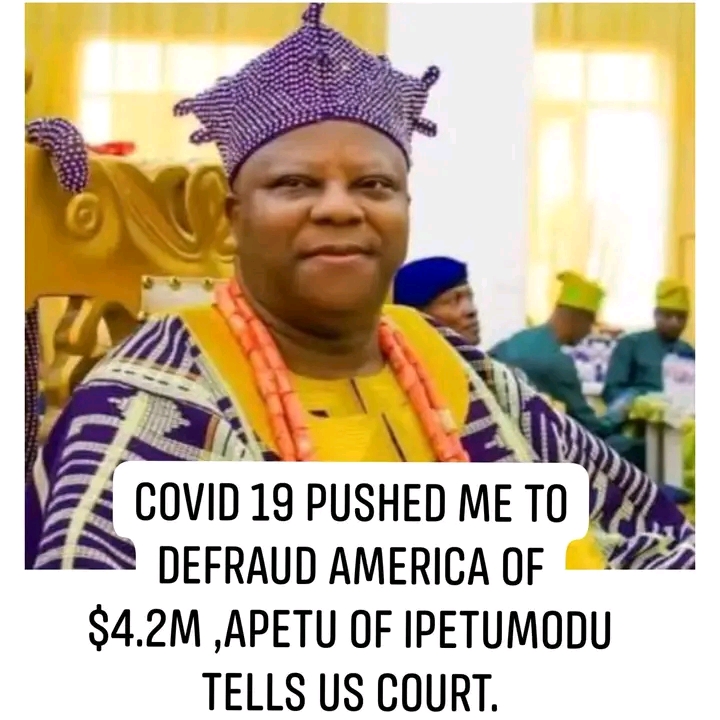
COVID-19 Pandemic Drove Me to $4.2m Fraud, Osun Monarch Apetu of Ipetumodu Tells US Court”

“COVID-19 Pandemic Drove Me to $4.2m Fraud, Osun Monarch Apetu of Ipetumodu Tells US Court”

The Apetu of Ipetumodu, Oba Joseph Oloyede, has pleaded guilty to a $4.2 million COVID-19 relief fraud scandal in the United States. According to court filings, Oloyede used six companies to file fraudulent loan applications under the US Paycheck Protection Programme and Economic Injury Disaster Loan schemes.

Oloyede’s lawyers argue that the COVID-19 pandemic was a significant factor that led him to commit the crime, citing concerns about pre-existing health problems potentially becoming fatal if he contracted the virus. They also highlighted his clean record and contributions to society, working as an adjunct professor and banker before returning to Nigeria to become the Apetu of Ipetumodu in July 2019.¹

Key Details of the Case:

– Amount Involved: $4.2 million in COVID-19 relief funds
– Charges: Conspiracy to commit wire fraud, wire fraud, conspiracy to defraud, money laundering, and related offenses
– Plea: Guilty plea entered by Oloyede
– Sentence: Scheduled for August 26, 2025
– Consequences:* Faces possible prison sentence and has already had a Medina County property in Ohio and over $96,000 seized from one of his company’s bank accounts

Oloyede’s prolonged absence from his kingdom in Osun State, Nigeria, has raised concerns about succession and the vacuum created by his ordeal.

Posted on Leave a comment

‘Learn Combat Skills For Self Defence’, CDS Musa Tells Nigerians

General Christopher Musa, Chief of Defence Staff, has urged Nigerians to acquire combat skills for self-defense, emphasizing that it’s essential for survival in today’s world. He suggests that learning combat skills is similar to acquiring essential life skills like driving or swimming. According to him, security awareness and self-defense are critical for all Nigerians, and the National Youth Service Corps (NYSC) should incorporate unarmed combat training for graduates.

Key Points:

  • Combat Skills for Self-Defense: General Musa believes that combat skills are vital for Nigerians to protect themselves in uncertain times.
  • NYSC Training: He recommends that NYSC should equip Nigerian graduates with unarmed combat training to help them navigate daily threats.
  • Shared Responsibility: Musa emphasizes that security is a shared responsibility among all Nigerians, and citizens should remain vigilant and report suspicious activities.

This call to action comes as Nigeria faces various security challenges, and General Musa highlights the importance of synergy between the military, citizens, and other stakeholders to address these issues. By acquiring combat skills, Nigerians can better protect themselves and contribute to a safer community.

Posted on Leave a comment

Unmasking Neocolonialism in Africa: How Former Colonial Powers Still Shape the Continent’s Fate

Unmasking Neocolonialism in Africa: How Former Colonial Powers Still Shape the Continent’s Fate

African countries, including Nigeria, continue to grapple with the legacy of colonialism, as former colonial powers exert influence through economic and political means. This phenomenon, known as neocolonialism, can undermine African sovereignty and hinder economic development.

Neocolonialism operates through various channels, including economic influence, financial dependence, and political manipulation. Former colonial powers maintain significant economic interests in Africa, often through extractive industries like oil, gas, and minerals. Many African countries rely on foreign aid, loans, or investments, creating dependence and limiting their economic autonomy.

The effects of neocolonialism on African economies and security are far-reaching. Economic exploitation perpetuates underdevelopment and inequality, while limited sovereignty constrains African countries’ ability to make independent decisions. External powers may prioritize their own interests over regional stability, impacting African security.

To break free from neocolonialism, African countries can adopt strategies like economic diversification, regional integration, and strategic partnerships. By promoting intra-African trade and strengthening regional organizations like the African Union, African countries can collectively address neocolonialism and promote continental unity.