Posted on Leave a comment

Alaafin Of Oyo Denies Supremacy Battle With Ooni

Alaafin Of Oyo Denies Supremacy Battle With Ooni, Says British Colonial Govt Recognised His Throne As Yoruba Nation’s Superior Head.

The Alaafin of Oyo, Oba Akeem Owoade, has dismissed speculations of being in a supremacy tussle with any traditional ruler, including the Ooni of Ife, Oba Enitan Ogunwusi.

The monarch made this known in a statement issued on Thursday by his Director of Media and Publicity, Bode Durojaiye, in Ibadan, the Oyo State capital.

Posted on Leave a comment

Nigeria Deports 51 More Foreigners for Cyberterrorism and Internet Fraud

Nigeria Deports 51 More Foreigners for Cyberterrorism and Internet Fraud


The Economic and Financial Crimes Commission (EFCC) and the Nigerian Immigration Service (NIS) have repatriated 51 foreign nationals convicted of cyber-terrorism and internet fraud. The deportees include 50 Chinese nationals and one Tunisian, bringing the total number of deported convicts to 102 since the exercise began on August 15, 2025.

These individuals were part of a larger group of 192 foreign nationals arrested in Lagos during a sting operation targeting a major foreign-led cybercrime syndicate. The EFCC has stated that further deportations are scheduled in the coming days as part of an intensified crackdown on transnational cybercrime.

The deported individuals had completed their prison sentences handed down by the Federal High Court in Lagos before being handed over to immigration authorities for repatriation. The EFCC emphasized that this operation demonstrates Nigeria’s commitment to tackling global cybercrime syndicates and protecting its digital space.

Key Details:
– Number of Deportees: 102 foreign nationals deported since August 15, 2025
– Nationalities: 50 Chinese and one Tunisian in the latest batch
– Crimes: Cyber-terrorism and internet fraud, including romance scams and fraudulent cryptocurrency schemes
– Arrests: 192 foreign nationals arrested in Lagos during a sting operation
– Future Plans: Further deportations scheduled as court processes for remaining suspects are concluded.

Posted on Leave a comment

Japan Names Kisarazu City as Hometown for Nigerians in New Cultural Diplomacy Effort

Kisarazu, a city in Chiba Prefecture, Japan, has been designated as a “hometown” for Nigerians looking to live and work in Japan. This initiative aims to foster cultural diplomacy, boost economic growth, and enhance workforce productivity.

About Kisarazu

  • Location: Chiba Prefecture, Japan, approximately 30 kilometers southwest of Chiba City and 70-80 kilometers from central Tokyo
  • Population: around 136,023 people
  • Economy: Mixed economy with commercial fishing, agriculture, and heavy industry along its Tokyo Bay shoreline

Getting to Kisarazu

  • Train: Accessible via JR Uchibo Line and JR Keiyo Line from Tokyo Station, with journey times ranging from 40 minutes to 1 hour 20 minutes
  • Bus: Bus services available from Tokyo Station, Yokohama, Shinagawa, Kawasaki, and Haneda Airport

Living in Kisarazu

  • Climate: Humid subtropical with warm summers and cool winters
  • Attractions: Kisarazu Port, firework displays, and traditional festivals like the Kisarazu Port Festival

For Nigerians considering this opportunity, it’s essential to research the specific requirements, benefits, and cultural aspects of living in Kisarazu.

Posted on 2 Comments

Nigerian Government Bans Nursery Primar JSS3 Graduation Parties Party

The Imo State Government has indeed banned graduation parties for kindergarten, nursery, and Junior Secondary School (JSS3) students, effective immediately. This decision aims to reduce financial burdens on parents and redirect attention to academic development. Only Primary 6 and Senior Secondary School 3 (SS3) students are permitted to hold graduation ceremonies, aligning with Nigeria’s 6-3-3-4 education system.Key Highlights of the Ban:- Reduced Financial Burden: The government seeks to alleviate excessive spending on graduation parties, which can be financially draining for parents.- Focus on Academics: By limiting graduation ceremonies to key academic milestones, the government aims to emphasize the importance of academic achievement over extravagant celebrations.- Promoting Discipline: The ban is also intended to instill discipline and responsible values in students, encouraging them to focus on their studies rather than indulging in lavish parties.Additional Measures:- Textbook Policy: The government has also directed schools to stop changing textbooks annually, mandating the use of approved textbooks for at least four years. This aims to reduce costs for parents and promote consistency in teaching.- Monitoring Compliance: The Ministry of Primary and Secondary Education will monitor schools to ensure compliance with the new policies.The National Orientation Agency (NOA) has praised the Imo State Government for this decision, describing it as a bold step toward instilling discipline and responsible value reorientation among young learners.

Posted on Leave a comment

COVID-19 Pandemic Drove Me to $4.2m Fraud, Osun Monarch Apetu of Ipetumodu Tells US Court”

“COVID-19 Pandemic Drove Me to $4.2m Fraud, Osun Monarch Apetu of Ipetumodu Tells US Court”

The Apetu of Ipetumodu, Oba Joseph Oloyede, has pleaded guilty to a $4.2 million COVID-19 relief fraud scandal in the United States. According to court filings, Oloyede used six companies to file fraudulent loan applications under the US Paycheck Protection Programme and Economic Injury Disaster Loan schemes.

Oloyede’s lawyers argue that the COVID-19 pandemic was a significant factor that led him to commit the crime, citing concerns about pre-existing health problems potentially becoming fatal if he contracted the virus. They also highlighted his clean record and contributions to society, working as an adjunct professor and banker before returning to Nigeria to become the Apetu of Ipetumodu in July 2019.¹

Key Details of the Case:

– Amount Involved: $4.2 million in COVID-19 relief funds
– Charges: Conspiracy to commit wire fraud, wire fraud, conspiracy to defraud, money laundering, and related offenses
– Plea: Guilty plea entered by Oloyede
– Sentence: Scheduled for August 26, 2025
– Consequences:* Faces possible prison sentence and has already had a Medina County property in Ohio and over $96,000 seized from one of his company’s bank accounts

Oloyede’s prolonged absence from his kingdom in Osun State, Nigeria, has raised concerns about succession and the vacuum created by his ordeal.

Posted on Leave a comment

‘Learn Combat Skills For Self Defence’, CDS Musa Tells Nigerians

General Christopher Musa, Chief of Defence Staff, has urged Nigerians to acquire combat skills for self-defense, emphasizing that it’s essential for survival in today’s world. He suggests that learning combat skills is similar to acquiring essential life skills like driving or swimming. According to him, security awareness and self-defense are critical for all Nigerians, and the National Youth Service Corps (NYSC) should incorporate unarmed combat training for graduates.

Key Points:

  • Combat Skills for Self-Defense: General Musa believes that combat skills are vital for Nigerians to protect themselves in uncertain times.
  • NYSC Training: He recommends that NYSC should equip Nigerian graduates with unarmed combat training to help them navigate daily threats.
  • Shared Responsibility: Musa emphasizes that security is a shared responsibility among all Nigerians, and citizens should remain vigilant and report suspicious activities.

This call to action comes as Nigeria faces various security challenges, and General Musa highlights the importance of synergy between the military, citizens, and other stakeholders to address these issues. By acquiring combat skills, Nigerians can better protect themselves and contribute to a safer community.

Posted on Leave a comment

Unmasking Neocolonialism in Africa: How Former Colonial Powers Still Shape the Continent’s Fate

Unmasking Neocolonialism in Africa: How Former Colonial Powers Still Shape the Continent’s Fate

African countries, including Nigeria, continue to grapple with the legacy of colonialism, as former colonial powers exert influence through economic and political means. This phenomenon, known as neocolonialism, can undermine African sovereignty and hinder economic development.

Neocolonialism operates through various channels, including economic influence, financial dependence, and political manipulation. Former colonial powers maintain significant economic interests in Africa, often through extractive industries like oil, gas, and minerals. Many African countries rely on foreign aid, loans, or investments, creating dependence and limiting their economic autonomy.

The effects of neocolonialism on African economies and security are far-reaching. Economic exploitation perpetuates underdevelopment and inequality, while limited sovereignty constrains African countries’ ability to make independent decisions. External powers may prioritize their own interests over regional stability, impacting African security.

To break free from neocolonialism, African countries can adopt strategies like economic diversification, regional integration, and strategic partnerships. By promoting intra-African trade and strengthening regional organizations like the African Union, African countries can collectively address neocolonialism and promote continental unity.


Posted on Leave a comment

How to Guide Your Daughter: Essential Tips for Parents on Sex Education”

“How to Guide Your Daughter: Essential Tips for Parents on Sex Education”

Sex education is an essential aspect of a child’s development, and parents play a vital role in providing guidance and support. Here are some tips for parents to consider:

1. Start the conversation early: It’s essential to begin talking to your child about sex and relationships from an early age, using age-appropriate language and examples.
2. Create a safe and open environment: Make sure your child feels comfortable coming to you with questions or concerns. Listen attentively and provide honest, accurate information.
3. Focus on values and boundaries: Teach your child about healthy relationships, boundaries, and respect for themselves and others.
4. Use correct anatomical terms: When discussing body parts, use correct anatomical terms to help your child understand and communicate effectively.
5. Discuss puberty and changes: As your child enters puberty, discuss the physical and emotional changes they may experience and how to manage them.
6. Talk about consent and respect: Emphasize the importance of consent, respect, and healthy relationships.
7. Be prepared for questions: Anticipate questions and be prepared to provide accurate and age-appropriate information.
8. Be open to ongoing conversations: Sex education is not a one-time conversation. Be open to ongoing discussions and questions as your child grows and develops.

By following these tips, parents can help their girls develop healthy attitudes towards sex, relationships, and their bodies, setting them up for a positive and empowered life.

Posted on Leave a comment

Teenage Pregnancy in Nigeria: Challenges and Solutions

The Federal Government of Nigeria reports that 15% of girls aged 15-19 are mothers or pregnant. This highlights the need to address teenage pregnancy challenges.

Challenges:
– Limited access to sexual education and reproductive health
– Inadequate family planning resources
– Poverty and lack of opportunities
– Cultural norms supporting early marriage

Solutions:
– Enhance sexual education and reproductive health access
– Increase family planning resources
– Economic empowerment for adolescent girls
– Support girls’ education and prevent early marriage
– Community engagement on adolescent health

By tackling these challenges and implementing solutions, Nigeria can reduce teenage pregnancy and empower girls to reach their potential. Collaboration between government, civil society, and communities is key.

Posted on Leave a comment

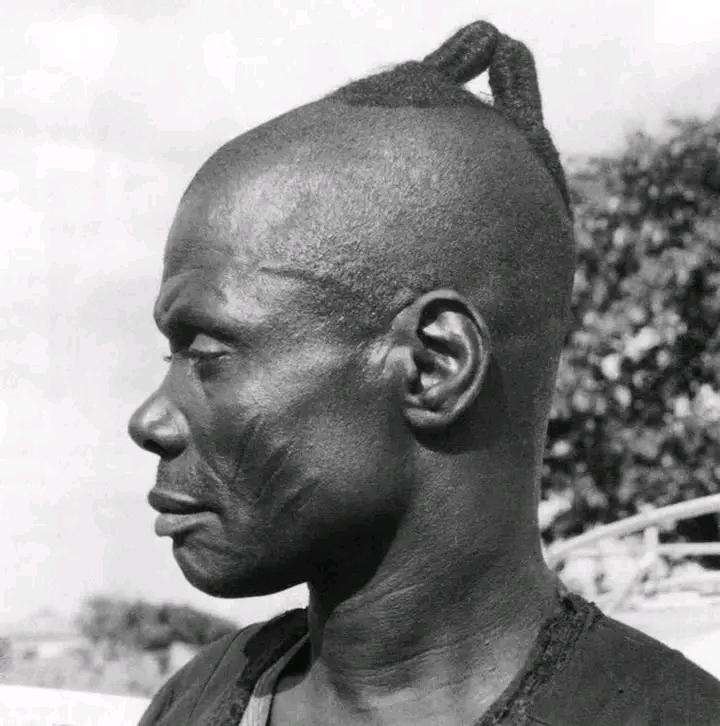
British historian of Yoruba art

William Fagg (a British historian of Yoruba art) took this portrait in Saki, the most Northern city of the Yoruba region, in 1959. Along with Ife, Oshogbo and Ede, Shaki is one of the oldest Yoruba settlements, having been founded in the 15th century by the legendary Yoruba king Ofiran. Next to the clear presence of the three typical lineage scarifications (ila) on the man’s cheeks, is the special hair-do, made up of two rising hair braids connected at the top. Among the Yoruba, persons with privileged roles, such as a king’s messenger (are or ilari) had their heads shaved. The remaining hair was fashioned in a distinctive way in order to identify the person’s powerful position.

Cc Proudly Yoruba