Posted on Leave a comment

The Complex Relationship Between America and African Countries

US-Africa Relations: A Complex Dynamic

The relationship between the US and African countries is complex and often contentious. The US aims to guide African nations, but its actions have significant consequences.

Understanding US Interference

The US has faced criticism for interfering in African governance. By supporting leaders who prioritize American interests, the US can inadvertently empower exploitative leaders. This can lead to poverty and instability in African nations. Moreover, US influence can create dependencies that hinder growth and self-sufficiency.

The Impact of US Influence

US actions can have far-reaching consequences for African economies. For instance, the devaluation of African currencies and undermining of local economies can stifle growth. Furthermore, external interference has consistently frustrated and undermined African economies, perpetuating poverty and inequality.

The Need for Self-Determination

African countries must assert their sovereignty and prioritize their own development agendas. By recognizing the complexities of US-Africa relations, African nations can work towards a more prosperous future. To achieve this, African leaders can take several steps.

Breaking the Cycle of Dependency

  • Prioritize national interests over external influences.
  • Develop homegrown economic policies that benefit African countries and people.
  • Promote transparency and accountability in governance.
  • Invest in human capital and infrastructure development.
  • Foster regional cooperation and integration.
  • Resist external interference and assert sovereignty.
  • Develop strategic partnerships that benefit African nations.
  • Encourage citizen participation in decision-making processes.

Empowering African Nations through Diaspora Engagement

Some African countries are strengthening their relationships with diaspora communities. Examples include Ghana, Nigeria, South Africa, Kenya, Gabon, Cape Verde, and Zimbabwe. By working together, African nations can unlock their true potential for growth, prosperity, and self-determination.

I made the following changes to improve the SEO score:

  1. Added subheadings to structure the content and make it easier to scan.
  2. Shortened sentence length to improve readability.
  3. Used transition words to connect ideas and improve flow.
  4. Simplified vocabulary to suit a larger audience.

These changes should help improve the SEO score and make the content more engaging and readable.

Posted on Leave a comment

You Go to School to Be Educated, Not to Be a Job Seeker

diagnosed car with laptop

You Go to School to Be Educated, Not to Be a Job Seeker

You go to school to be educated, not to be a job seeker. The purpose of education is often misunderstood. Many people believe that the sole purpose of going to school is to get a job. However, this perspective is limiting and narrow-minded. Education is about building yourself, gaining knowledge, and developing skills that will benefit you throughout your life.

Building yourself, not just a certificate
When you focus solely on getting a certificate or degree, you miss out on the opportunity to truly learn and grow. Education is not just about passing exams or getting good grades; it’s about developing critical thinking, problem-solving, and communication skills. By focusing on building yourself, you’ll gain a deeper understanding of the world and develop a sense of purpose. You’ll learn to think creatively, approach problems from different angles, and develop a growth mindset.

The benefits of a holistic education
A holistic education that focuses on building yourself has numerous benefits. You’ll:

  • Develop a love for learning that will stay with you throughout your life
  • Gain a deeper understanding of the world and your place in it
  • Develop critical thinking and problem-solving skills
  • Improve your communication and collaboration skills
  • Become a more well-rounded and informed individual

There is nothing bad if you get employment – that means you’re lucky. But still, it doesn’t stop you from discovering yourself. Let your employer know the value you can bring to your role. Your education and skills can benefit your workplace in many ways, and it’s essential to showcase your abilities and contribute to the organization’s growth.

It’s better to be employed based on your skills than your certificate. Skills are what set you apart and make you valuable in the workplace. While a certificate can get you in the door, it’s your skills and abilities that will keep you there and help you grow.

Conclusion
You go to school to be educated, not to be a job seeker. By focusing on building yourself and gaining knowledge, you’ll set yourself up for success in all areas of life. Don’t just focus on getting a certificate; focus on developing the skills and knowledge that will benefit you for years to come.

Adding specific examples or anecdotes could enhance the post. Some ideas include:

  • Sharing personal experiences of how a holistic education benefited you
  • Highlighting successful individuals who attribute their success to a well-rounded education
  • Providing examples of innovative schools or programs that prioritize holistic education
  • Discussing the long-term benefits of a holistic education in various fields, such as business, art, or science?
Posted on Leave a comment

“It’s Better to Be Employed with Your Skills than Your Certificate”

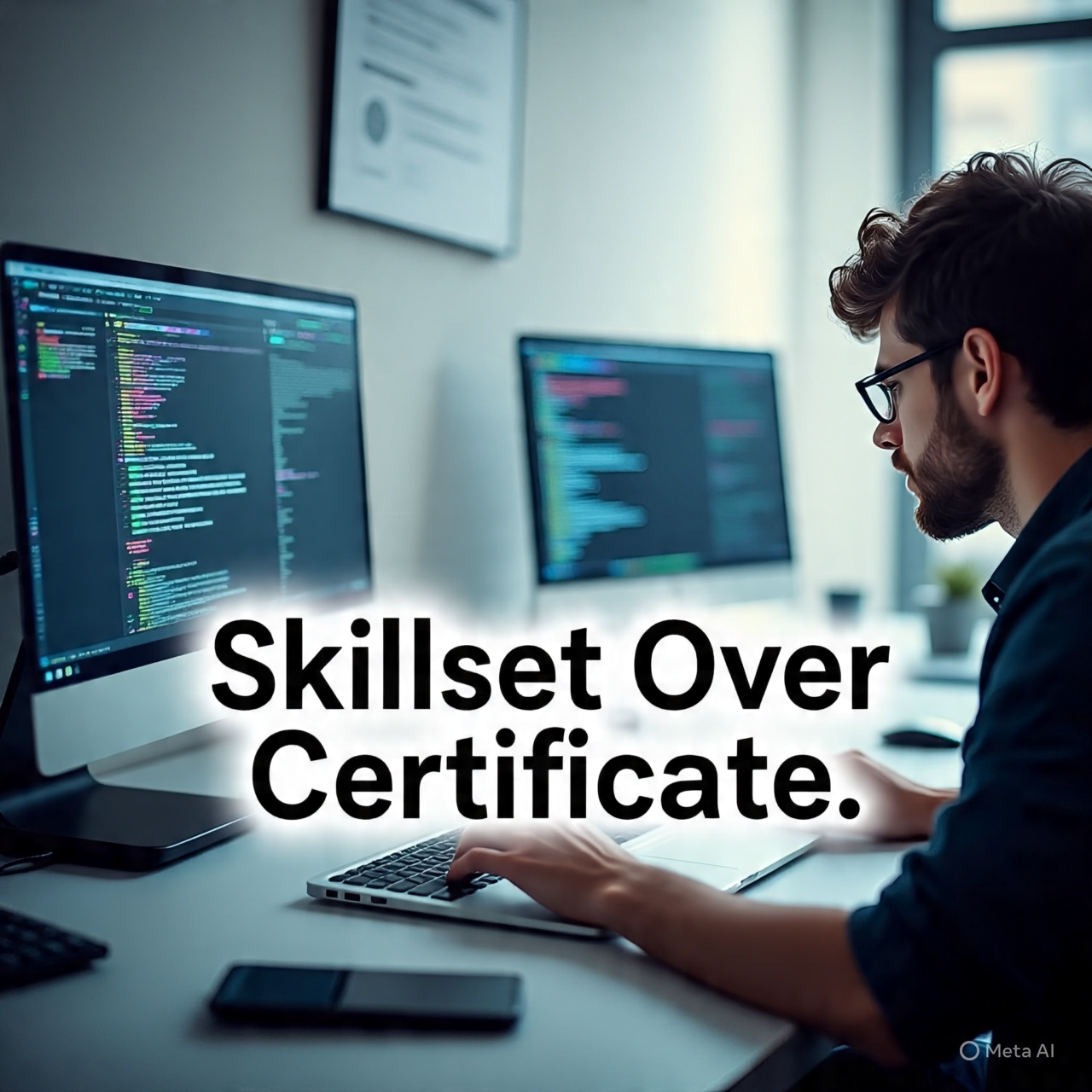
Skill Over Certificate

“It’s Better to Be Employed with Your Skills than Your Certificate”

In today’s competitive job market, the debate rages on: what’s more important, having the right certificate or possessing the necessary skills? While certificates and degrees can open doors, it’s the skills that ultimately make you employable and valuable in the workplace.

Why Skills Trump Certificates

  1. Practical application: Skills demonstrate your ability to apply knowledge in real-world situations.
  2. Adaptability: Skills are transferable across industries and roles, making you more versatile.
  3. Problem-solving: Skills enable you to tackle complex challenges and find innovative solutions.
  4. Value addition: Skills make you a valuable asset to your organization, driving growth and success.

The Limitations of Certificates

  1. Credentialism: Certificates can become outdated or lose relevance in a rapidly changing job market.
  2. Lack of practical experience: Certificates may not guarantee hands-on experience or practical skills.
  3. Overemphasis on theory: Certificates often focus on theoretical knowledge, which may not be directly applicable in the workplace.

The Benefits of Skill-Based Employment

  1. Increased job satisfaction: When you’re employed based on your skills, you’re more likely to enjoy your work and feel fulfilled.
  2. Better job prospects: Skills make you a more attractive candidate, increasing your chances of landing your desired job.
  3. Career growth: Developing skills can lead to career advancement opportunities and higher earning potential.
  4. Personal growth: Acquiring new skills can boost your confidence and self-esteem, leading to personal growth and development.

Conclusion
In conclusion, while certificates can provide a foundation, it’s the skills that ultimately make you employable and valuable in the workplace. Focus on developing practical skills that align with your career goals, and you’ll be more likely to succeed in today’s competitive job market.

Posted on Leave a comment

Exploring the Latest Breakthroughs and Trends in AI Technology

Exploring the Latest Breakthroughs and Trends in AI Technology

The world of AI is rapidly evolving, with new developments and innovations emerging every day. Here are some exciting recent breakthroughs and trends:

Recent Breakthroughs:

  1. Text-to-Video AI: New metamorphic video capabilities are being explored, enabling more sophisticated video generation.
  2. AI in Medicine: AI models are being developed to assist in medical decision-making, with some models outperforming doctors in certain exams.
  3. Robotics: Robots are being designed to navigate complex environments, recognize objects, and even exhibit human-like touch.
  4. Quantum Computing: Researchers are making progress in developing fault-tolerant quantum computers and exploring the potential of photonic computing.

Emerging Trends:

  1. Generative AI: Large language models, text-to-image, and text-to-video models are becoming increasingly popular.
  2. Predictive Analytics: AI is being used to predict complex phenomena, such as chemical properties and nuclear waste behavior.
  3. Autonomous Systems: Self-driving cars and drones are being developed with advanced AI capabilities.

Research and Applications:

  1. Cancer Immunotherapy: AI is being used to analyze cell behavior and identify potential targets for therapy.
  2. Environmental Sustainability: AI is being applied to optimize carbon storage and minimize economic disruptions.
  3. Education: AI-powered platforms are being developed to support lifelong learning and improve student outcomes.

Some notable institutions driving AI research include:

  1. MIT: Researchers at MIT are working on various AI projects, including natural language processing, computer vision, and robotics.
  2. ScienceDaily: This platform provides updates on the latest AI research and breakthroughs.

To stay up-to-date on the latest AI news and developments, you can follow sources like:

  1. TechCrunch: Covers AI news, trends, and events.
  2. AI News: Reports on the latest AI news and insights.
  3. Google News: Aggregates news articles on artificial intelligence from various sources.
Posted on Leave a comment

From Strength to Weakness: The Naira’s Journey Over the Years”

The Naira’s value has fluctuated significantly over the years. In the early 1980s, the exchange rate was favorable, with $1 equivalent to approximately ₦0.550-0.647. By 1983, the rate had improved further, with $1 worth around ₦0.724-0.894. However, from the late 1980s onwards, the Naira began to depreciate steadily.

Key Factors Contributing to the Naira’s Decline:

  • Over-reliance on Oil Exports: Nigeria’s economy has historically been heavily dependent on oil exports, making it vulnerable to fluctuations in global oil prices.
  • Lack of Diversification: The country’s failure to diversify its economy has limited its ability to generate foreign exchange through other means.
  • Poor Governance and Corruption: Weak institutions, corruption, and poor governance have hindered economic growth and development.
  • Monetary Policy Challenges: The Central Bank of Nigeria’s interventions, while aimed at stabilizing the currency, have sometimes exacerbated the problem.
  • External Debt and Financing: Nigeria’s external debt and financing challenges have put pressure on the Naira.

Current State of the Naira:

  • As of August 6, 2025, the exchange rate stands at approximately ₦1,527.69 per $1.
  • The Naira has been experiencing volatility, with the Central Bank of Nigeria intervening to defend the currency.
  • The black market rate has been higher than the official rate, reflecting the demand for foreign exchange.

Potential Solutions:

  • Diversifying the Economy: Encouraging non-oil exports and promoting economic growth through diversification.
  • Improving Governance and Institutions: Strengthening institutions and promoting good governance to attract foreign investment.
  • Monetary Policy Reforms: Implementing effective monetary policies to stabilize the currency and promote economic growth.
  • Promoting Transparency and Accountability: Enhancing transparency and accountability in governance and economic management.
Posted on Leave a comment

“Don’t Be Left Behind: IT is a Must for Boosting Efficiency and Productivity

“Don’t Be Left Behind: IT is a Must for Boosting Efficiency and Productivity”

By: Comr. Sulaiman Abdulfatai


In today’s competitive business landscape, staying ahead of the curve is crucial. One way to do this is by leveraging Information Technology (IT) to boost efficiency and productivity. IT is no longer a luxury, but a necessity for businesses and professionals looking to stay relevant.


By incorporating IT into your work, you can:

– Automate repetitive tasks and focus on high-value activities
– Streamline processes and reduce errors
– Enhance collaboration and communication with colleagues and clients
– Gain insights and make data-driven decisions
– Improve customer service and respond quickly to inquiries

Don’t get left behind. Invest in IT and take your work to the next level. Whether you’re a small business owner, entrepreneur, or professional, IT can help you work smarter, not harder.

Posted on Leave a comment

The Importance of IT in the 21st Century

In today’s fast-paced, technology-driven world, Information Technology (IT) plays a vital role in driving business success, innovation, and economic growth. Here are some reasons why IT is crucial in the 21st century:

  1. Global Connectivity: IT enables global communication, collaboration, and connectivity, bridging geographical gaps and fostering international relationships.
  2. Business Efficiency: IT streamlines processes, automates tasks, and enhances productivity, allowing businesses to operate more efficiently and effectively.
  3. Innovation and Competitiveness: IT drives innovation, enabling businesses to develop new products, services, and business models, and stay competitive in a rapidly changing market.
  4. Economic Growth: IT contributes to economic growth by creating new industries, jobs, and opportunities, and improving overall productivity.
  5. Improved Customer Experience: IT enables businesses to provide personalized, responsive, and efficient services, enhancing customer satisfaction and loyalty.
  6. Data-Driven Decision Making: IT provides businesses with valuable insights and data, enabling informed decision-making and strategic planning.
  7. Cybersecurity: IT helps protect businesses and individuals from cyber threats, ensuring the security and integrity of sensitive information.

In summary, IT is essential in the 21st century because it drives business success, innovation, and economic growth, while also improving customer experience, efficiency, and decision-making.

Posted on Leave a comment

“Behind Closed Doors: Protecting Your Children from Manipulation and Abuse”

Dear Parents and School Owners: Not Every Teacher Deserves Your Trust

There’s a teacher I once worked with—
No, I won’t mention his name.
But what he does has left a bitter taste in my soul.
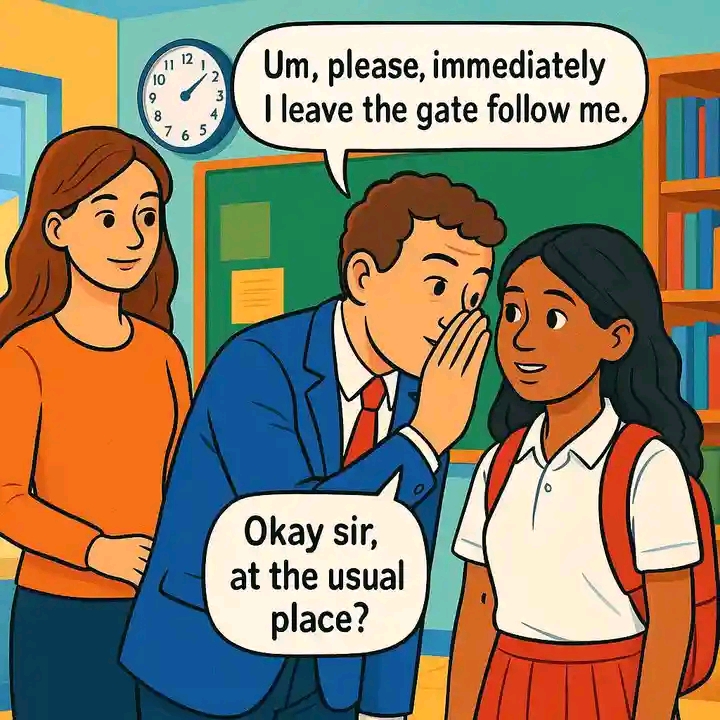
He is fond of inviting femal3 students—girls who haven’t even graduated—to his house.

Yes.
During school breaks… after school…
He finds a way to sn3ak them in.

He claims they’re helping him with house chores.
Really? Chores?
Why only femal3 students?
What happened to the boys? Don’t they know how to sweep or wash?

Let’s be honest. This is not about chores. This is about control. Manipulat!on. Possibly abu$e.

I’m not inside that house. I don’t know what happens behind closed doors.
But I know this: It is wrong. Deeply wrong.

These are young girls—
Innocent. Naive.
Still under their parents’ roof.
They don’t know what they’re walking into.
They think it’s just kindness… they think it’s just help…

But some of these teachers—
They play the long game.
They give the girls special treatment in school.
Call them “my favorite.”
Let them skip punishm3nt.
Laugh too much with them.
They build trust… just to trap.

And the worst part?
Parents don’t know.

You drop your daughter at school…
Thinking she’s in safe hands.
You believe education is happening—
Meanwhile, manipulat!on is unfolding.

This is a warning.
School owners, wake up.
Set rules. Enforce them.
Teachers should never be allowed to invite students—especially of the opposite s3x—to their private homes.
No excuse. No justification.

Parents, please, know your child’s movement.
Ask questions.
Talk to your daughter.
Talk to your son.
Know who they’re close to in school.
Know who is giving them gifts.
Who is calling them “special.”

If something feels off, don’t keep quiet.
Report it.
Speak up.
Silence protects pr3dators.

So many young lives have been abu$3d.
So many destinies tampered with.
And it started with:
“He’s just helping me wash his car…”
“He said I should come and help clean…”
“He said I’m his favorite…”

Posted on Leave a comment

Asake’s Ambitious Leap: From YBNL to Global Stardom

Asake’s Ambitious Leap: From YBNL to Global Stardom

Asake has indeed parted ways with YBNL Nation, launching his own record label, Giran Republic. However, it seems there’s some confusion regarding the details. Contrary to reports of a new deal with Gamma, Asake actually retains his global distribution deal with Empire, a US-based label he partnered with in July 2022. This partnership has enabled him to maintain a strong international presence, with his music dominating streaming platforms and Billboard charts [1][2].

Asake’s decision to leave YBNL Nation appears to be driven by a desire for greater creative control and ownership of his music. By establishing Giran Republic, he’s taking a bold step towards independence, while still leveraging Empire’s global reach for distribution [6].

Some key highlights from Asake’s recent journey include [2][1]:

  • New Record Label: Asake has launched Giran Republic, marking a new chapter in his career.
  • Global Distribution: His partnership with Empire remains intact, ensuring his music continues to reach a global audience.
  • Creative Control: By starting his own label, Asake gains more control over his musical output and direction.

Overall, Asake’s move seems to be a strategic step towards long-term success, allowing him to balance his artistic vision with global ambitions.

Posted on Leave a comment

Legless But Not Hopeless Soldier

Peacemaker Azuegbulam, a 27-year-old Nigerian soldier, lost his left leg in October 2020 while fighting Boko Haram jihadists in the northeast region of Nigeria. His unit came under fire from an anti-aircraft gun, and he was wounded, requiring doctors to amputate his leg. Despite this life-changing experience, Azuegbulam has made a remarkable recovery and has become an inspiration to many.

After his injury, Azuegbulam struggled emotionally, physically, and mentally. However, with the help of local organization Nigeria Unconquered, he discovered sports as a way to rehabilitate and rebuild his life. He started participating in powerlifting, sitting volleyball, and other sports, which eventually led him to the Invictus Games.

In a remarkable turn of events, Azuegbulam won Africa’s first-ever gold medal at the Invictus Games in Dusseldorf, Germany, in a powerlifting event. This achievement has not only brought him personal triumph but also hope and inspiration to others. Azuegbulam’s story showcases his resilience and determination, and he aims to continue competing in sports, including the Olympics.

Azuegbulam’s Achievements:

  • Invictus Games Gold Medalist: Won Africa’s first-ever gold medal in powerlifting at the Invictus Games
  • Multi-Sport Athlete: Competes in powerlifting, sitting volleyball, and other sports
  • Inspiration to Others: His story aims to bring hope and inspiration to wounded servicemen and women, and others facing challenges.